Meliponas and Jorge the Xamán
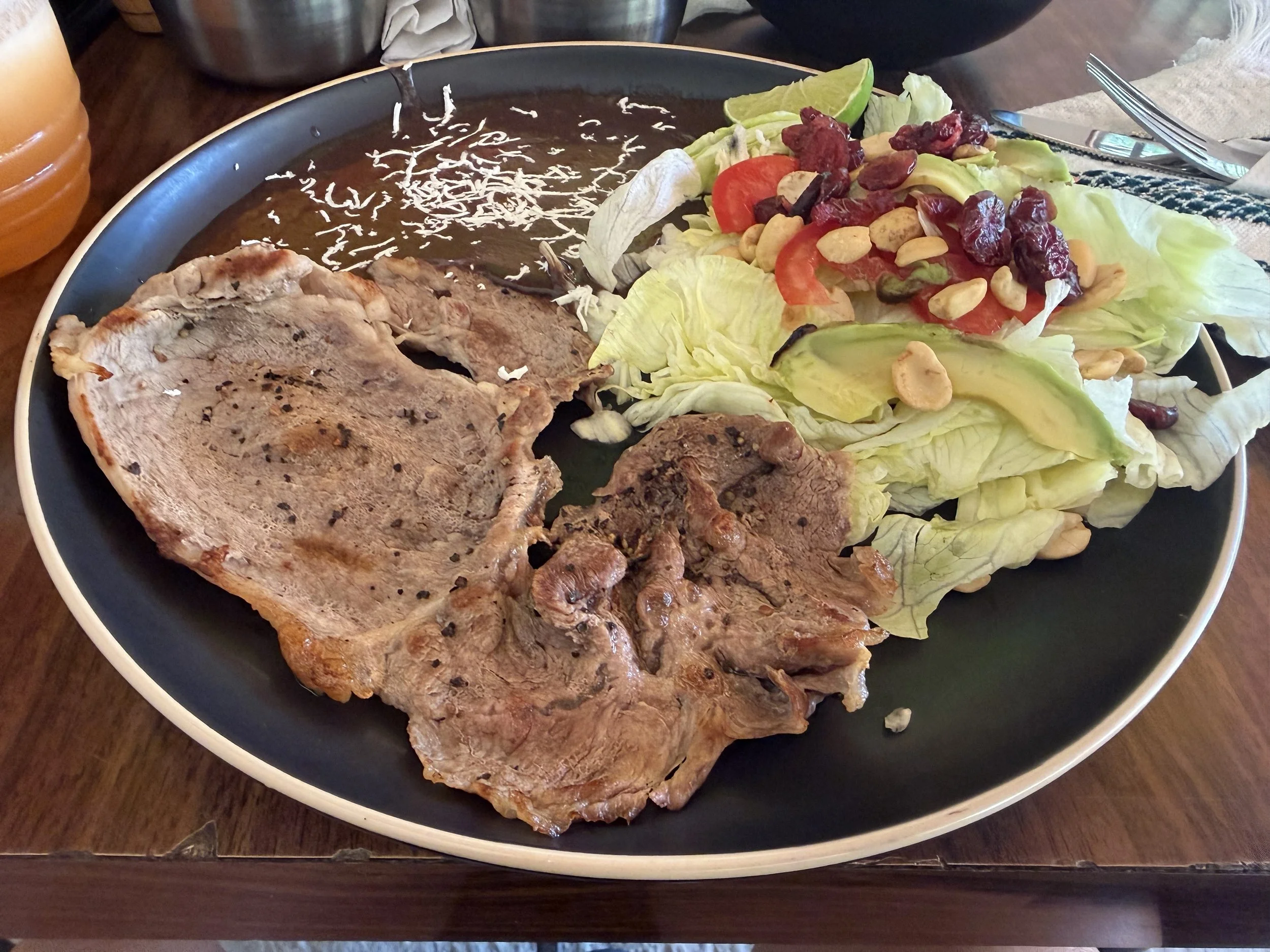
After a beautiful lunch in Macario Gómez, at a restaurant called Mi Pequeño Oaxaca, we headed out toward an aldea recommended by John.
Mi Pequeño Oaxaca is owned by a young couple, both around 25 years old, who decided to move to this peaceful little town on the highway to the archaeological zone of Cobá. Lining the street are small comercios selling food, artisanal products and so much macramé that, for a moment, I thought I had been transported straight back to the 70s.
Sadly, the town has been very much affected by the drop in tourism in the Tulum area. I barely saw people on the streets or cars on the roads. Beautiful stands, clean and inviting, sit quietly along the roadside, their owners hopeful that an interested client might stop.
And then off we went to the aldea.
I was about to meet the melipona bee.
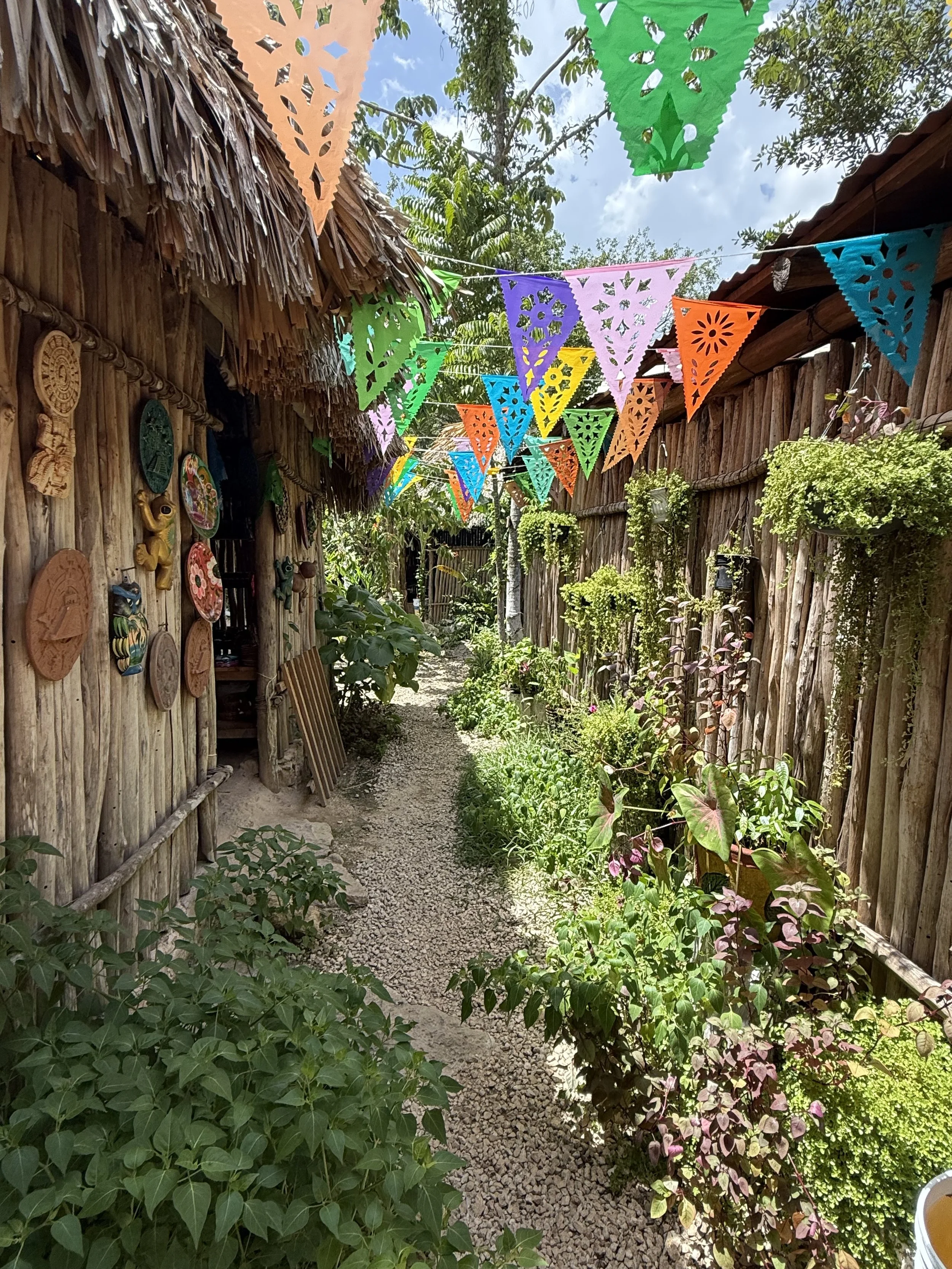
The property was beautiful, with plants and flowers everywhere. A peaceful garden surrounding a home. The air felt thick with green life, humid earth, blooming flowers and the faint sweetness of something ripening in the shade.
And then there was Jorge.
Jorge is a beekeeper, a Maya man and a xamán. There was something immediately gentle about him. His energy was peaceful but powerful, the kind that does not need to announce itself.
Before I even understood what I was hearing, I could feel the bees.
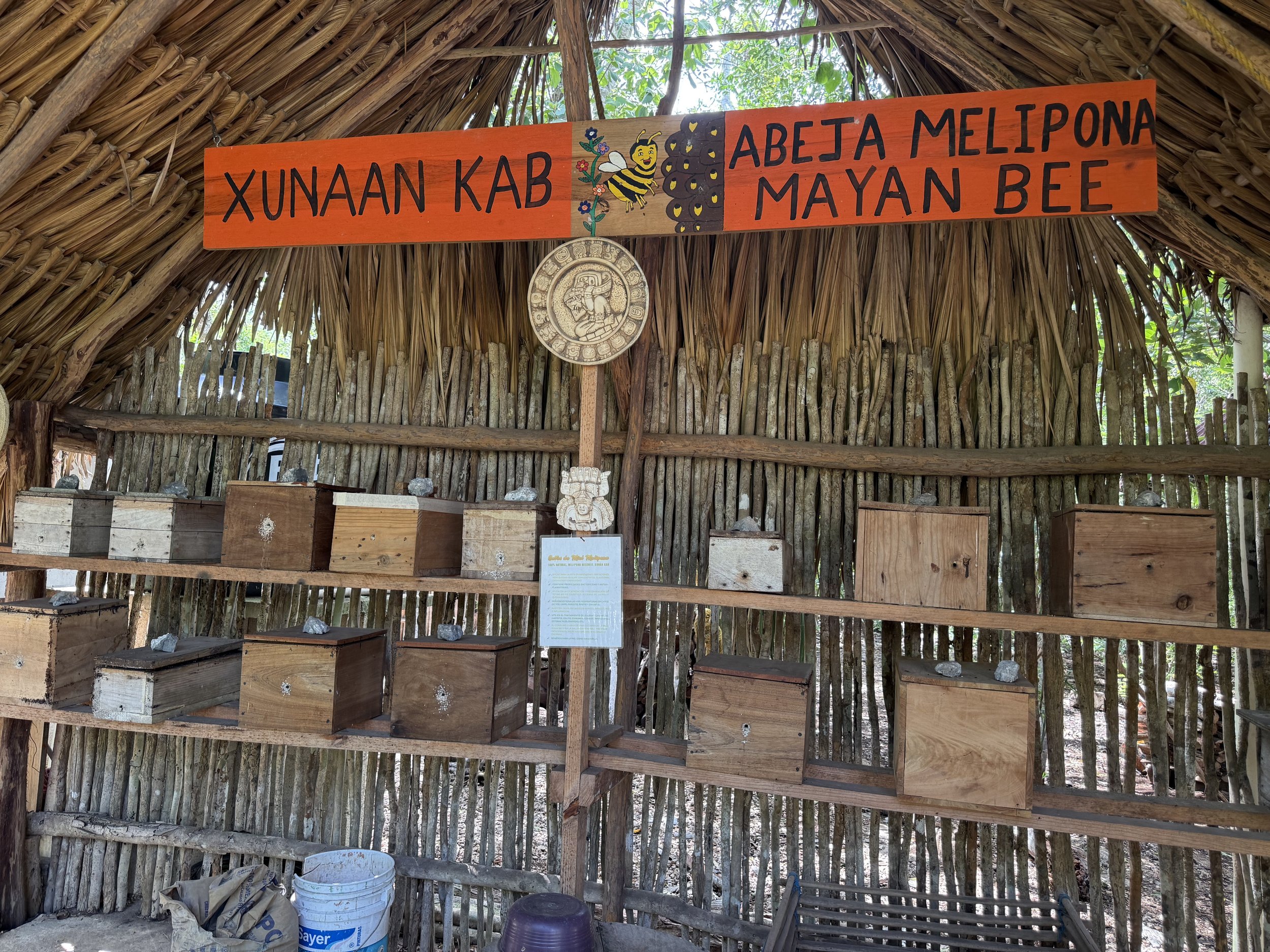
A deep, continuous humming came from the hives. Not the frantic buzzing of a bee trapped against a window, but something much more ancient and collective. A low vibration, almost a living current running through the wooden boxes. Thousands of tiny wings working together, creating one enormous sound.
I stood there listening to it and could feel the vibration in the air around me.
It was strangely calming.
Jorge spoke to us about the three varieties of meliponas they work with. One is about the size of a regular honeybee, perhaps slightly smaller. One is red. And the third is tiny.
Regardless of their colour or size, these little beings are remarkably intelligent. Jorge explained that if someone arrives carrying bad energy, the bees will sense it and sound the alarm.
Lucky for me, I have been bathing in natural light, cristal-clear cenote water and little pools at the houses I have rented. I was hoping I had arrived carrying the right kind of energy.
The family began working with meliponas roughly 15 years ago, starting with one variety and eventually growing to work with all three.
But this is not honey production in the way we might imagine it.
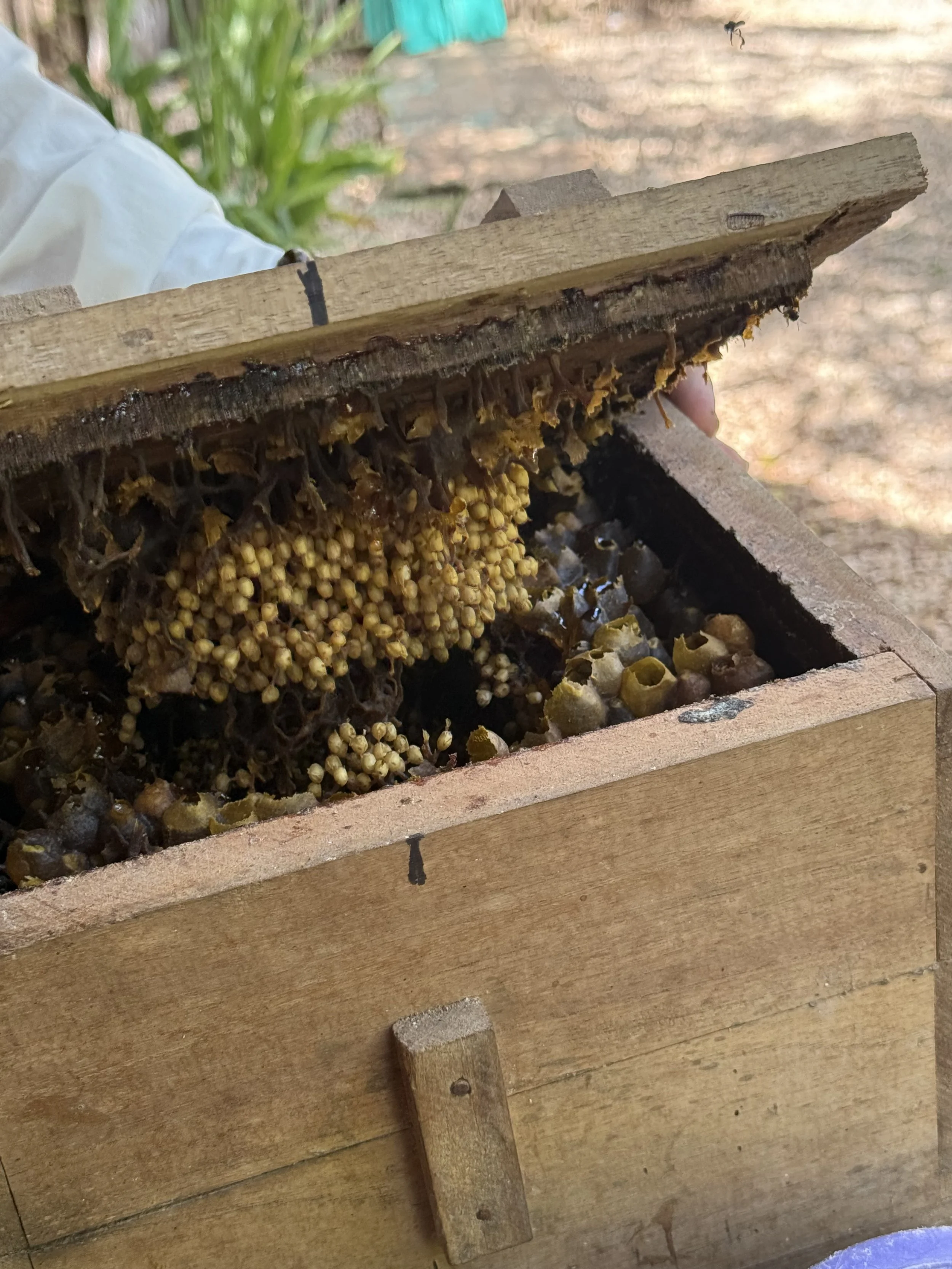
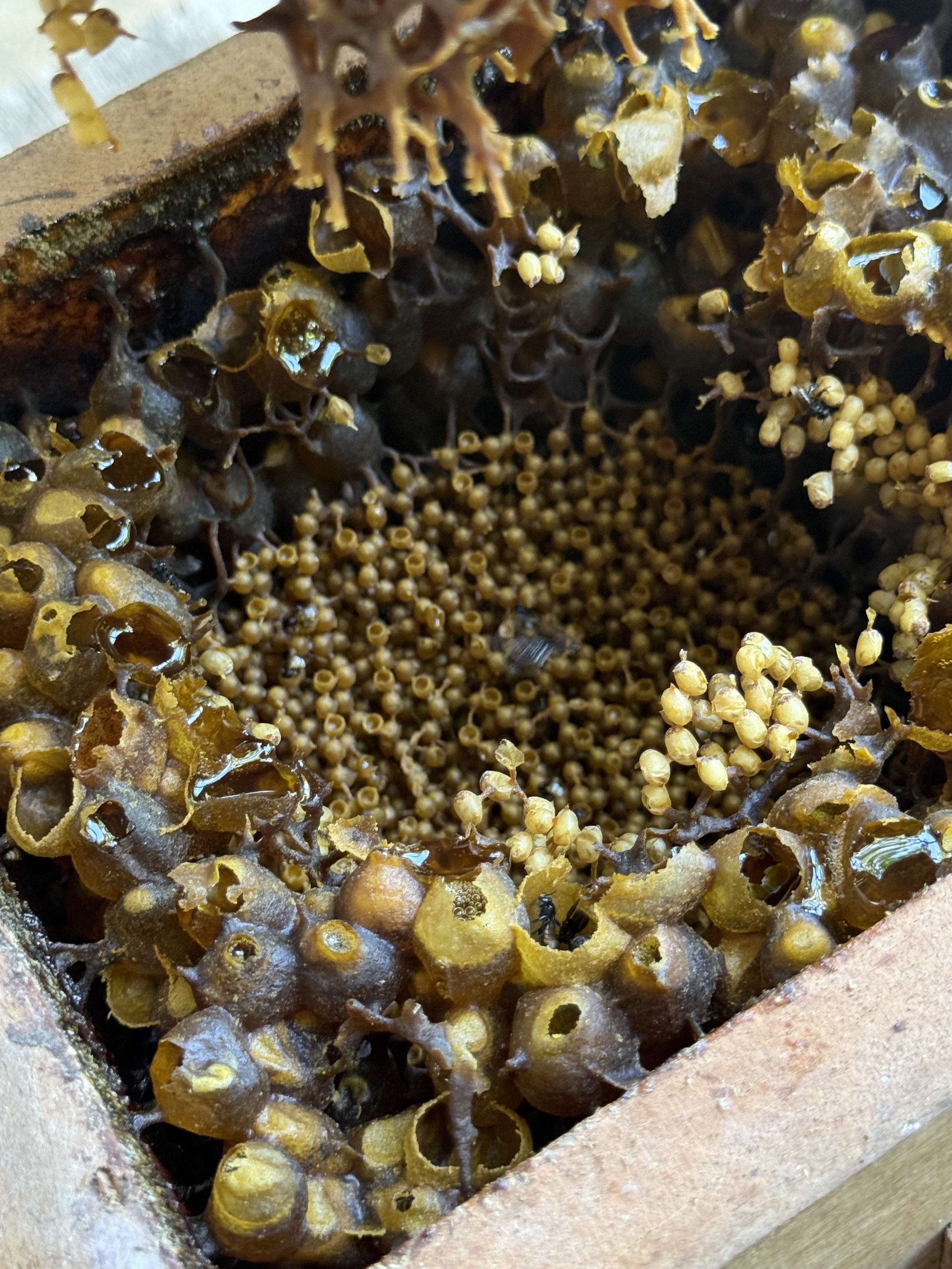
The harvest season is incredibly short, less than three months of the year. And even during that precious window, the family harvests only once or twice.
No more.
The reason is simple: they do not want to destabilize the hive.
There is something beautiful about that restraint. They could take more, but they choose not to.
The bees come first.
And the honey itself is precious because there simply isn’t much of it.
Jorge showed us the tiny little cups made from beeswax, each one filled with a small amount of honey. They looked almost impossibly delicate, like miniature vessels warmed by the hive itself. Soft, waxy, faintly sticky to the touch, holding the golden honey inside.
And then we tasted it.
It was not quite like the honey I know.
The flavour was delicate but distinct, with a brightness and slight acidity that made it feel completely different from ordinary honey. It was floral, almost citrusy, with something slightly tangy that lingered on the tongue.
And because there is so little of it, tasting it felt almost intimate.
This was not honey produced by the bucketful, destined for supermarket shelves.
This was a tiny gift from a fragile ecosystem, carefully taken once or twice during a very short season.
Perhaps that is why it tasted different.
Perhaps I was tasting the flowers, the forest, the humidity, the bees themselves.
On cloudy days, the bees have another problem.
Their enemies come.
The scent of the honey escapes the hives into the humid air and attracts tiny flies, smaller than fruit flies, which invade the colonies.
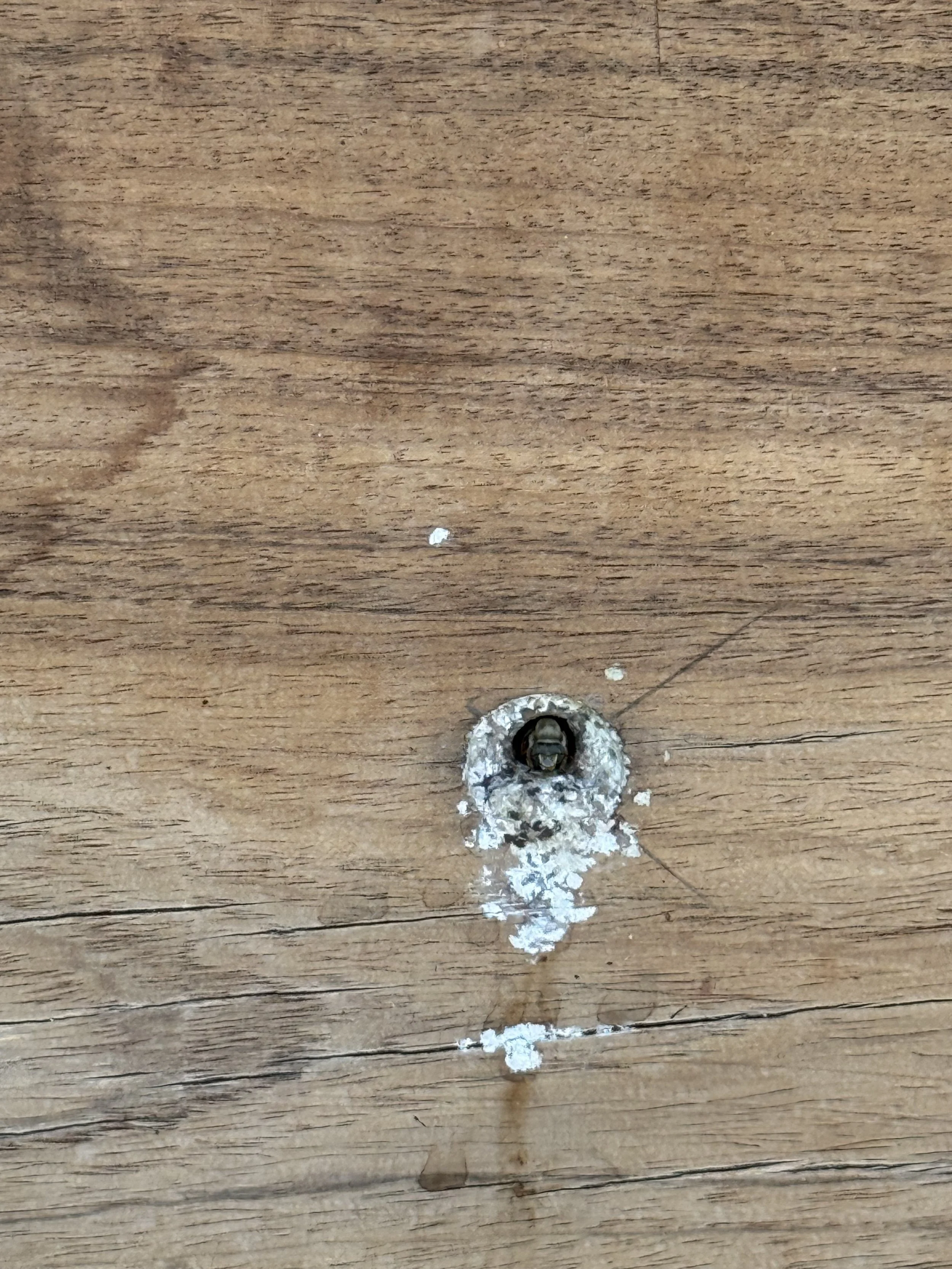
The bees are clever about defending themselves. Only one entrance is created to the hive, where a sentinel keeps watch. Another bee stands behind it, ready to take over should the first sentinel die.
I could have listened to Jorge talk about them for hours.
A young girl making tortillas listened with her eyes wide open as John spoke about the big city of Mexico. I couldn’t help but wonder what that enormous city sounded like in her imagination. Perhaps wilder than any dream she had ever had.
She lives here, as her parents and grandparents did before her.
A simple life.
One filled with delicious bounty.
The pib
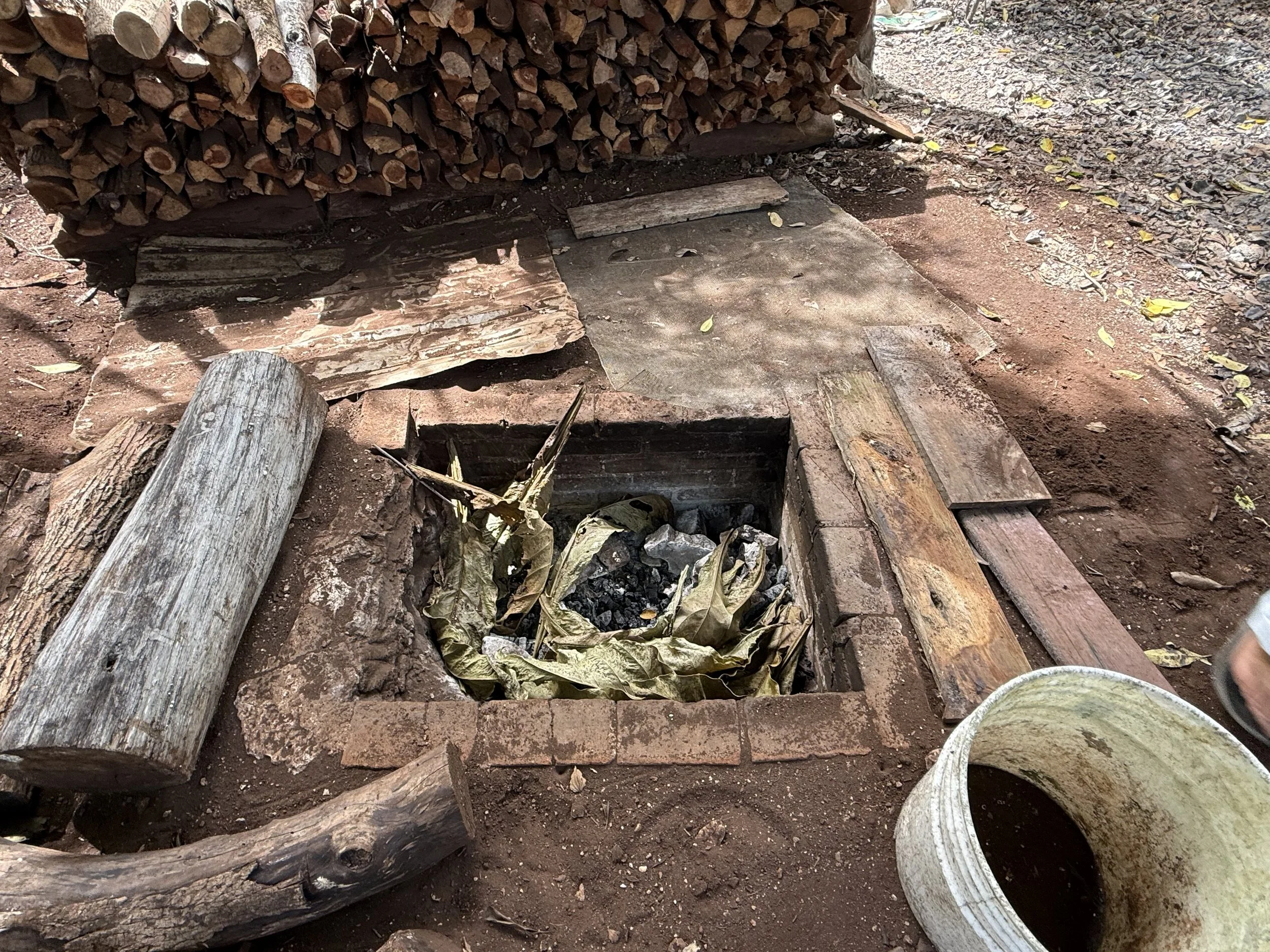
We ordered a pib for lunch.
A traditional Maya cooking method, it reminded me of the baked beans my forefathers would have cooked in a hole in the ground. Different ingredients, different culture, but that same ancient relationship with fire, earth and food.
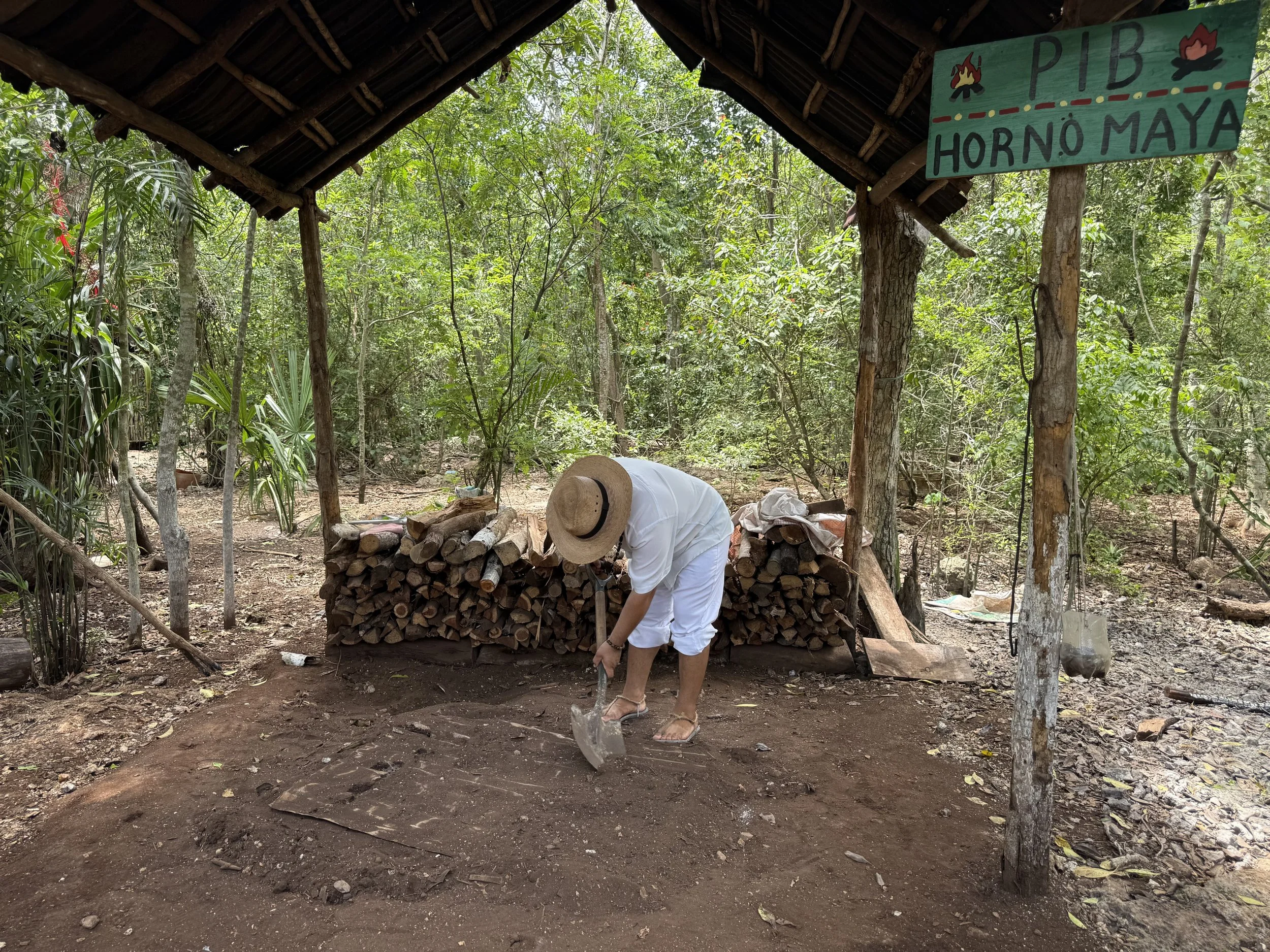
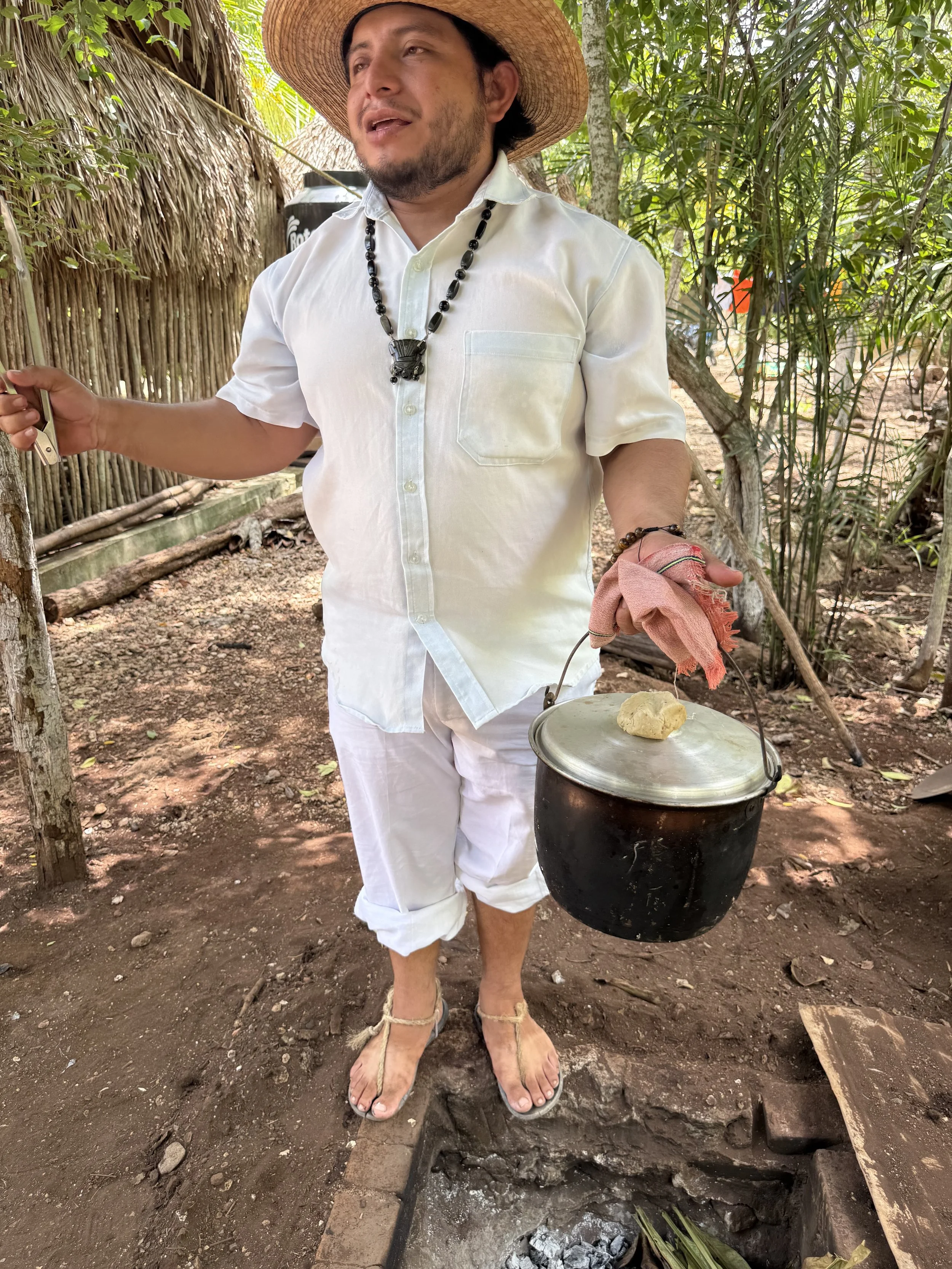
The pib was ready, and Jorge invited us to follow him so we could watch him pull it from the earth.
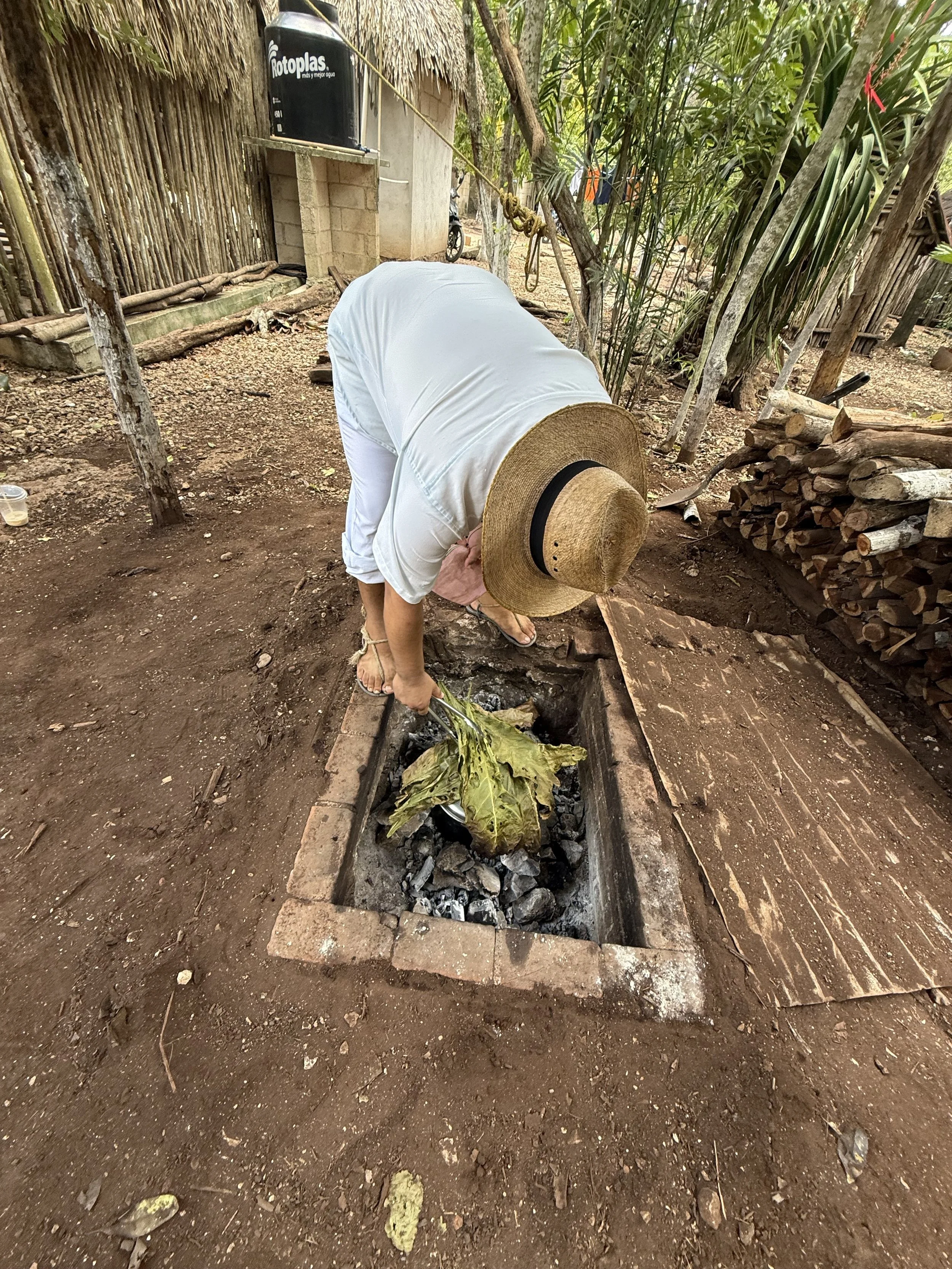
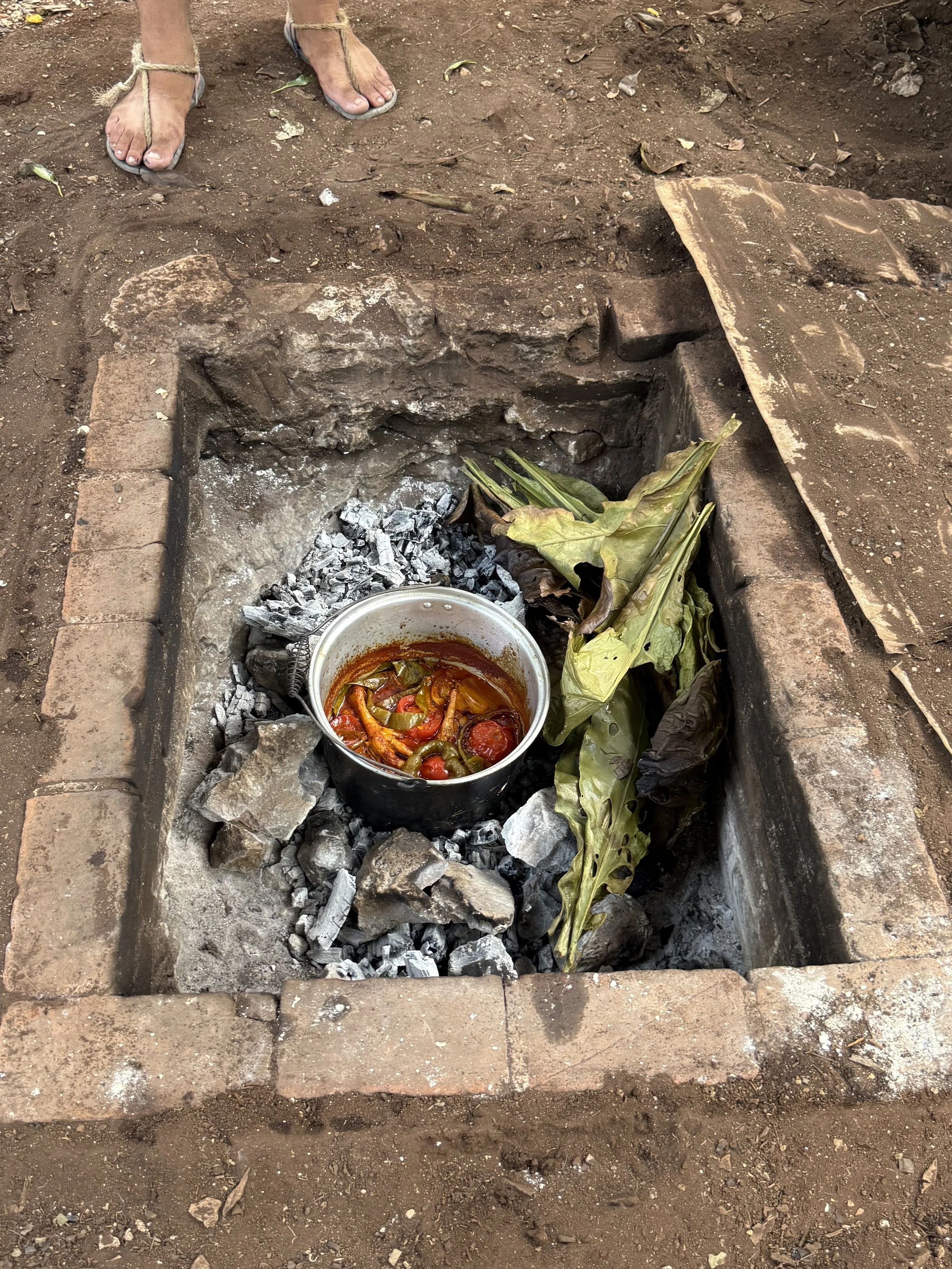
The ground itself felt warm around the opening, as if it had been breathing heat all morning. A rectangular hole had been dug into the soil. Stones were placed inside and a fire built over them.
Once the rocks became bright red with heat, fresh leaves were laid over them, releasing a sharp, green aroma as they hit the embers. The pot was set in the middle, and the earth was slowly closed over it again, sealing in the heat like a secret.
On the lid was a ball of masa, corn dough, which is used to help determine when the pib is ready.
There is something wonderfully primitive about this way of cooking.
No timer.
No oven temperature.
No fancy equipment.
Just fire, earth, leaves, time and instinct.
We were served in a dining room built from large, straight branches arranged in a circular form, with enough space between them for the air to flow through. The palapa roof kept everything cool in the shade, the air moving gently through the structure like a slow breath.
And then came the food.
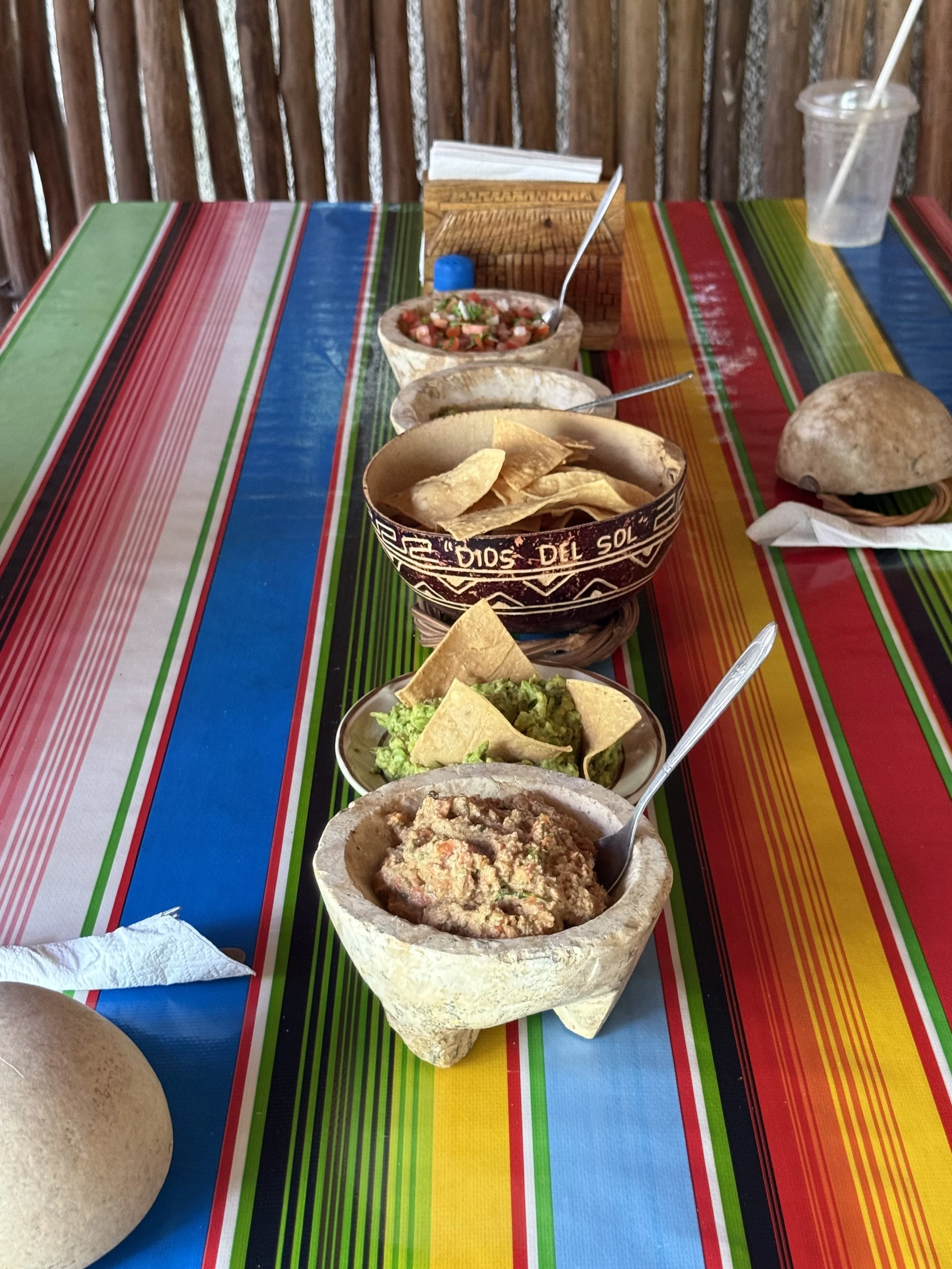
Sikil p’ak, with the texture of hummus but made from ground seeds and spices. A wonderfully spicy habanero salsa that made the air itself feel hotter. Pico de gallo and guacamole, bright and fresh, almost cooling in contrast.
Handmade tortillas served in a tortillero shaped like a wooden pear.
And then came the plate.
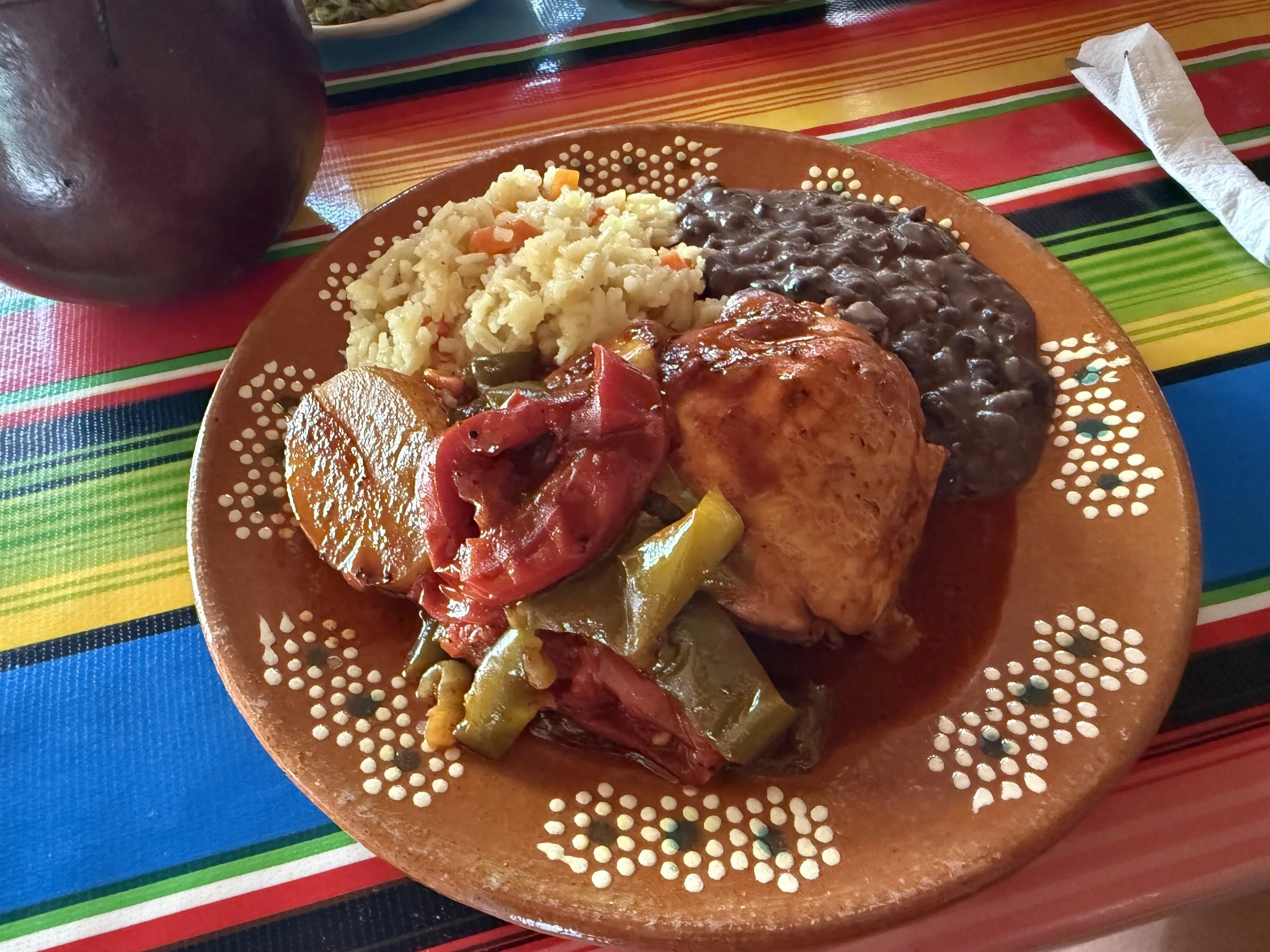
It was loaded with chicken so tender it practically fell apart beneath the fork, cooked in the pib in a sauce made from the vegetables that had cooked alongside it.
I recognized tomatoes, peppers, onions and potatoes in a bright red sauce with soul. Smoky, earthy, deeply infused with the memory of the fire it had been buried in.
Rice and beans alongside.
So much food.
But I just had to savour each bite until I simply couldn’t anymore.
For dessert came a cousin of jackfruit, with a pudding-like texture and dark black seeds. I ate some and, yes, it was delicious.
But it was so very sweet.
And you know me. I am a savoury-over-sweet kind of girl any day.
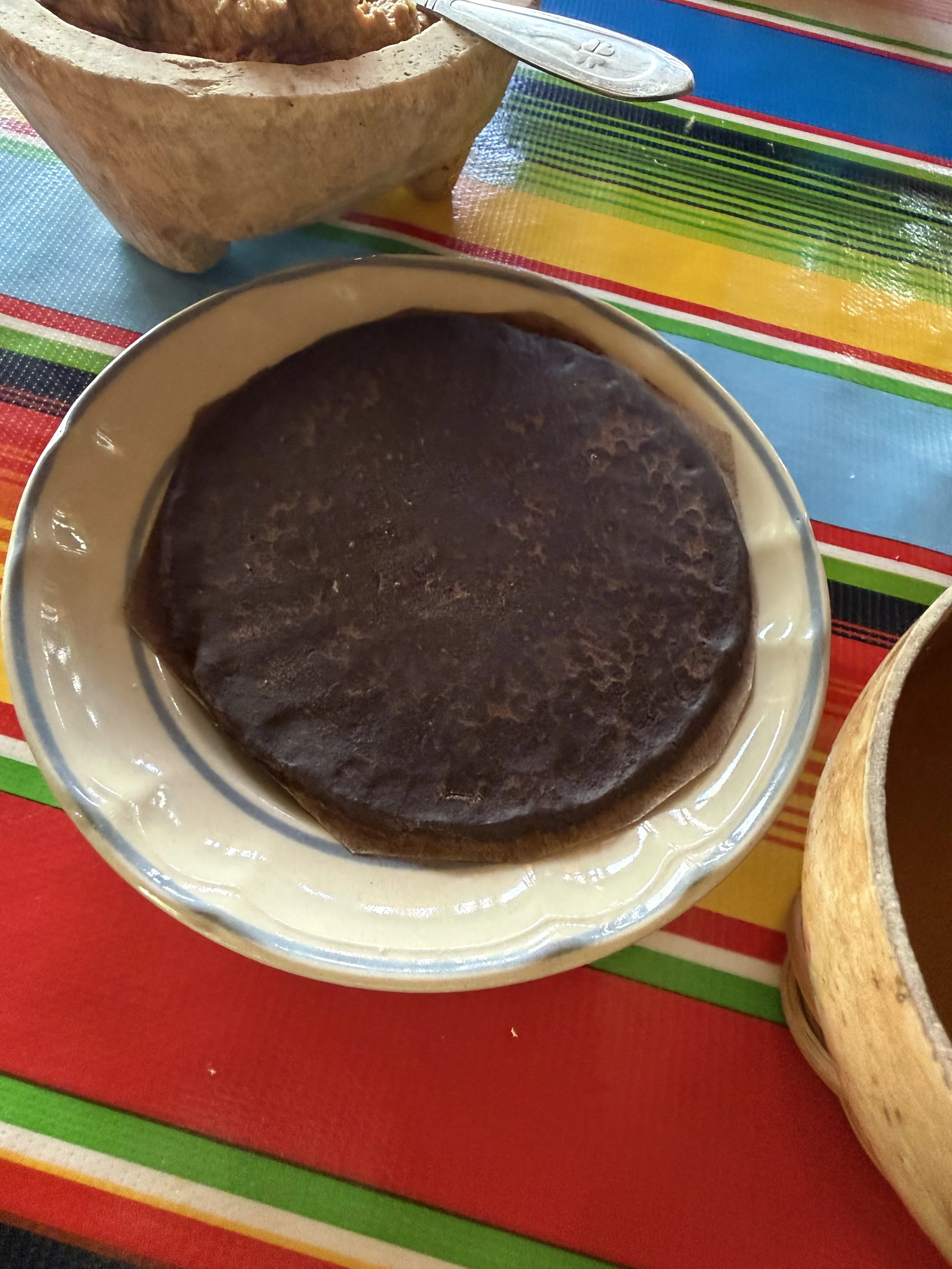
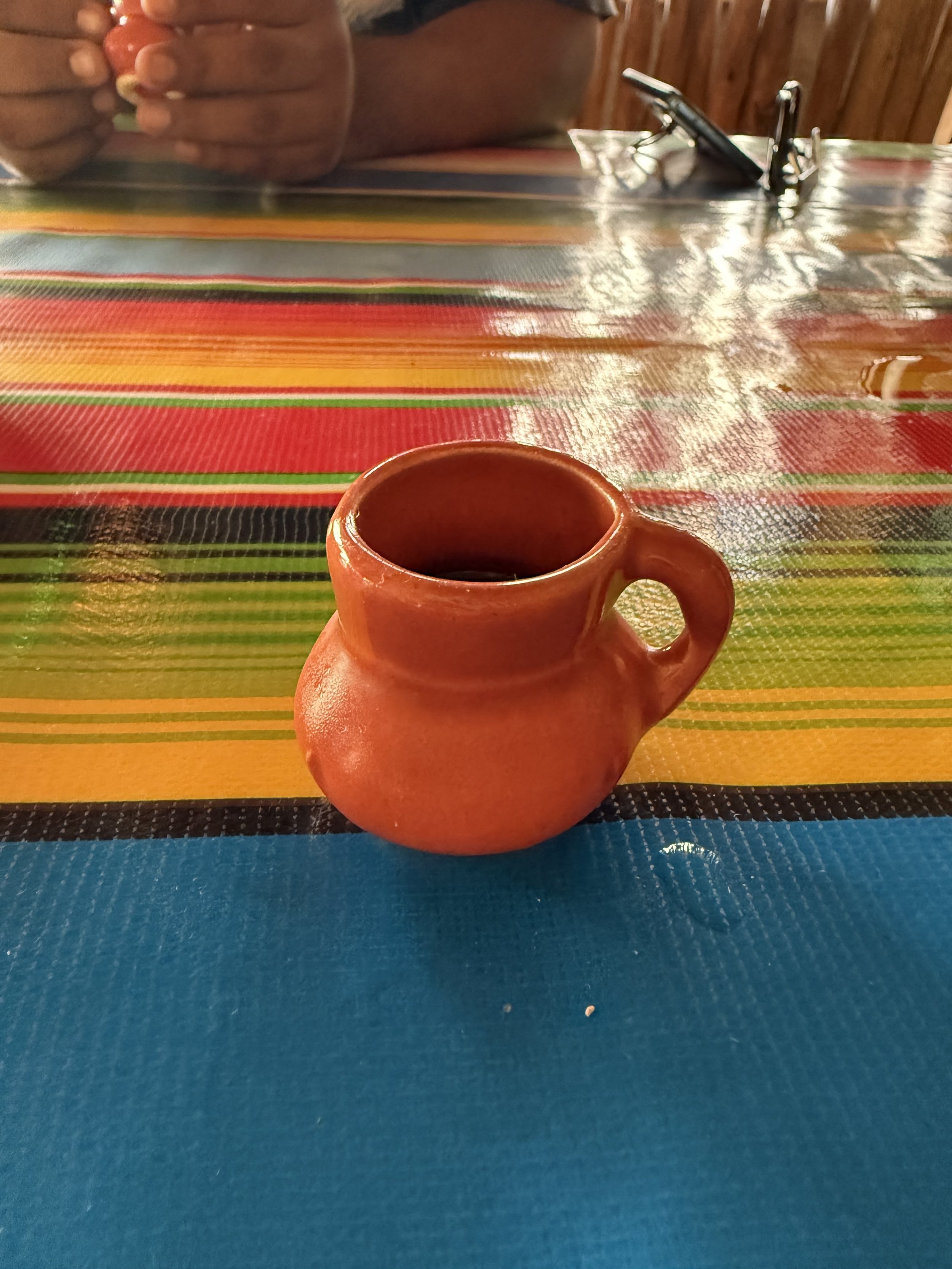
To finish, a tortilla-sized round of chocolate with cinnamon and other spices was served with a digestif that reminded me of a warm sambuca, where the aniseed shines through, but with something more herbal and comforting.
And after all this beautiful food, Jorge was waiting for me.
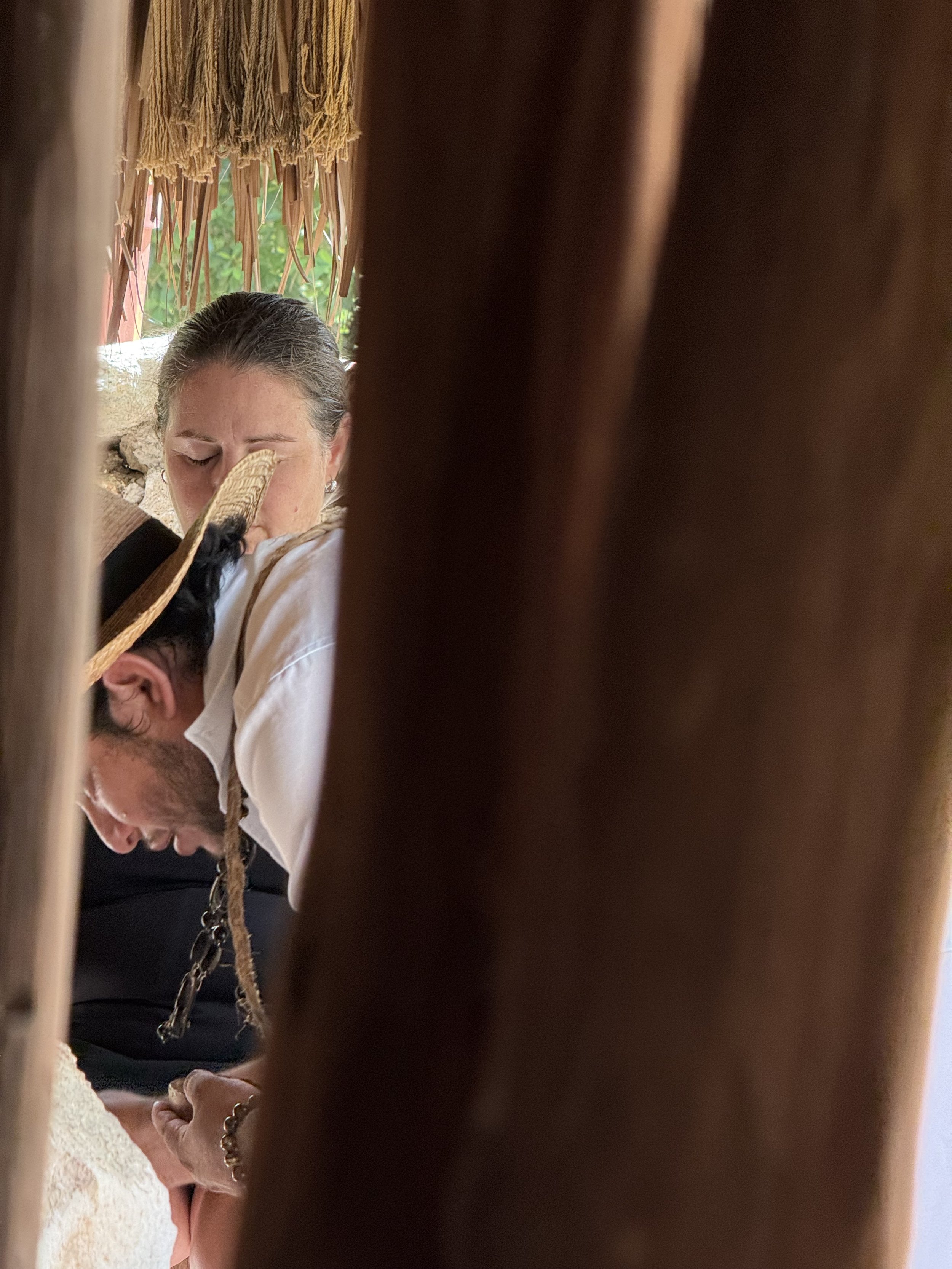
It was time for my limpia.
He asked me what kind I wanted.
“A limpia for health,” I gently requested.
His deep green eyes became so very focused. His gentle voice began reciting the prayers and words passed down through his ancestors.
Copal smoke filled the air, thick and resinous, curling upward in slow spirals and mixing with the sharp green scent of fresh herbs crushed between his hands.
The smoke clung to my skin, to my hair, to the inside of my breath.
Somewhere between incense and forest, between fire and plant.
This young man, so humble and discreet, looked at you from somewhere very deep.
There was a peace in every movement.
I let him work.
And slowly, I fell into a meditative dream.
After the limpia, I stayed with him for a while and we talked about medicines from the earth, tinctures and pomades displayed on a shelf. He showed me the branches and roots they use for kidney stones, asthma and so many other ailments.
He recommended something for me to try using oatmeal and explained how to work with it as part of a month-long program.
You can be certain I am going to give it a go!
He also gave me instructions for the next two meals: no more than three tortillas.
Easy peasy. 😂
I already refrain from them as much as I can at home.
Stay tuned for updates!
We eventually returned home, in need of some quiet time to think and write and, of course, call my dear husband.
Another day in Quintana Roo.
Another little piece of the Maya world I never could have planned.