
Arrival in Huautla de Jiménez
I left the hotel early Saturday morning. A taxi driver named Ezekiel was scheduled to pick me up. For some reason—maybe the name—I’d imagined an older gentleman, but he turned out to be younger than me, full of stories from his former life as a bus driver. He spoke with pride about that time: the joy of getting to know people, even if only for a fleeting moment. Everyone I’ve met in Oaxaca seems to carry that same belief—we are responsible for our own happiness and our own suffering. I read a phrase scrawled on a bus shelter: el problema está que tu eres la solución. It lingers in my thoughts.
As we drove into a region shaped by Zapotec and Mazatec roots, this worldview began to take deeper hold. Ezekiel dropped me off in a small town to meet my new travel companion, and from there we took the winding mountain road toward Huautla de Jiménez. The map suggested a five-hour drive. Reality laughed and offered us seven.
I was asked if I was comfortable with curves. “I love them,” I replied—when I’m the one driving. Otherwise, nausea tends to creep in. And creep in it did. After a couple of relentless hours of hairpin turns, I had to lie down in the backseat and surrendered to sleep. When I awoke, we were nearly there.
Huautla rises up into the clouds, an ancient town built before cars were ever imagined. Its steep, narrow streets were designed for donkeys and feet, not vehicles. As we navigated its tangled lanes, eyes followed us. Not the curious kind—more like suspicion, maybe even hostility. I was later advised not to wander alone. Here, law is an idea rather than a presence. Conflicts can escalate to violence, even murder, with no clear repercussions. It’s intimidating.
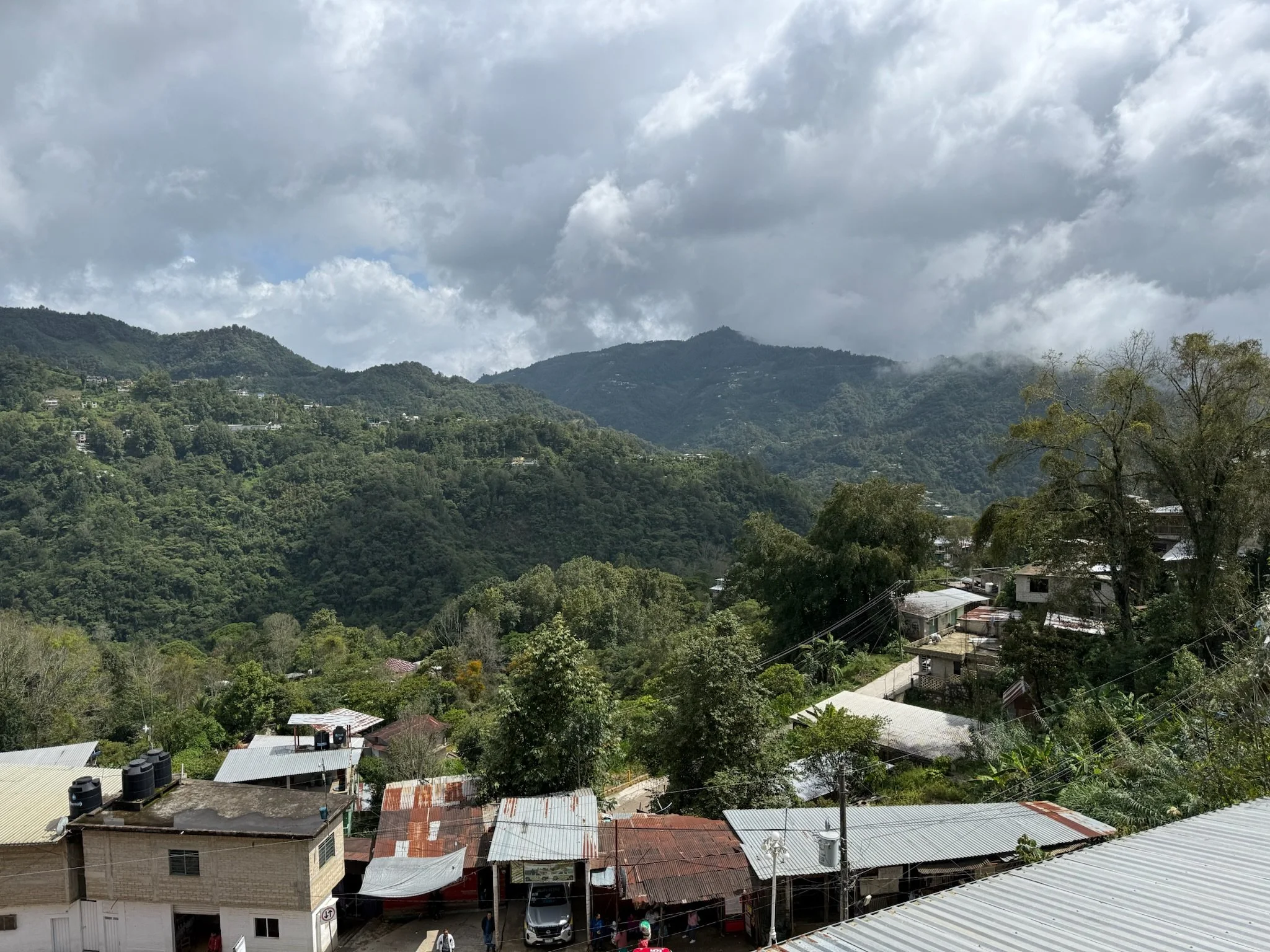
But the land—it breathes on another frequency. Lush, mystical, timeless.
We finally located the turnoff to Rancho San Lorenzo with help from some boys and their hound. Our host met us by her truck, accepted my suitcase, and handed me a walking stick. Her 72-year-old mother led us down a steep, wet path—slippery from the rains, tangled with rocks, roots, and young trees. I hadn’t asked many questions about what this stay would entail. I wanted to arrive with ojos vírgenes, no expectations. And I got exactly that.
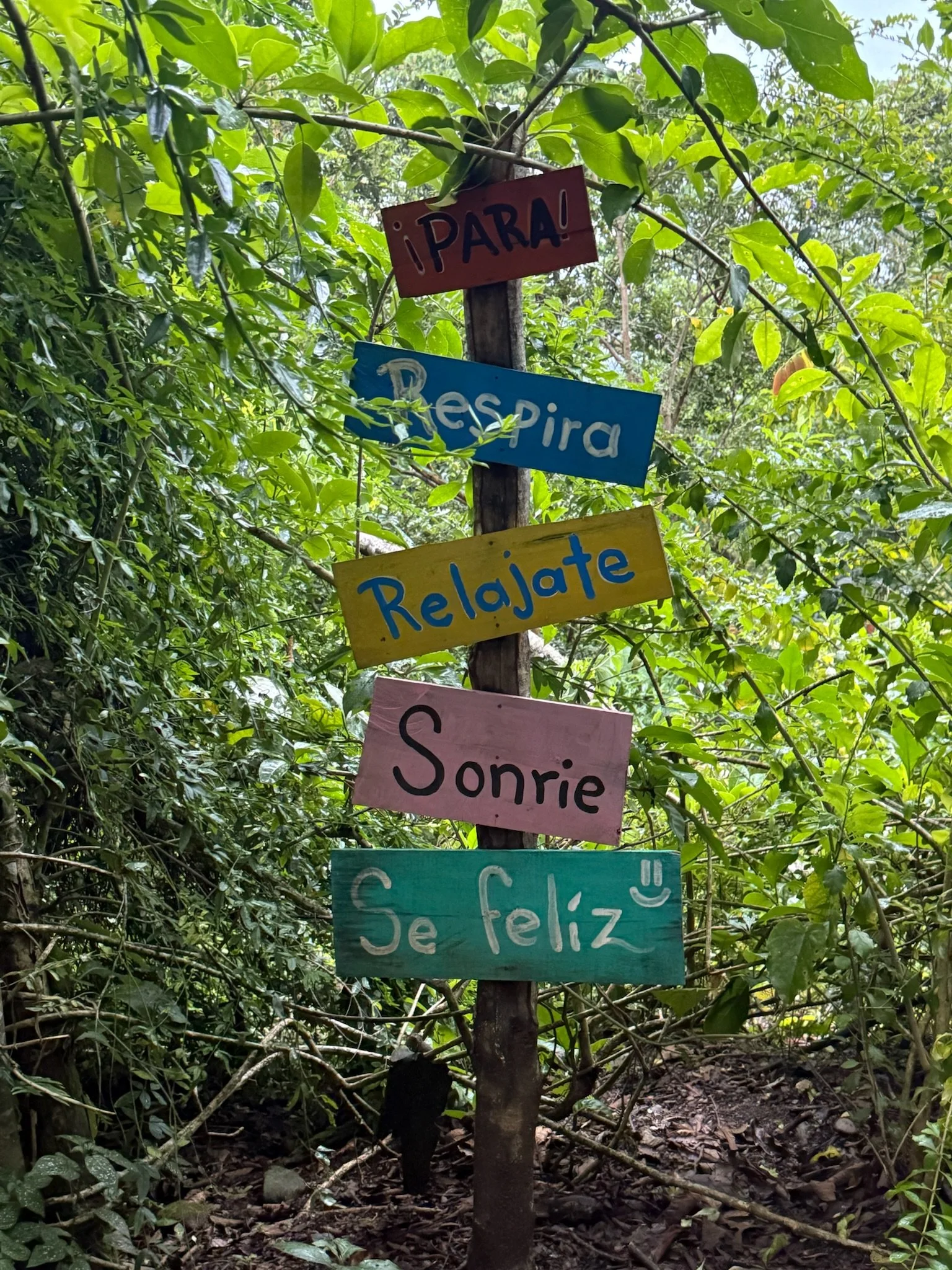
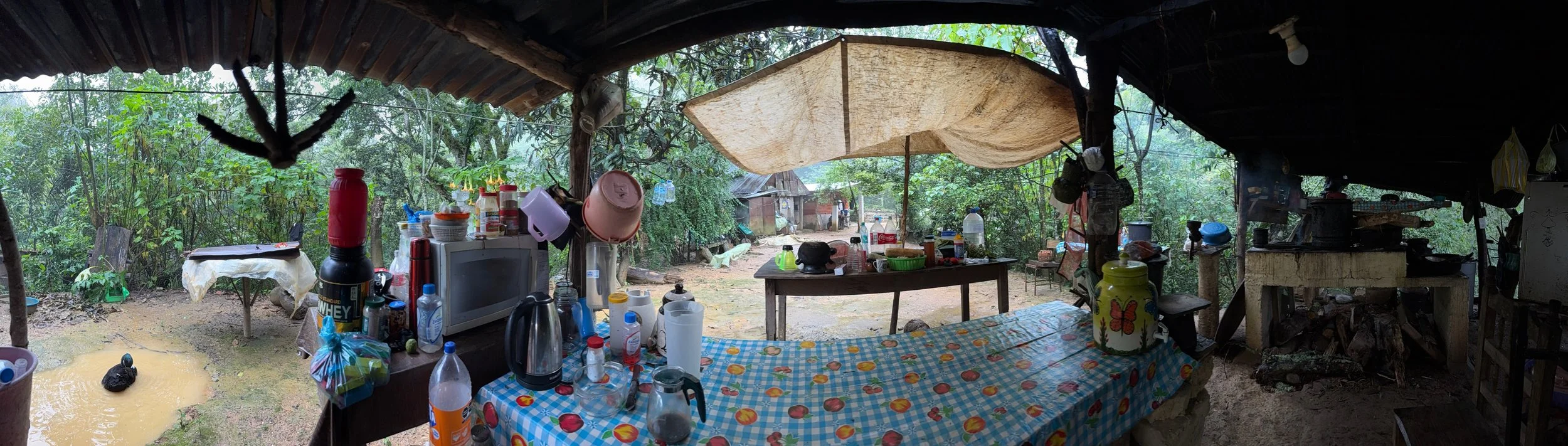
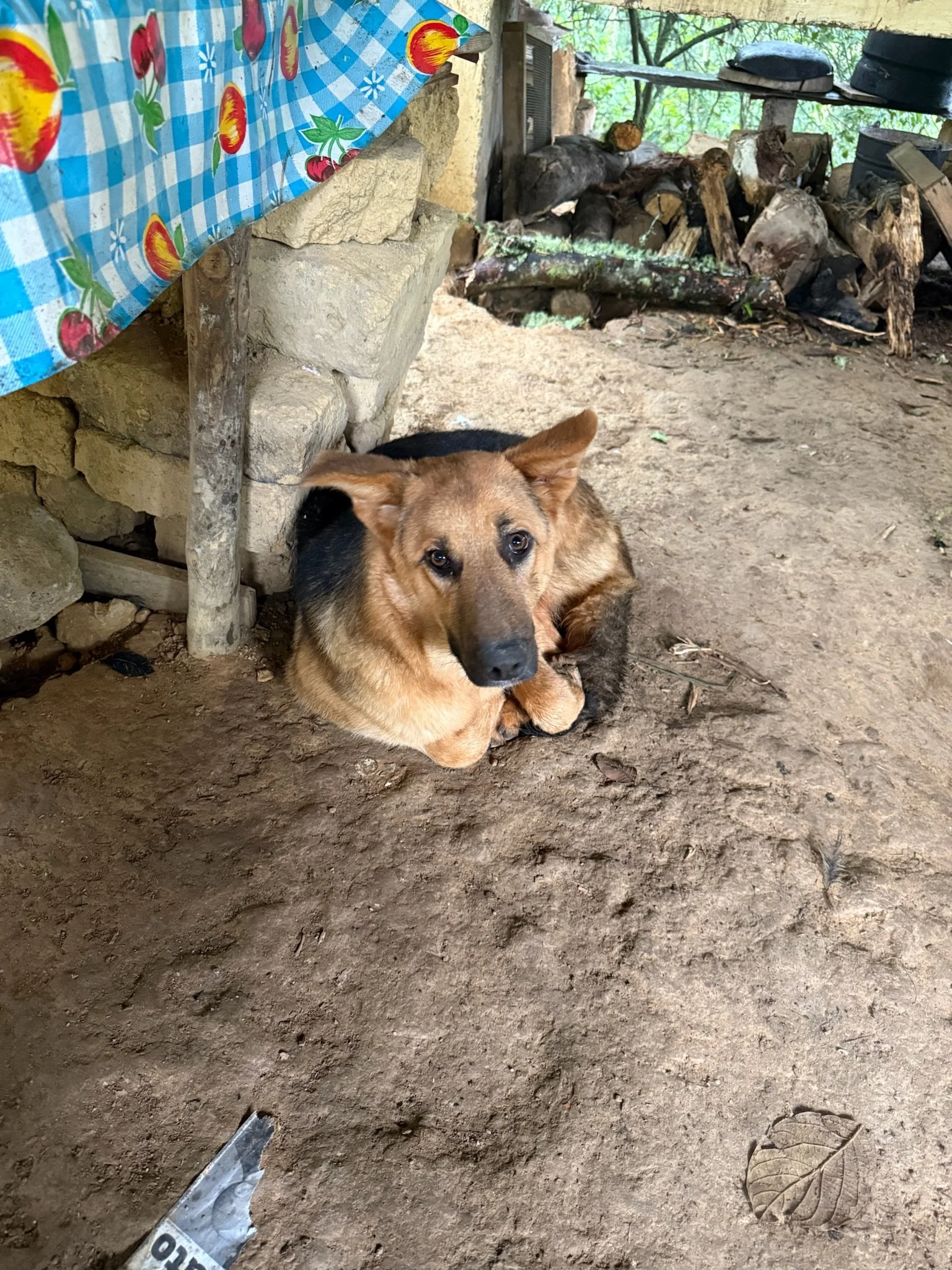
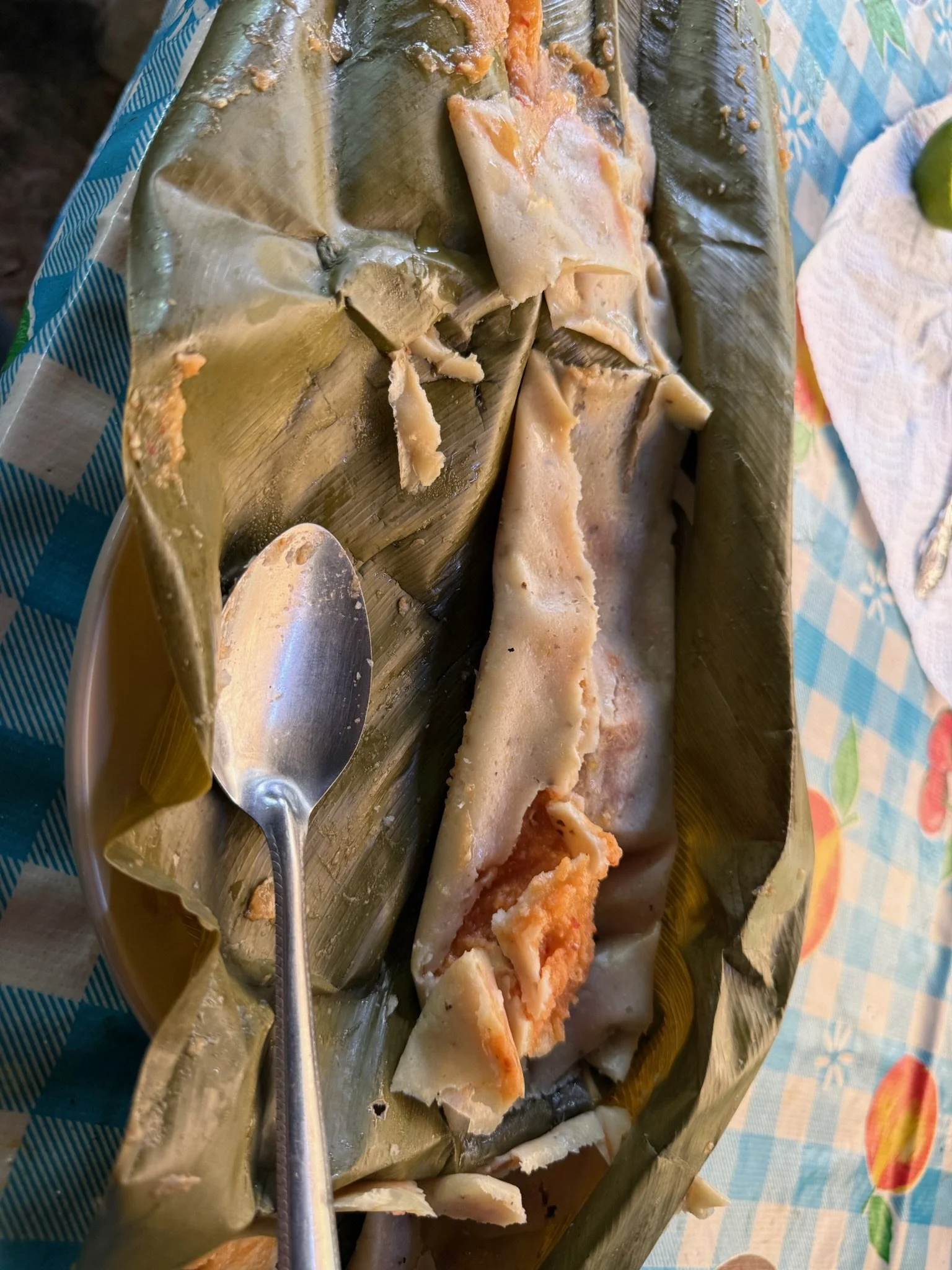
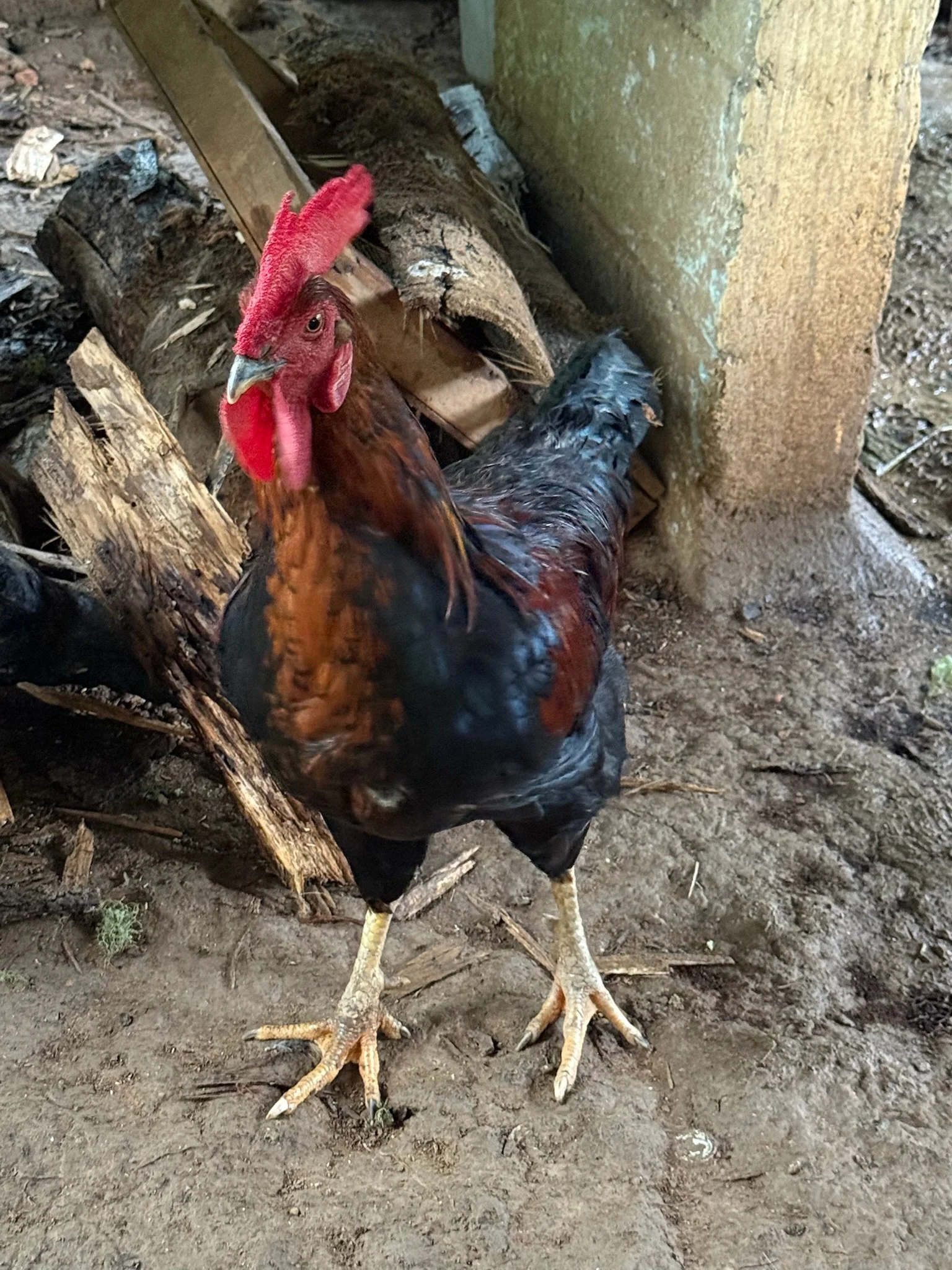
The ranch was modest, alive. A friendly dog greeted us, followed by chickens, a rooster, and a duck. Under a tin roof, the kitchen and dining area buzzed quietly with activity, neighbors arrived bearing freshly made tamales de carnitas en salsa roja—divine. We shared food and stories. As dusk fell, the father came forward with his guitar. He played for me, sang traditional Oaxacan songs. It was tender and grounding. The perfect end to a long journey.
That night, the rain pounded the roof of my cabaña like a lullaby. I slept like stone.