Cobá
This morning, early, we hit the road.
It was our last day in the Tulum/Francisco Uh May area, and there was one thing I still wanted to see before leaving: the highest Maya pyramid in the peninsula.
But first, coffee.
There are rules to these things.
Then we headed south, the open road stretching ahead of us, dotted with tiny pueblos that seemed to appear and disappear almost as quickly as we passed them. Their main streets were lined with artesanía, little dining rooms and gift shops, although today, being Sunday, everything seemed to move at half speed.
Actually, slower than that.
There were few tourists, if any. Most shops were closed for the day of rest, and the economy seemed to mirror the demeanor of the people themselves: unhurried, quiet, surrendered to the oppressive weight of the hot, humid air. People walked without purpose or hurry, as though time itself had decided to take Sunday off.
Then, passing one of the closed shops, something caught my eye.
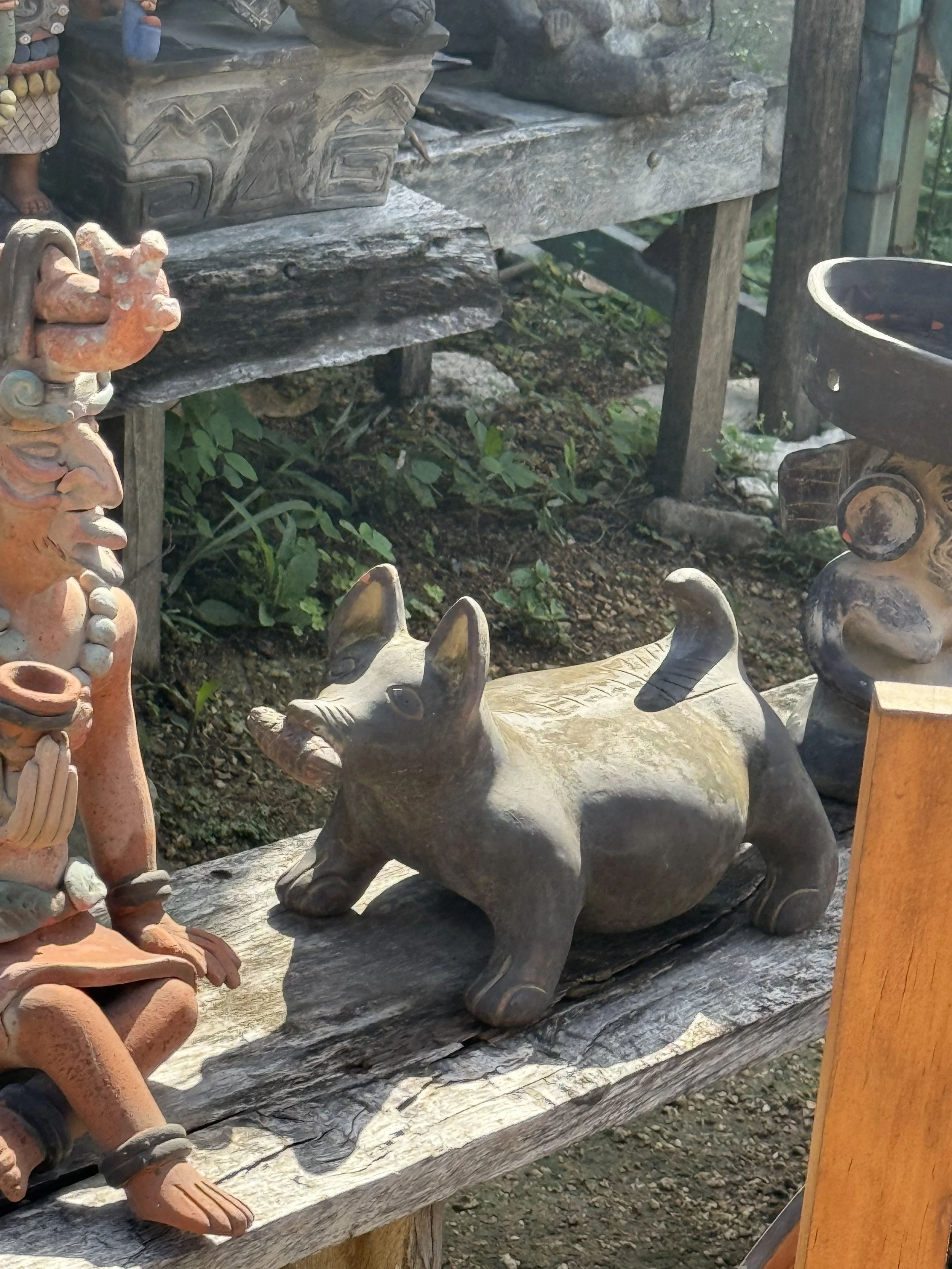
A little sculpture made of barro. A dog, with a corn cob held between its teeth, its little backside slightly lifted as though it were about to spring into motion.
I needed to know more.
We stopped.
He was lovely.
I wondered whether I might find one in Cobá, although anything displayed there for tourists would probably come with a considerably less charming price tag.
Back onto the road we went.
Soon the landscape changed and we reached the archaeological zone of Cobá, one of the great Maya cities of the northern lowlands. The ancient city grew around five lagoons and, at its height, covered roughly 70 square kilometres and may have been home to as many as 50,000 people. What makes Cobá particularly fascinating is its extraordinary network of sacbéob, the raised stone roads known as “white roads,” which connected different parts of the city and linked Cobá to distant settlements. One of them stretches more than 100 kilometres toward Yaxuná, near Chichén Itzá. (INAH)
This was not simply a collection of temples in the jungle.
Cobá was a centre of political and economic power.
And today, instead of walking the enormous site under the already-rising sun, we climbed onto a tricycle with a conductor and let him do the work.
Our first destination was the great pyramid, Nohoch Mul.
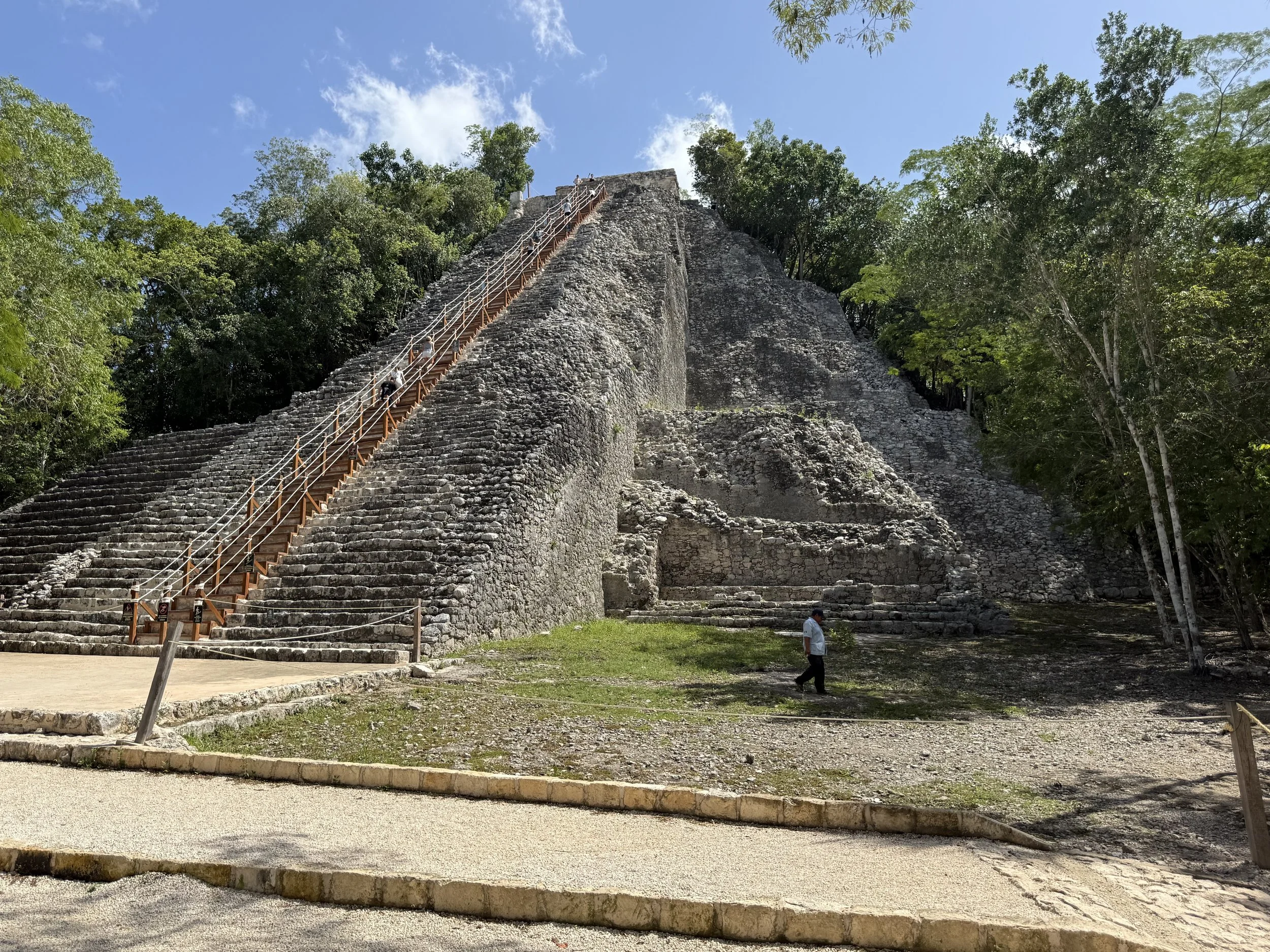
The name means “great mound,” and the name is fitting. Rising 42 metres above the jungle floor, it is the tallest structure at Cobá and the highest pyramid in the northern Maya area. The city itself reached its greatest influence between roughly the fourth and eighth centuries, when its rulers competed politically with other powerful Maya centres, including Tikal and Calakmul. (INAH)
And then there were the ball courts.
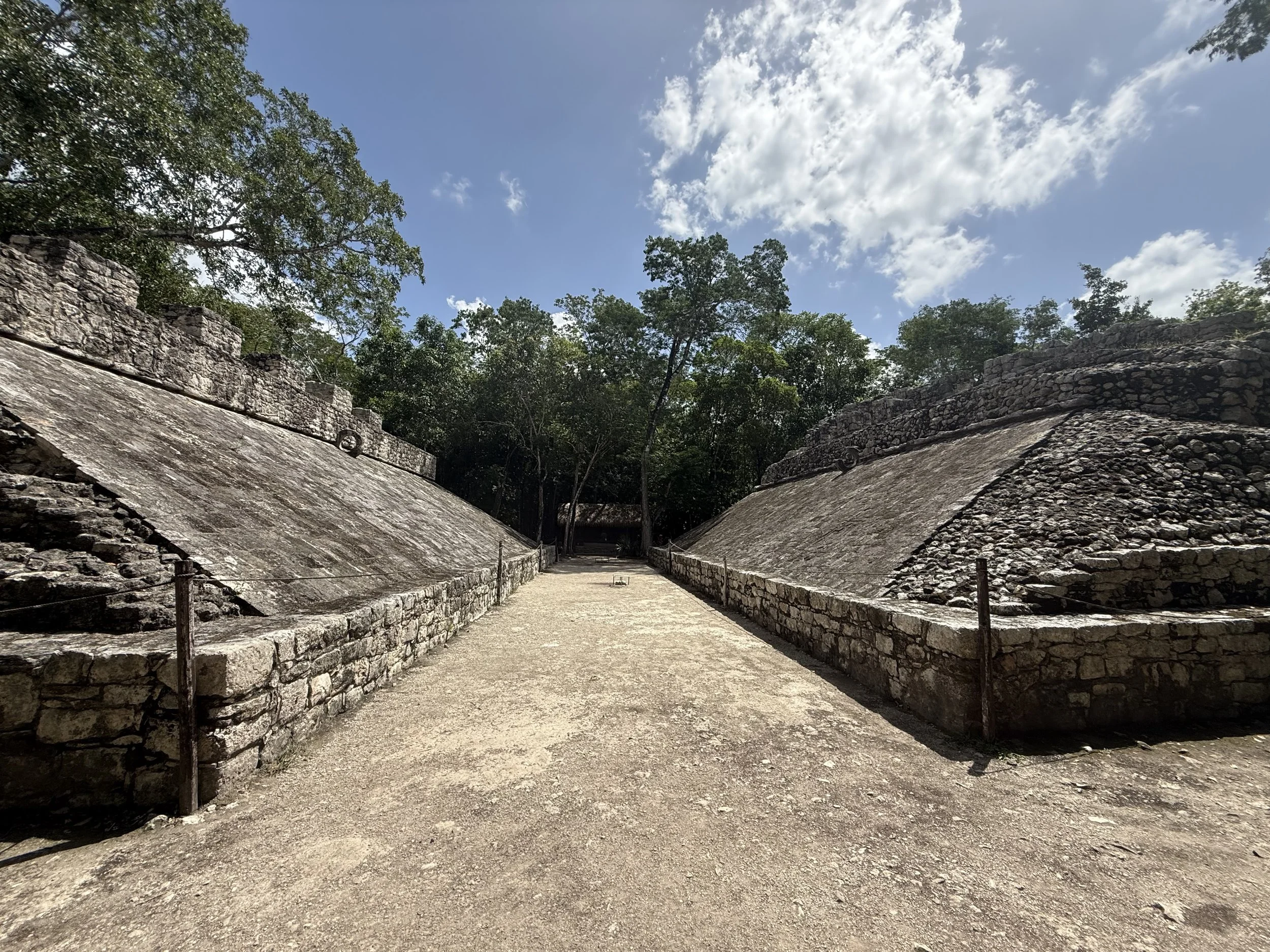
Cobá has two, and the Maya ballgame was far more than a game played for entertainment. It carried political, ceremonial and symbolic importance, and the courts themselves were part of the architecture of power. Our guide told us that during times of conflict, Maya leaders could sometimes pause their negotiations to play together, burning off some of the tension before returning to the conversation.
Whether history happened exactly that way, I don’t know.
But I rather liked the idea.
Perhaps there is something to be said for settling an argument after everyone has had a chance to run around and work up a sweat.
From there, we finally reached Nohoch Mul.
The pyramid had been closed to climbers for six years while conservation work was carried out. A new wooden staircase was inaugurated in December 2025, allowing visitors to climb again while helping protect the ancient structure itself. (INAH)
So, naturally, we climbed.
Step after step.
The heat rising from the stone. The jungle surrounding us. My legs beginning to wonder whether this had really been such a good idea.
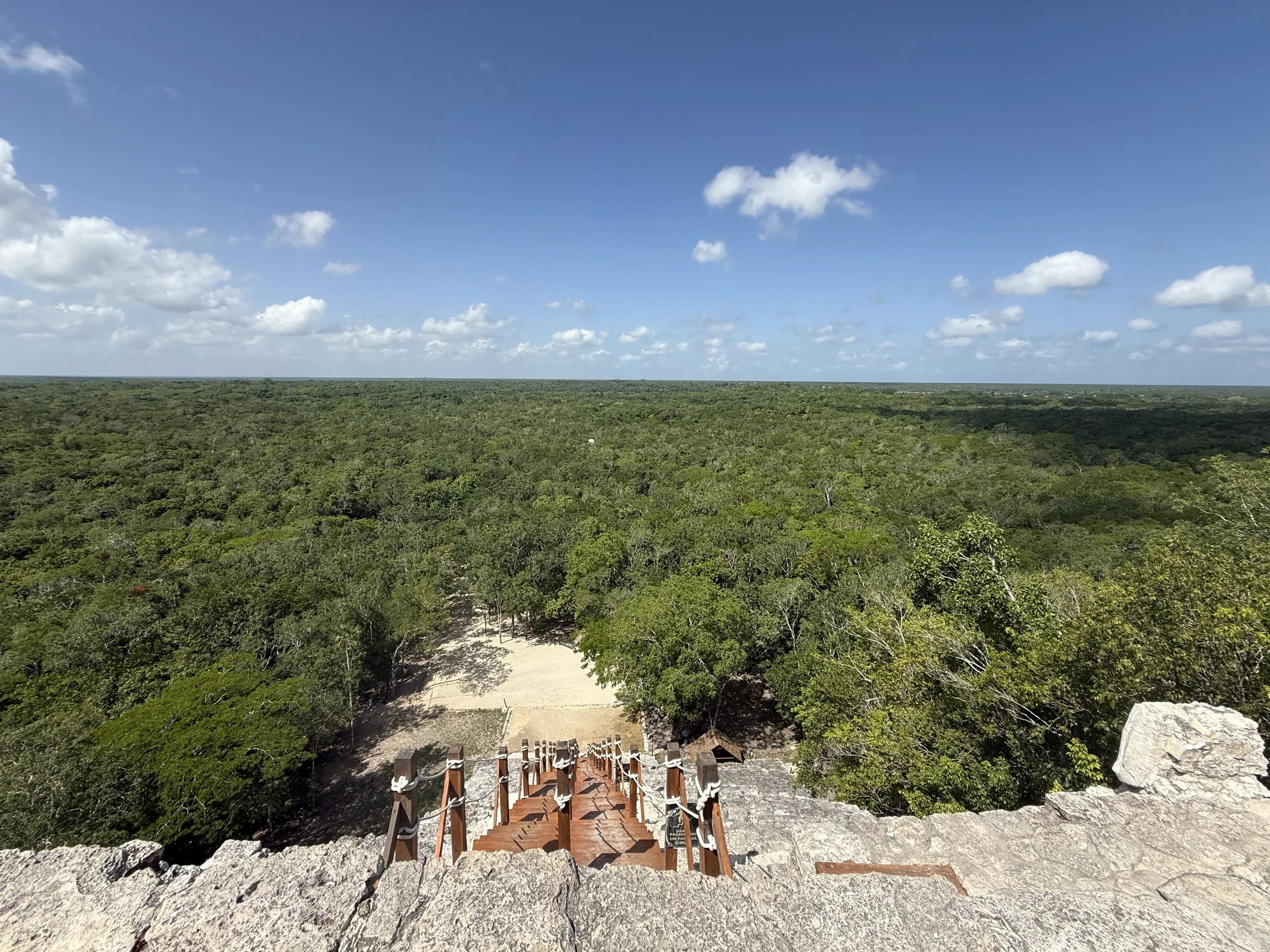
And then we reached the top.
What a sight.
The jungle did not seem to end.
It rolled outward in every direction, an enormous green carpet broken only by the occasional rise of another ancient structure. From up there, it was easier to understand what Cobá must once have been: not an isolated pyramid swallowed by vegetation, but a vast, living city connected by roads, lakes and political relationships stretching across the Maya world.
Standing there, above the canopy, I felt very small.
In the best possible way.
We climbed back down and found our tricycle friend waiting patiently for us. He took us through the rest of the site, pedalling beneath the trees while the jungle whispered around us and the heat settled heavily on our shoulders.
Eventually, we returned to the parking area.
I had been told that I could withdraw some cash at one of the little shops to pay our cyclist. And there, tucked among the souvenirs, I spotted him.
One of the sculptures I had seen earlier.
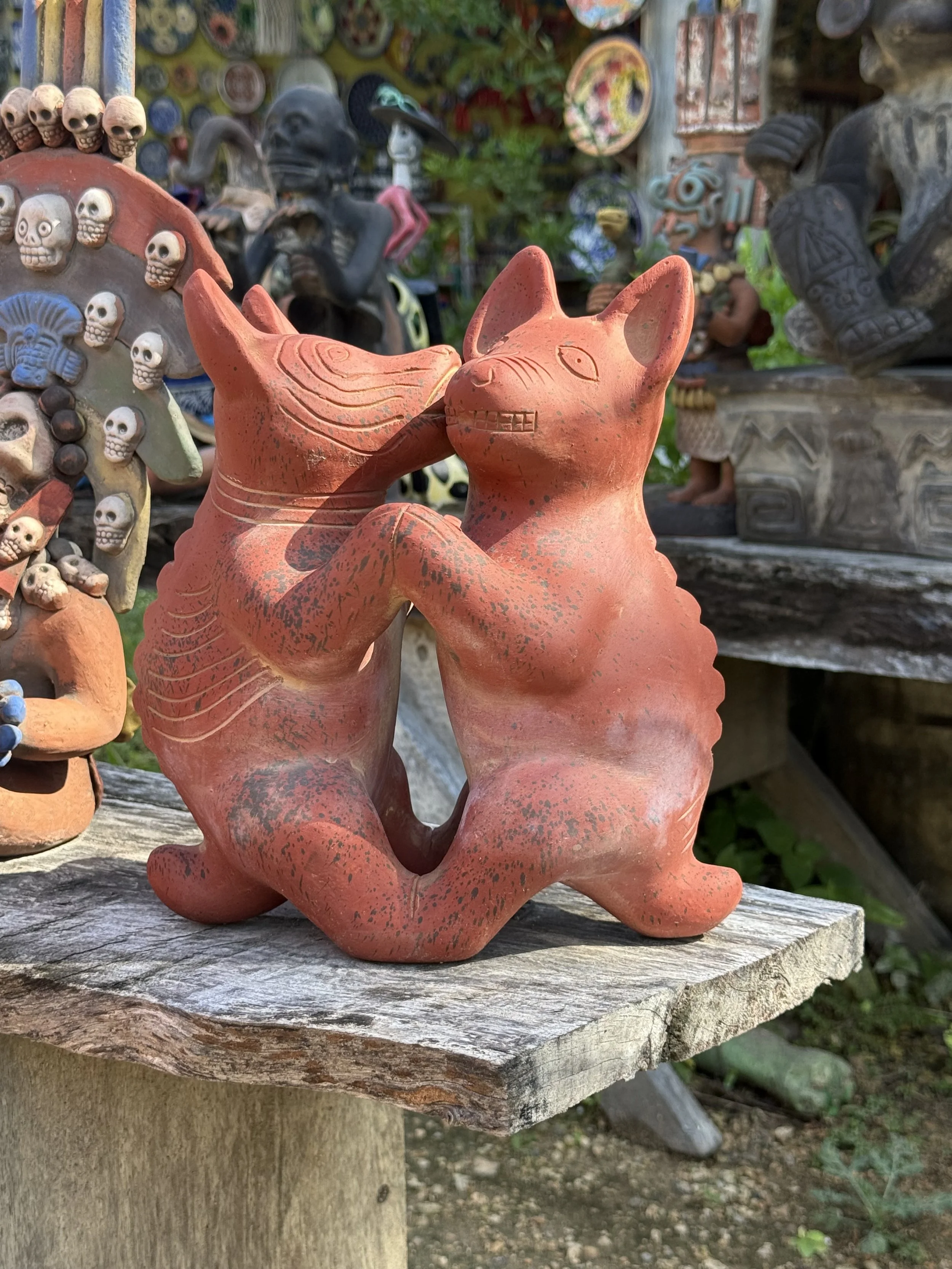
Two dogs.
Their bodies positioned almost as though they were dancing together.
We were given several different interpretations of what the sculpture represented. Naturally, I chose the one I liked best.
To me, it became the story of a young dog leading an old dog to dinner.
And somehow, after a morning spent wandering through a 1,300-year-old Maya city, climbing a 42-metre pyramid and travelling along ancient roads through the jungle, that seemed like the perfect little souvenir of Cobá.
Not history carved in stone.
A story carried home in barro.