The actual road trip
The last week has been filled with wonders for all the senses. I have been so busy taking it all in that I have barely managed to keep notes, scribbling little fragments on a post-it I called “seeds for later.” So the next posts may not necessarily follow a chronological order, but they will carry the same thread, the same feeling, the same vibe.
To situate you, my plane landed in Cancún. John, the driver, picked me up and off we went, hitting the highway toward Akumal. About halfway there, we stopped in Puerto Morelos for groceries.
I have to pause here and talk about Puerto Morelos.
This little town was the setting of my first love affair with Mexico. It was here that I first began to discover the heartbeat of its people, and where I learned to look at Mexican food differently. Not simply as something delicious on a plate, but as a language made of ingredients, history, hands and patience. It was also where I first began to cook and understand some of the ingredients so deeply rooted in the traditional cuisine of Mexico.
Puerto Morelos was a tiny fishing village back then. The air carried the unmistakable scent of the sea, mixed with smoke from little kitchens and the earthy aromas of whatever was simmering nearby. It felt wonderfully unpolished.
On the outskirts were the neighborhoods of many migrants who had come from Chiapas, Guatemala and so many other places, drawn by the promise of work in the growing tourism industry. Their homes were often pieced together from sheets of metal and whatever materials could be found or afforded, slowly becoming more permanent as a little money was saved and another piece was added.
I remember thinking about the extraordinary resilience contained in those humble homes. The local government understood the reality of these communities and had made sure that they received electricity and running water. There was something deeply human about that decision. People had come from somewhere else looking for a chance, and the town made room for them.
And now, years later, I was driving back to the very same Chedraui where I had once bought my first bag of sal de gusano and other wonderfully strange and exciting Mexican condiments, eager to continue my discovery of the cuisine that UNESCO would recognize as intangible cultural heritage.
In fact, there was a little Mexican cooking school in Puerto Morelos that I attended on that fateful first trip. I was still learning how to decipher the smells, textures and flavours that would eventually become so familiar to me: the sharpness of lime, the warmth of toasted chiles, the smokiness of something just kissed by the comal, the earthy saltiness of ingredients I had never encountered before.
Back then, there was even a micheledaría right on the shoulder of the Chedraui. I have an old photograph of the building somewhere, tucked away among the thousands of images that have accumulated over the years.
And then, on this trip, driving back toward that familiar supermarket, something very simple happened.
As we came off the highway, the familiar facade appeared.
I smiled.
Not because a supermarket is particularly exciting, but because for a brief moment, two versions of me met in the same place. The woman who had first arrived here, curious and hungry to understand this country, and the woman driving through Mexico again, years later, with a much deeper love for its people, its food and all the beautiful things I still have left to discover.
Puerto Morelos was waiting there, quietly familiar, like a page I had once dog-eared and forgotten.
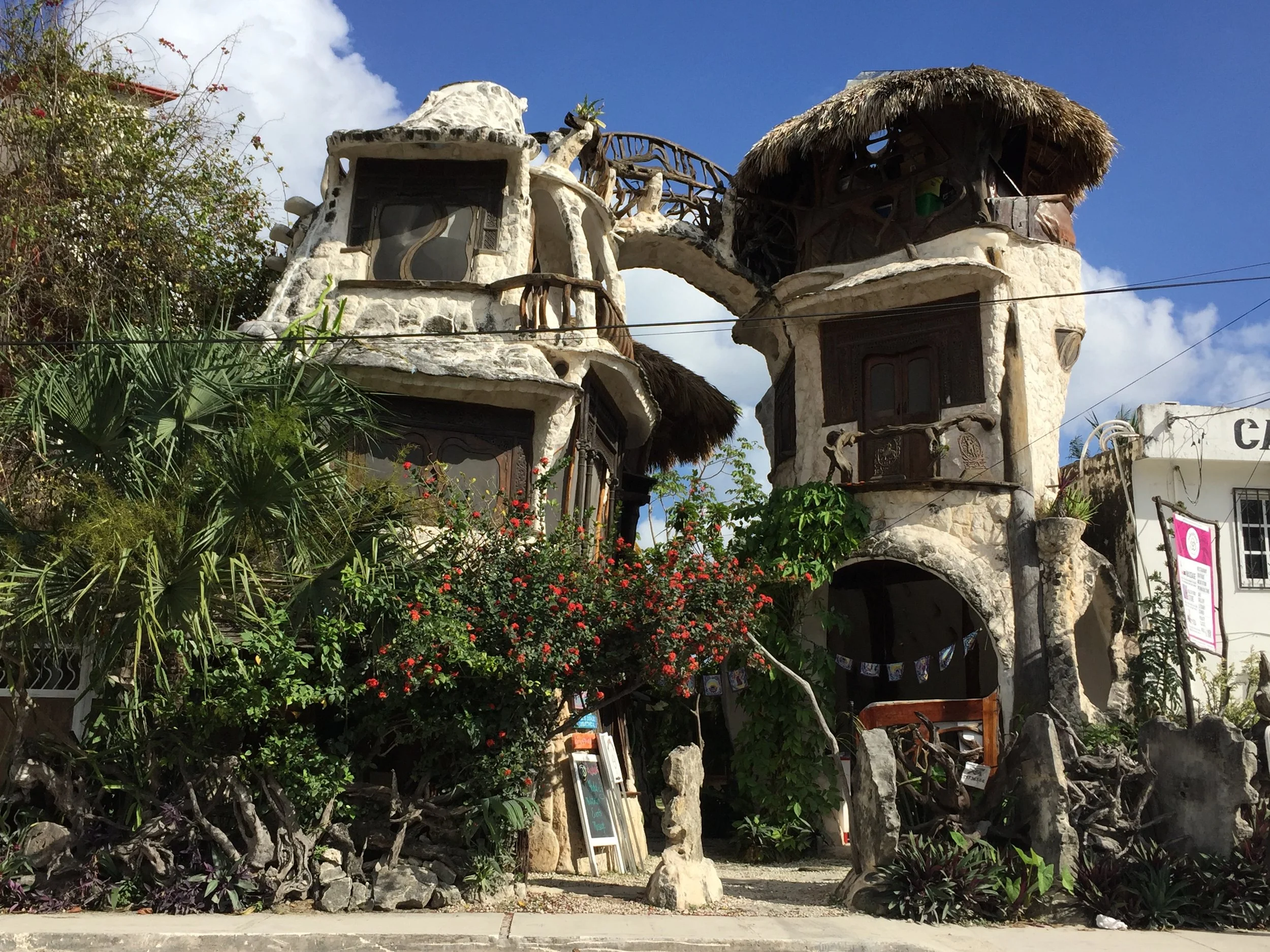
I remember a very interesting structure at the entrance of the town, back then it served as an art and wellness centre. This house reminds me of the pond with the pet crocodile right off the sidewalk.
And I was very happy to find it again. ❤️
With the car now full of groceries, we got back on the highway for the short drive to the first house. It was already late and completely dark by the time we arrived, and somehow no one seemed to know exactly where the specific unit was located. A small adventure for another time.
This was where I was supposed to rest after the temazcal in the Tres Reyes community.
From there, we often wandered into Tulum. Coffee, amazing tacos, more groceries. Nothing particularly planned. Just following the appetite of the day.
One evening, sirloin steak went onto the grill, accompanied by a fresh salad. Another morning, an omelet à la mexicana, the tomatoes, onions and chiles sizzling together in the pan, filling the kitchen with that unmistakable smell of breakfast in Mexico.
John loves food as much as I do, which makes him a rather excellent travelling companion. He told me about a little taquería in Tulum that he swore was worth getting up for.
Honario.
So, naturally, we went.
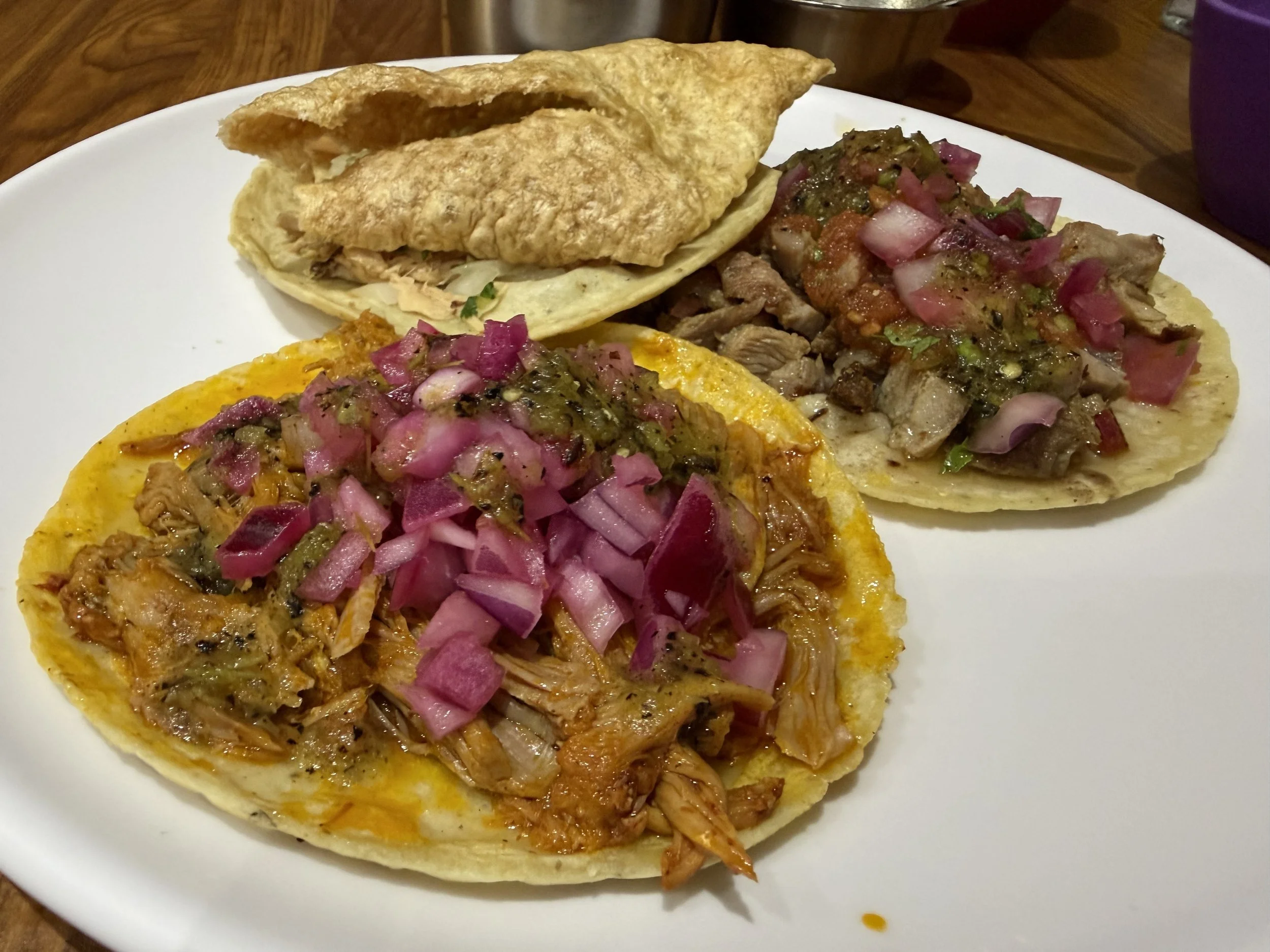
Tacos de lechón and cochinita pibil. The meat was so tender it seemed to surrender the moment you bit into it, rich with achiote, smoke and spices, the flavours unfolding one after another. The kind of taco that requires a brief silence because talking would be an unnecessary interruption.
And then, because apparently the universe knows exactly how to tempt me, we were walking through town one day when we came across a restaurant serving pulpo.
You know me.
I dragged John in for lunch.
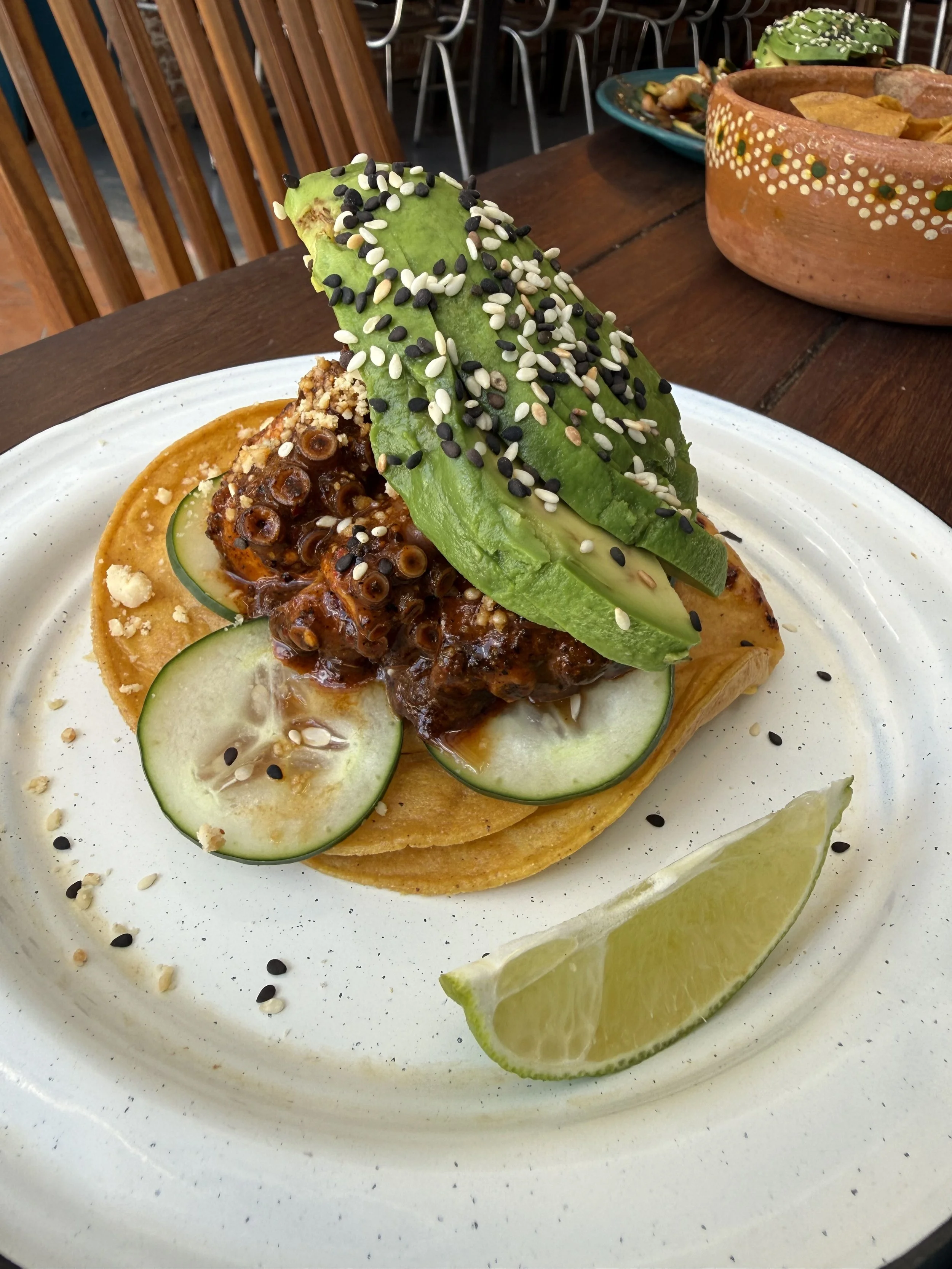
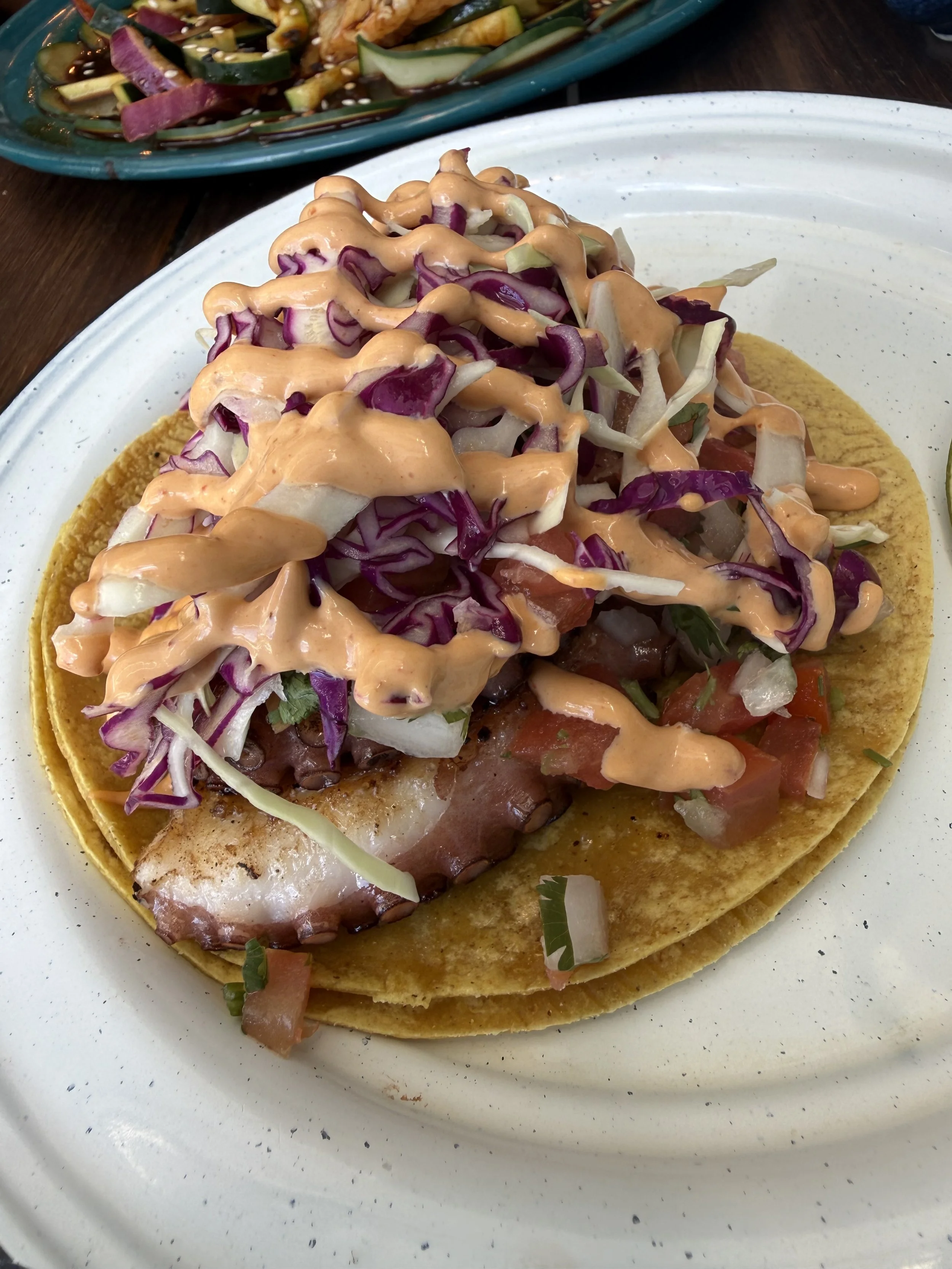
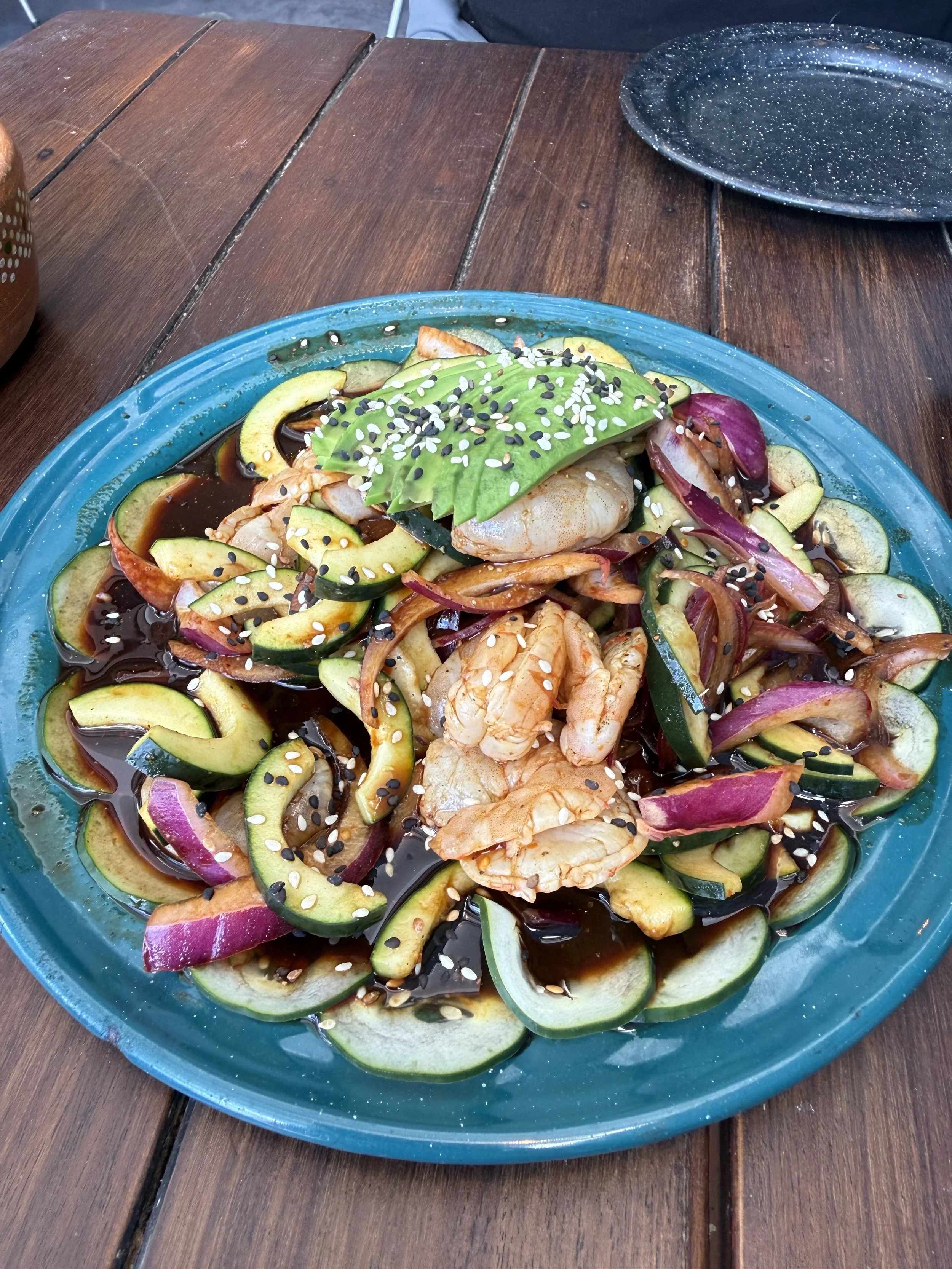
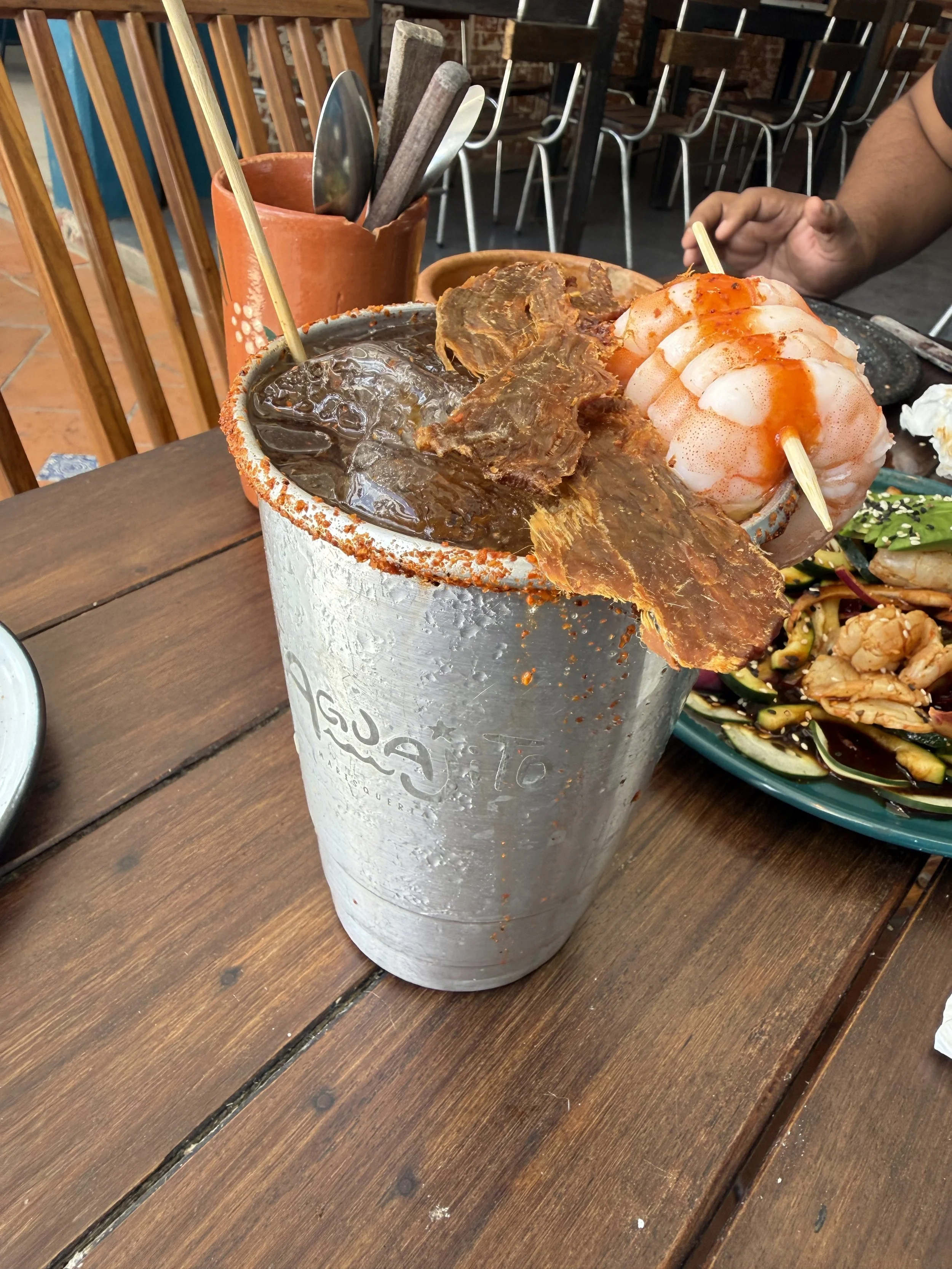
Aguachile Barba Negra, tacos de pulpo and an ojo rojo michelada loaded with cecina and shrimp. The ceviche bright and sharp, the octopus tender, the michelada spicy and briny, with enough texture and salt to make every sip interesting.
I have to say, rather surprisingly, I am not eating nearly as often on this trip as I normally would. Perhaps it is the heat, the constant movement, the hours spent wandering and exploring. Or perhaps it is simply that when the food is this satisfying, a few extraordinary bites can carry you much further than an ordinary meal ever could.
And then we moved on.
Francisco Uh May and Macario Gómez are two tiny communities sitting almost side by side. There is no grand transition announcing that you have left one pueblo and entered the next. Just a sign with the name of the town, quietly planted beside the road.
That is it.
We had arrived in Francisco Uh May.
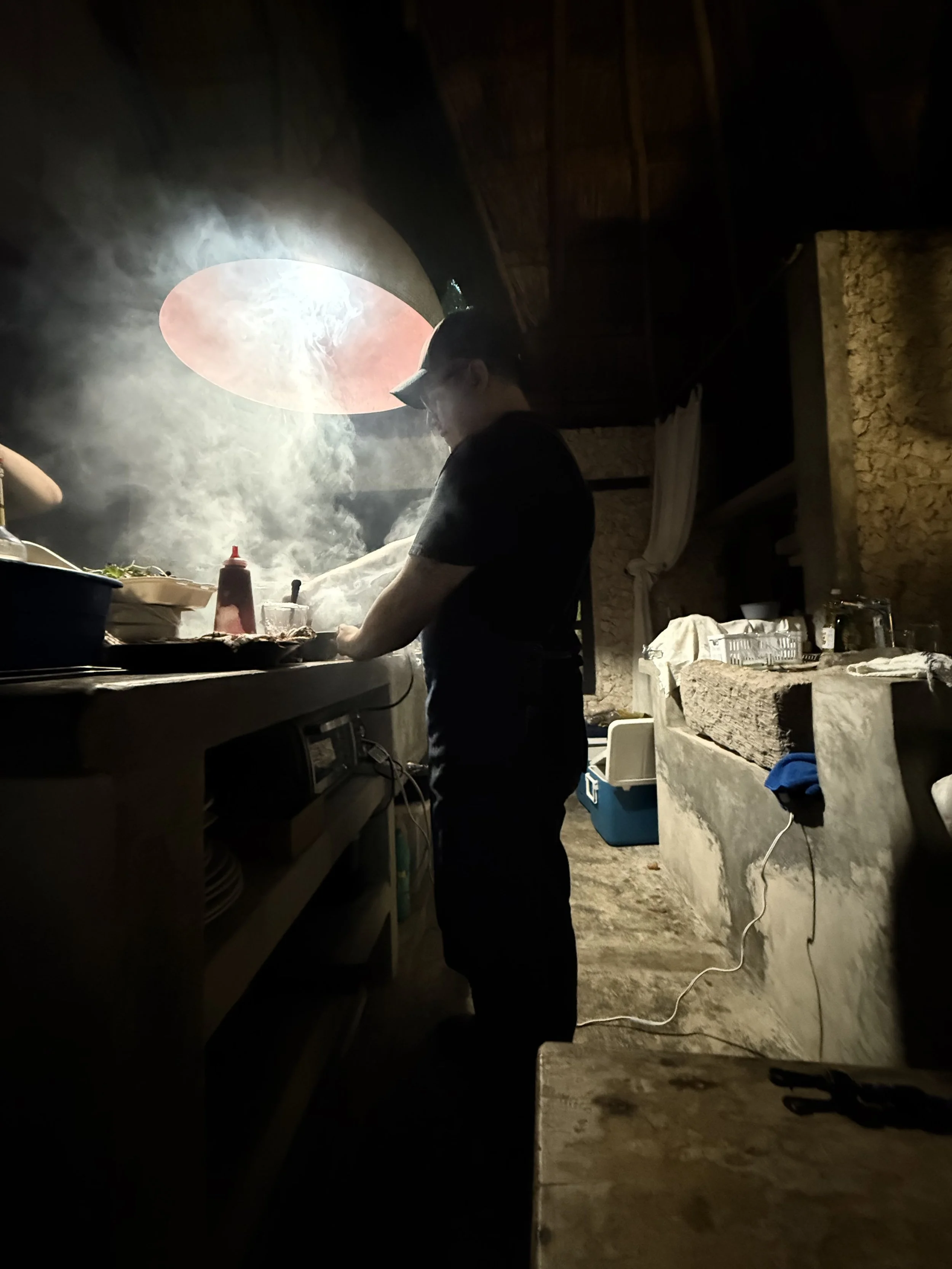
Our next house was hidden deep in the selva, with a slightly bohemian soul. An outdoor kitchen, surrounded by green, and a cool little plunge pool that became particularly seductive after spending time in the heat. It was the kind of place where you could lose track of the hour simply by sitting outside and listening to the jungle breathe. We quickly found our roomie, a large tarantula but timid as they are we never saw her again.
And then, less than five minutes away, in Macario Gómez, we discovered a little restaurant called Chaan Paal.
Chaan Paal is the work of Chef Eleazar Bonilla, whose cooking is deeply rooted in Yucatecan traditions and ancestral Maya techniques. His approach is not simply about putting traditional ingredients on a plate. There is a real intention to preserve, reinterpret and share the culinary heritage of the region, allowing the ingredients and techniques to tell their own stories.
And then I discovered that they also offered private dining experiences.
What?
A private dinner?
Eight courses?
Cocktails, aguas frescas and mezcal paired with the different services?
Well.
There was really only one possible answer.
I wanted this.
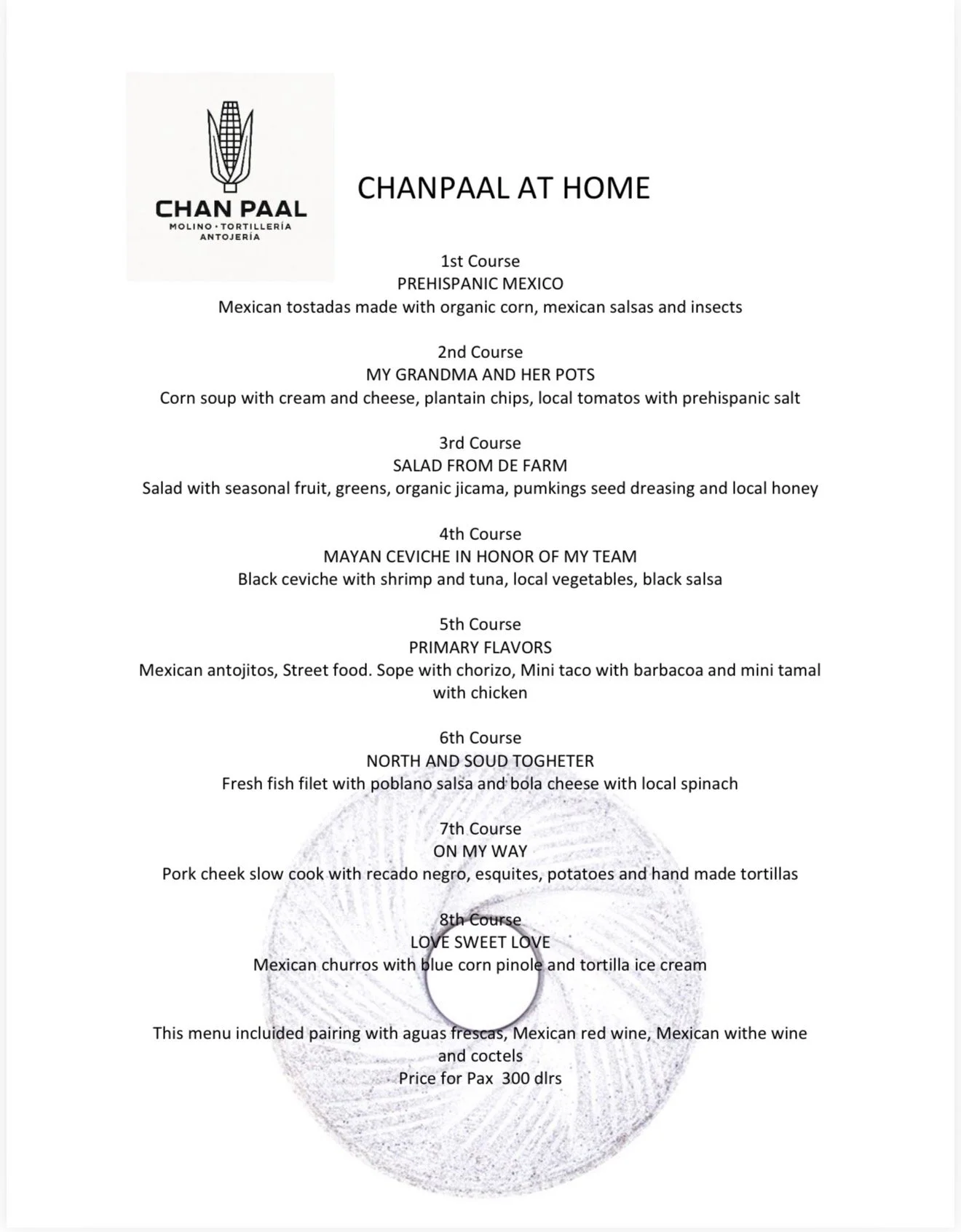
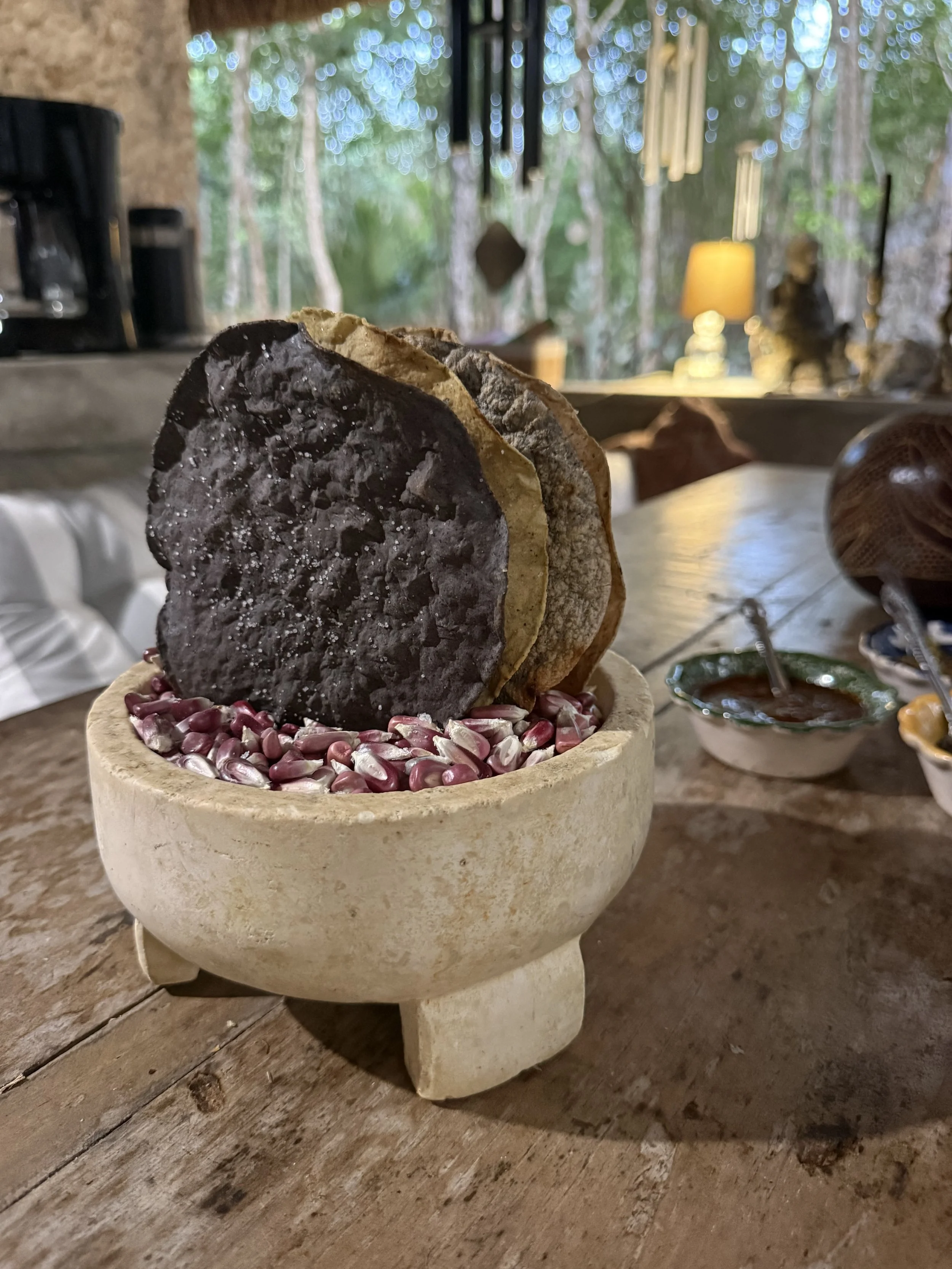
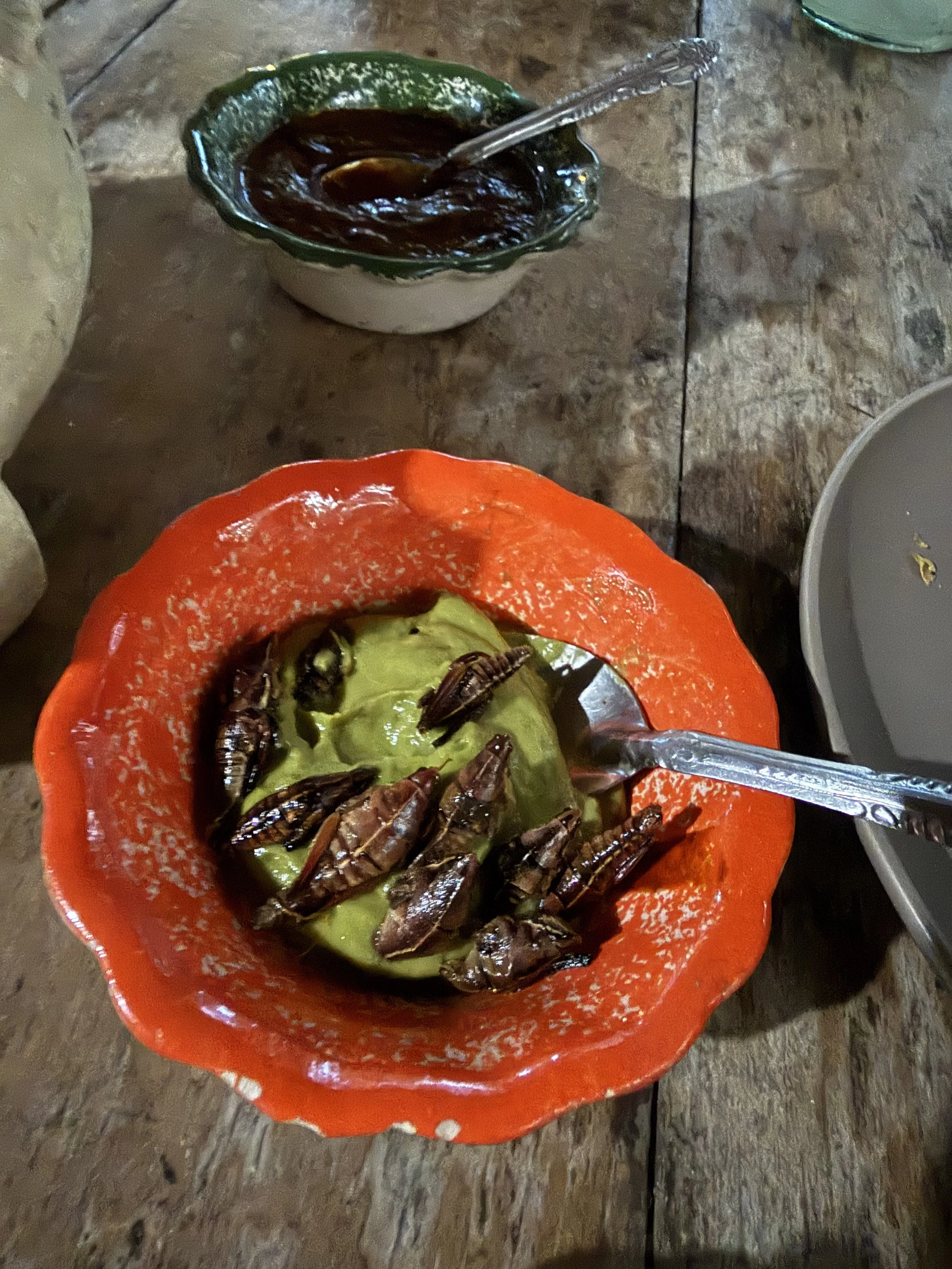
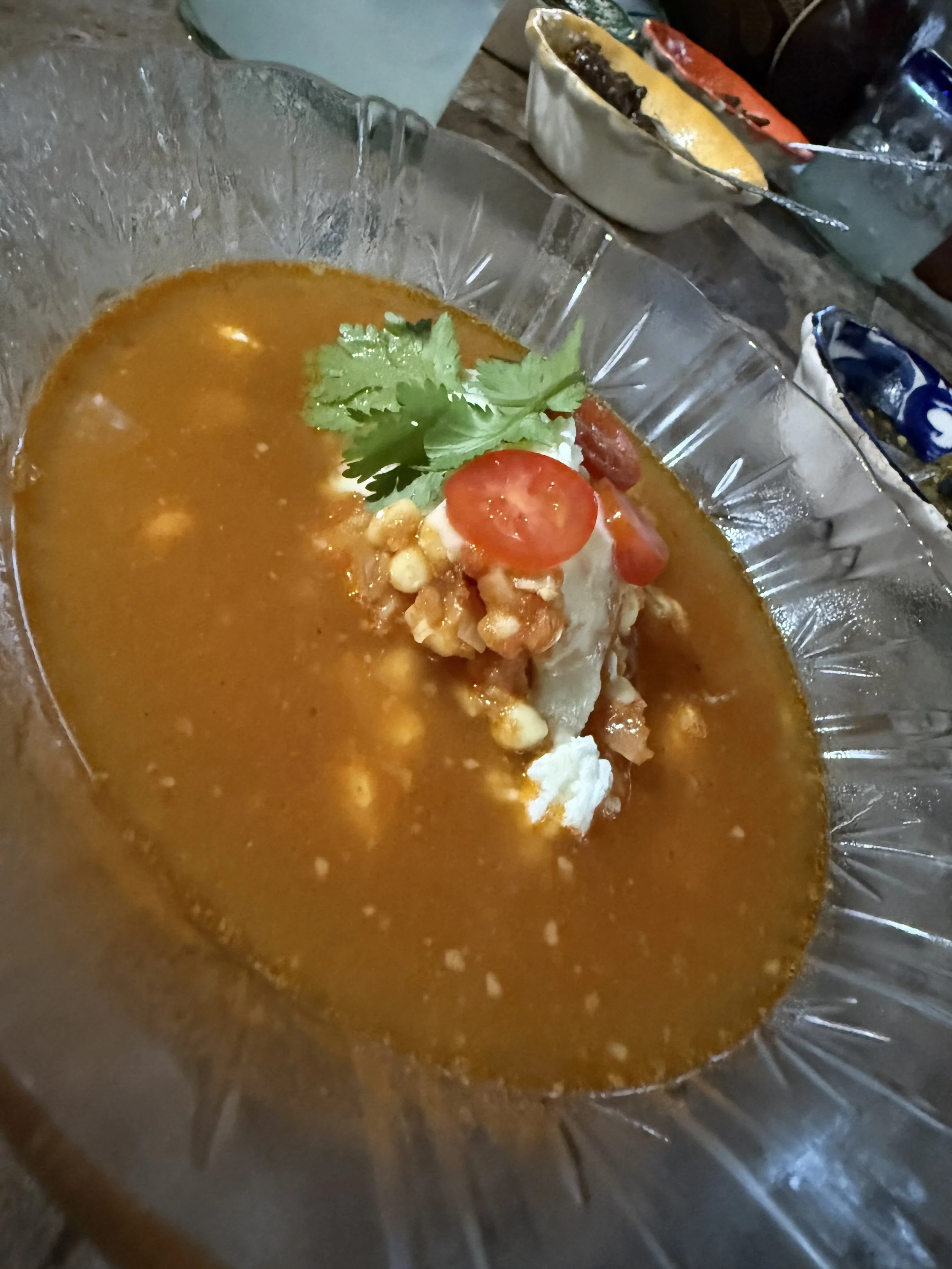
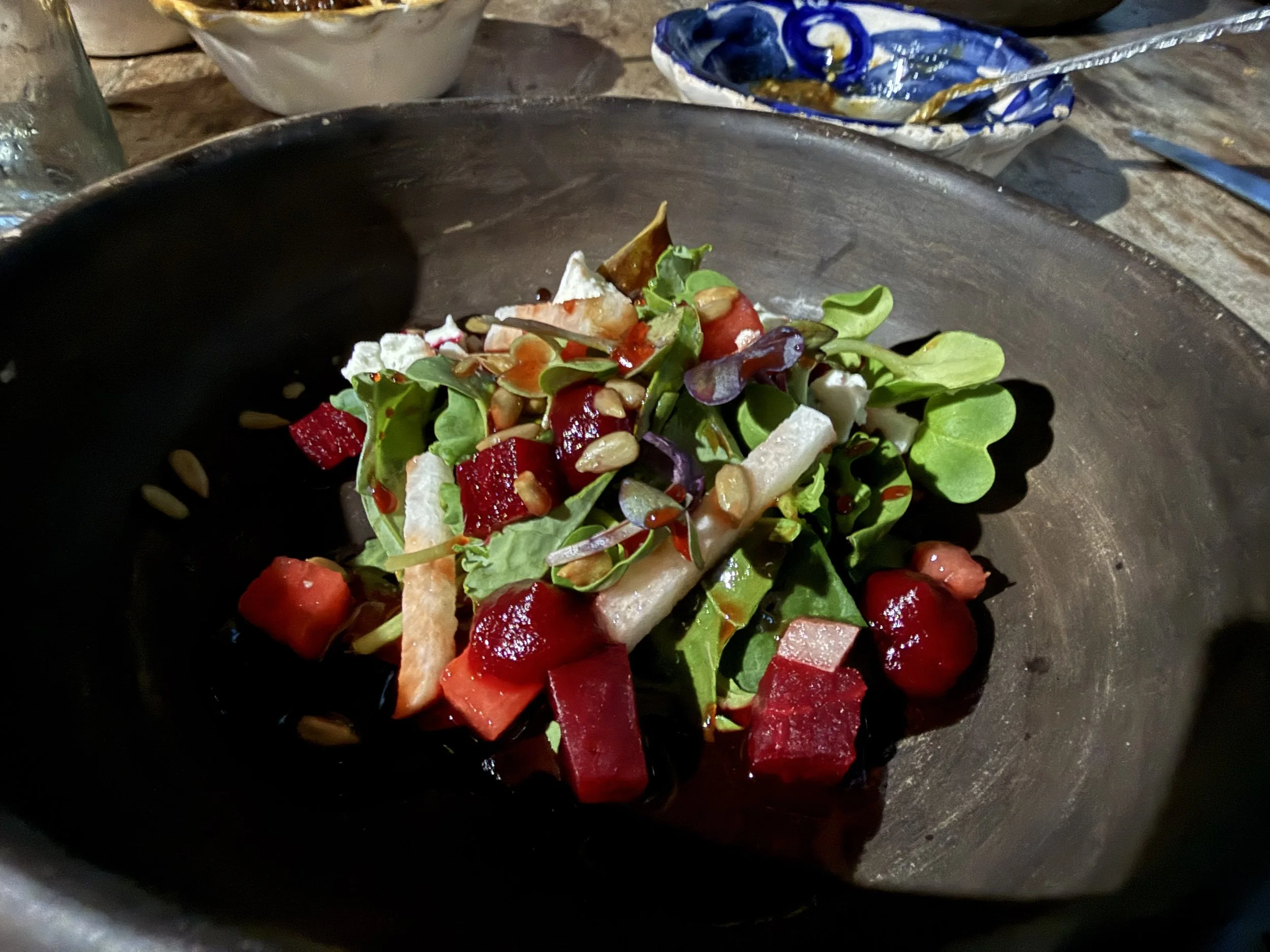
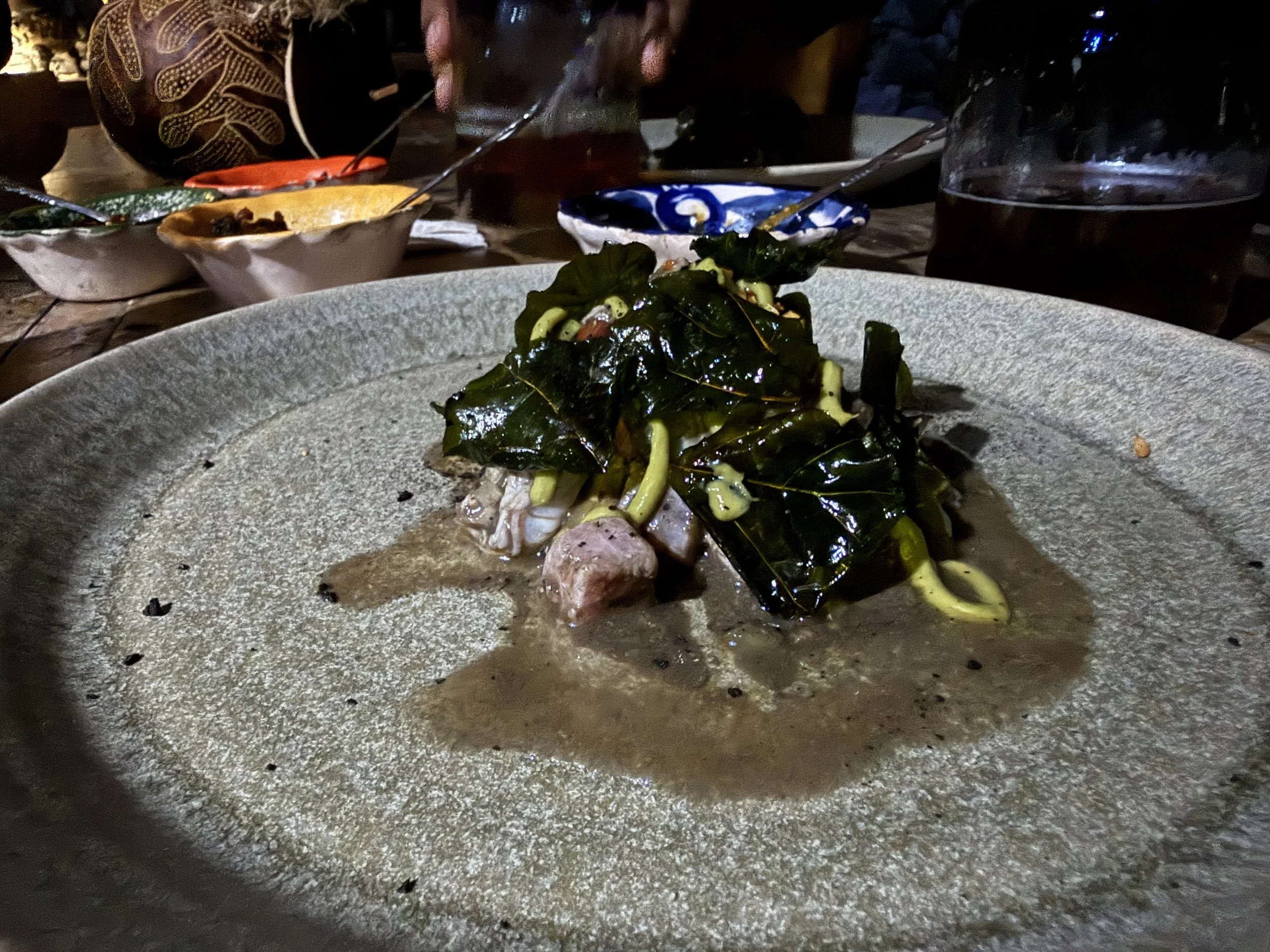
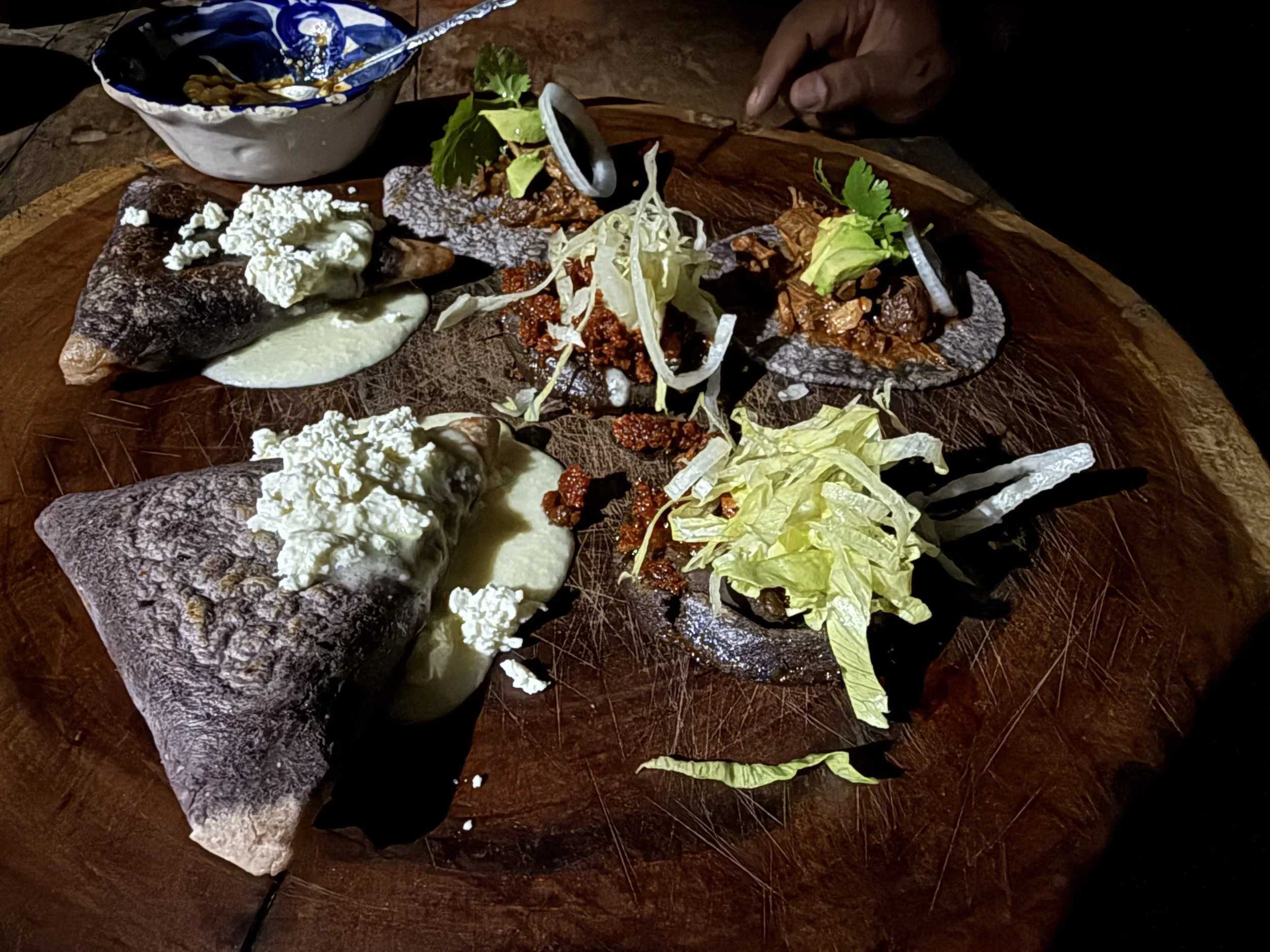
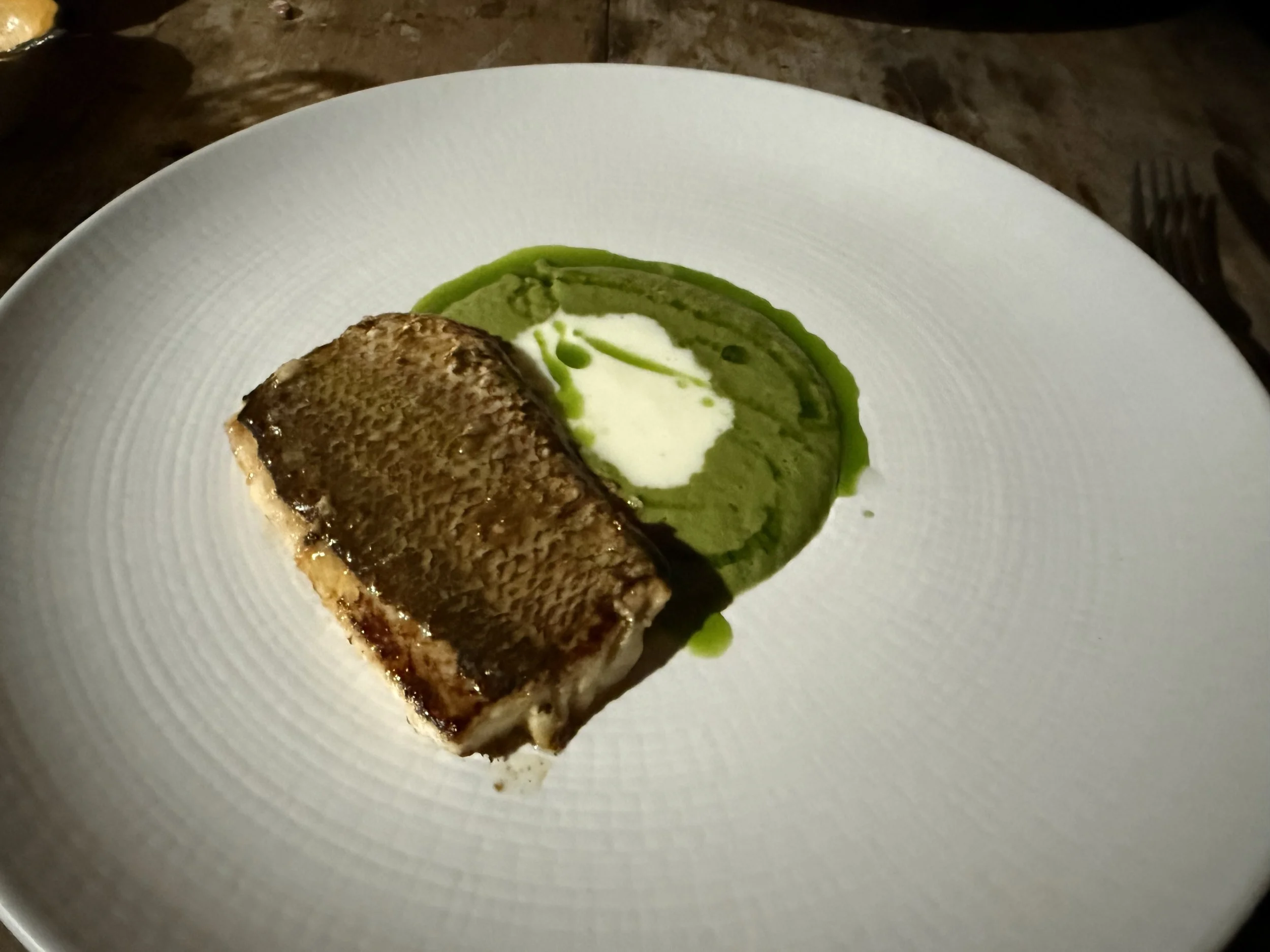
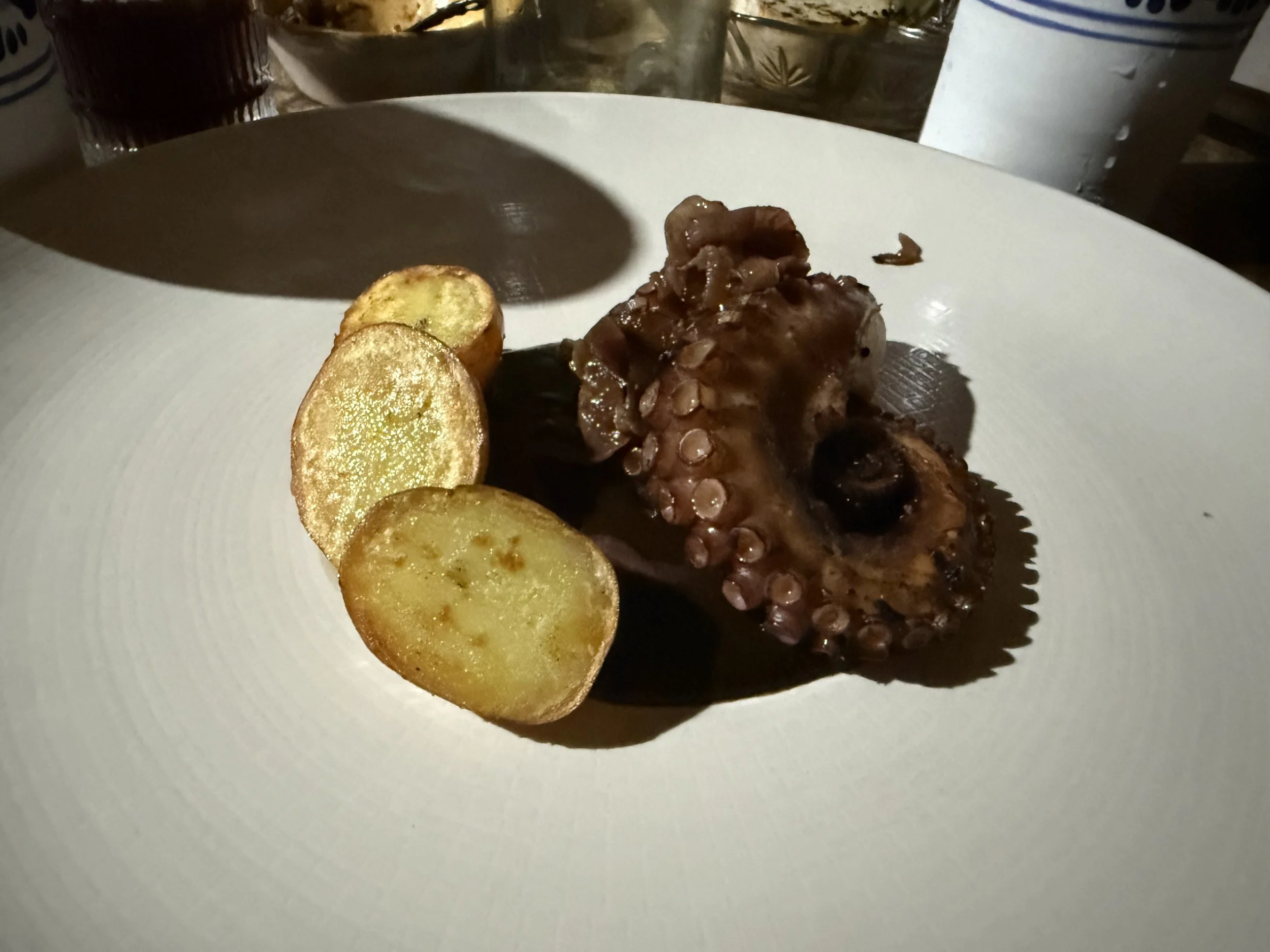
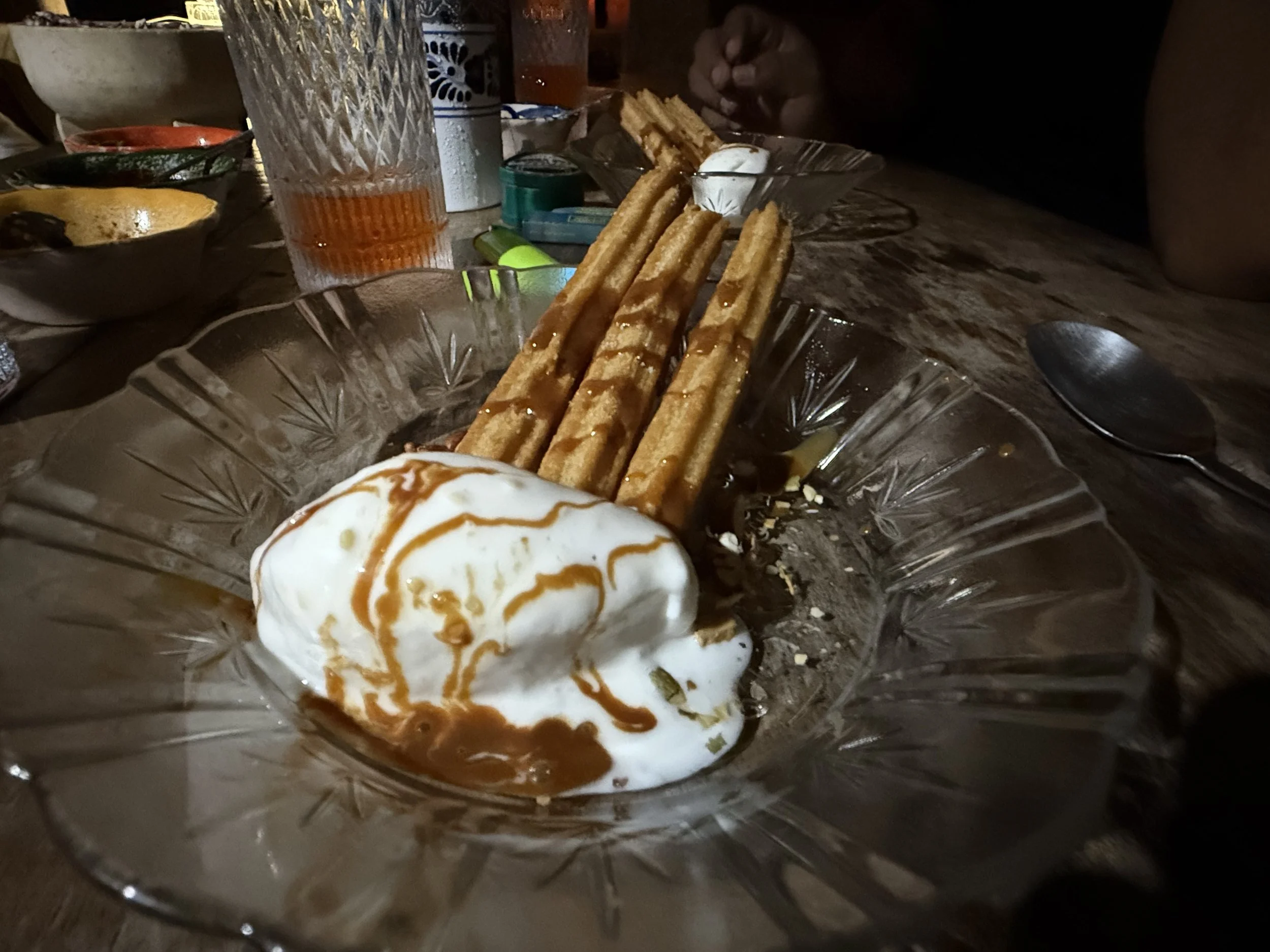
So we planned it. The menu below was modified to include the hero of this culinary story to replace the cerdo with pulpo.
What Eleazar created was not simply an eight-course dinner. He presented it almost like a book, each course becoming another chapter, another little turn of the page.
And naturally, there had to be a protagonist.
You already know who it was.
Pulpo. 🐙
Of course.