
From Harpoon to Patio
Each place I rented had a special energy, as though each one had somehow been connected to something I needed without me knowing it beforehand.
Mahahual is a special place, as I have come to understand.
It wasn’t always the Mahahual we know today. Before the cruise ships and the steady influx of tourists, this was a quaint fishing village sitting on a beautiful piece of paradise, tucked along the Caribbean coast. Follow the coastline for about an hour south and I would eventually cross the border into Belize.
But on this side of the Mexican border, mangroves, interrupted by very few constructions, stretch toward a tiny town centre. Two parallel streets run along the beach, with a boardwalk lined with beach clubs, each advertising mariscos and cold drinks. Everything is priced in USD. Tiny stalls sell artisanal souvenirs, half of which seem to have been made in China. Then there are the tour operators, many offering almost identical packages for snorkeling, fishing and deep-sea diving.
Their calendars are booked solid from Monday to Friday, catering mostly to the cruise passengers.
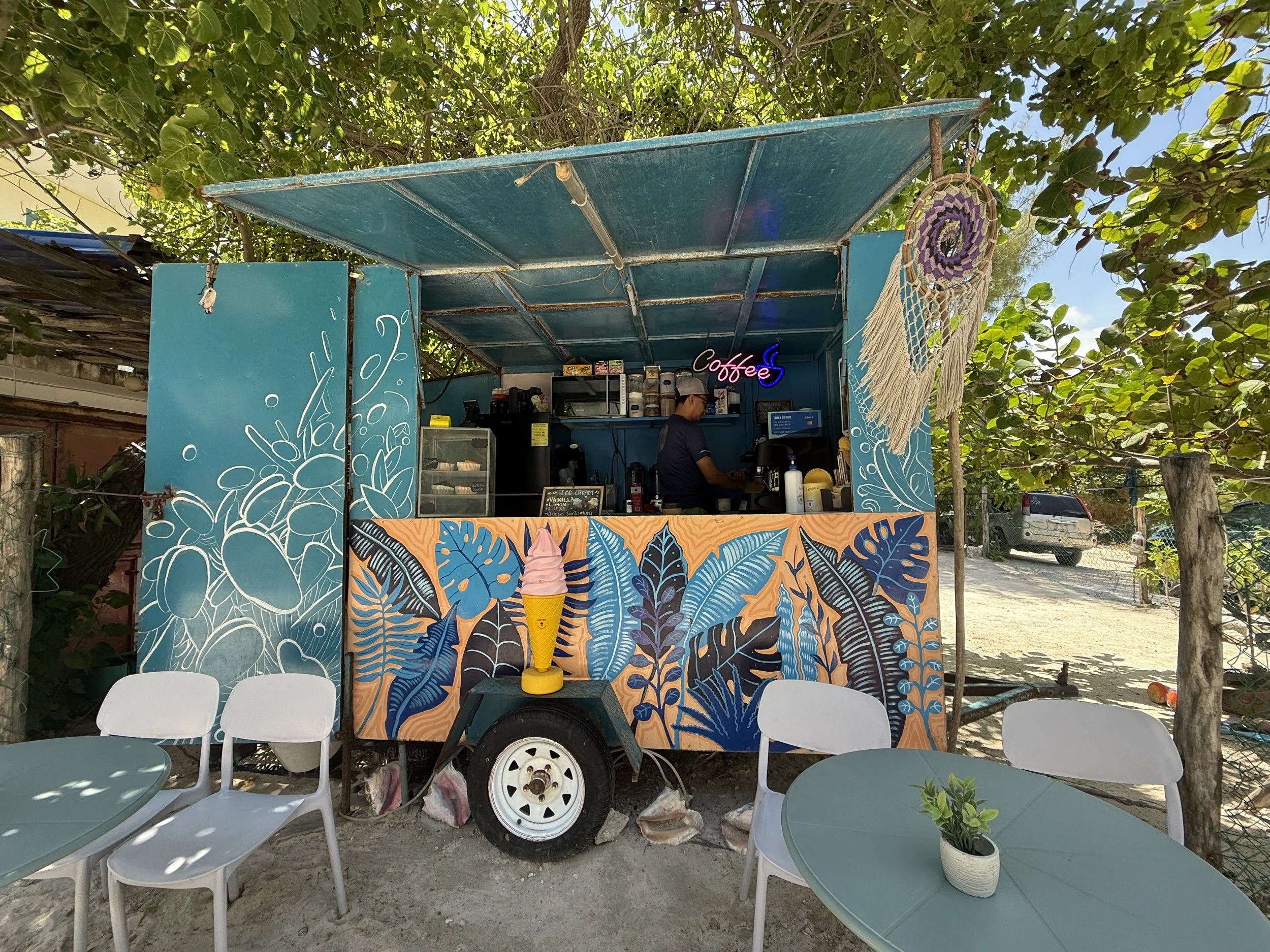
Every morning, we drive into town for coffee.
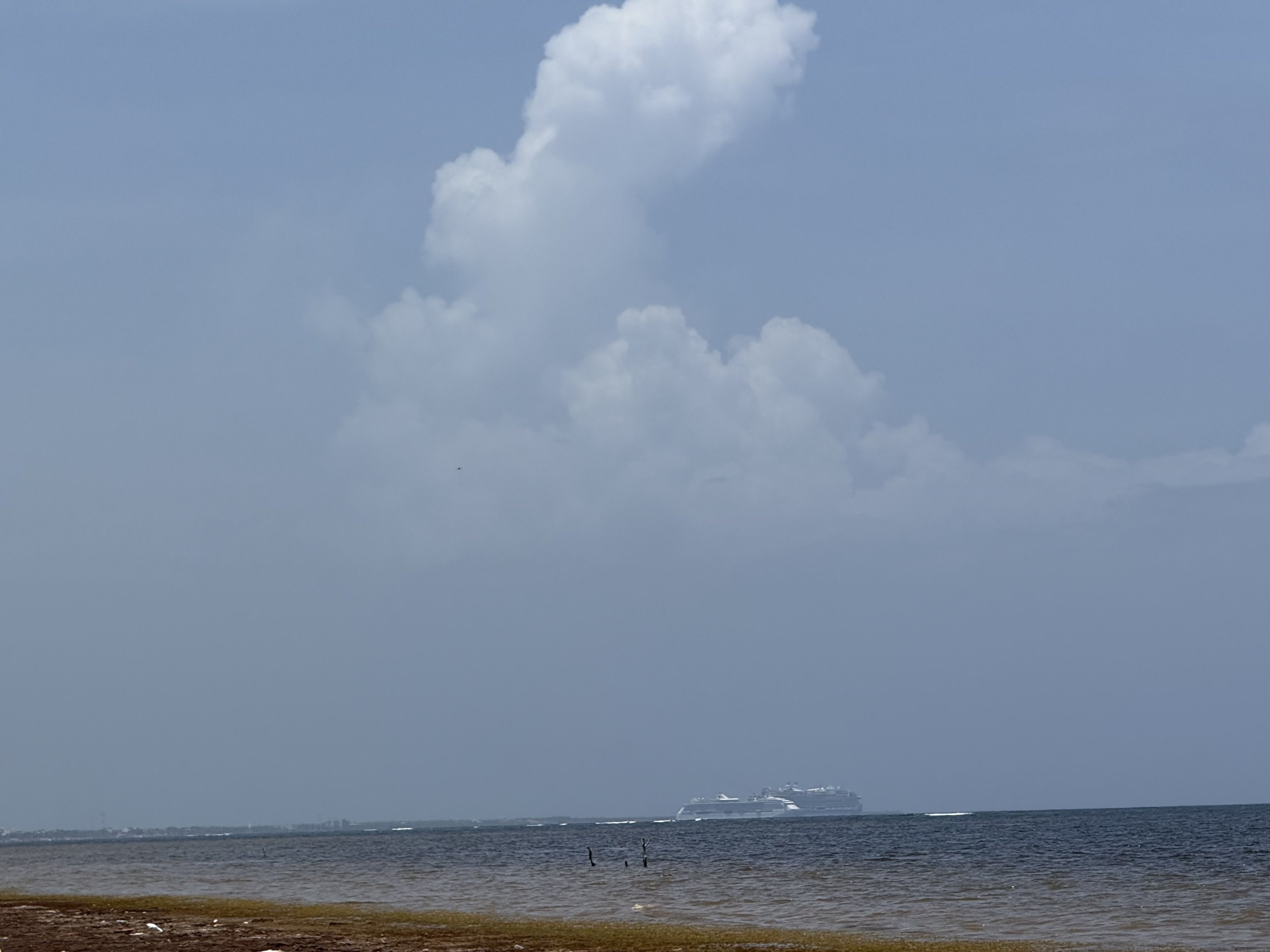
Every morning, there are two shopping-mall-sized cruise ships sitting offshore, stationed where the water remains deep enough for their large build. And yet, I barely see any tourists when I walk through the centre. They seem to hop onto their tour, spend the day in their carefully packaged version of Mahahual, and then return to their floating hotel.
What a shame.
The people of Mahahual are wonderful. Hard-working people living in a constant, humid heat, where even the evenings offer little relief, blessing you with temperatures of no less than 30 degrees Celsius. And yet they wear a smile that cannot be faked.
It seems everyone here is a fisherman.
Some fish from boats. Others stand on the pier, patiently waiting. Some swim out into the sea to collect the day’s bounty. The ocean dictates what ends up on the plates here, and for someone like me, that makes Mahahual a little slice of heaven.
You can find chicken and some beef, of course, but for the most part this is seafood nirvana.
Off we went, coffee and a drive into town.
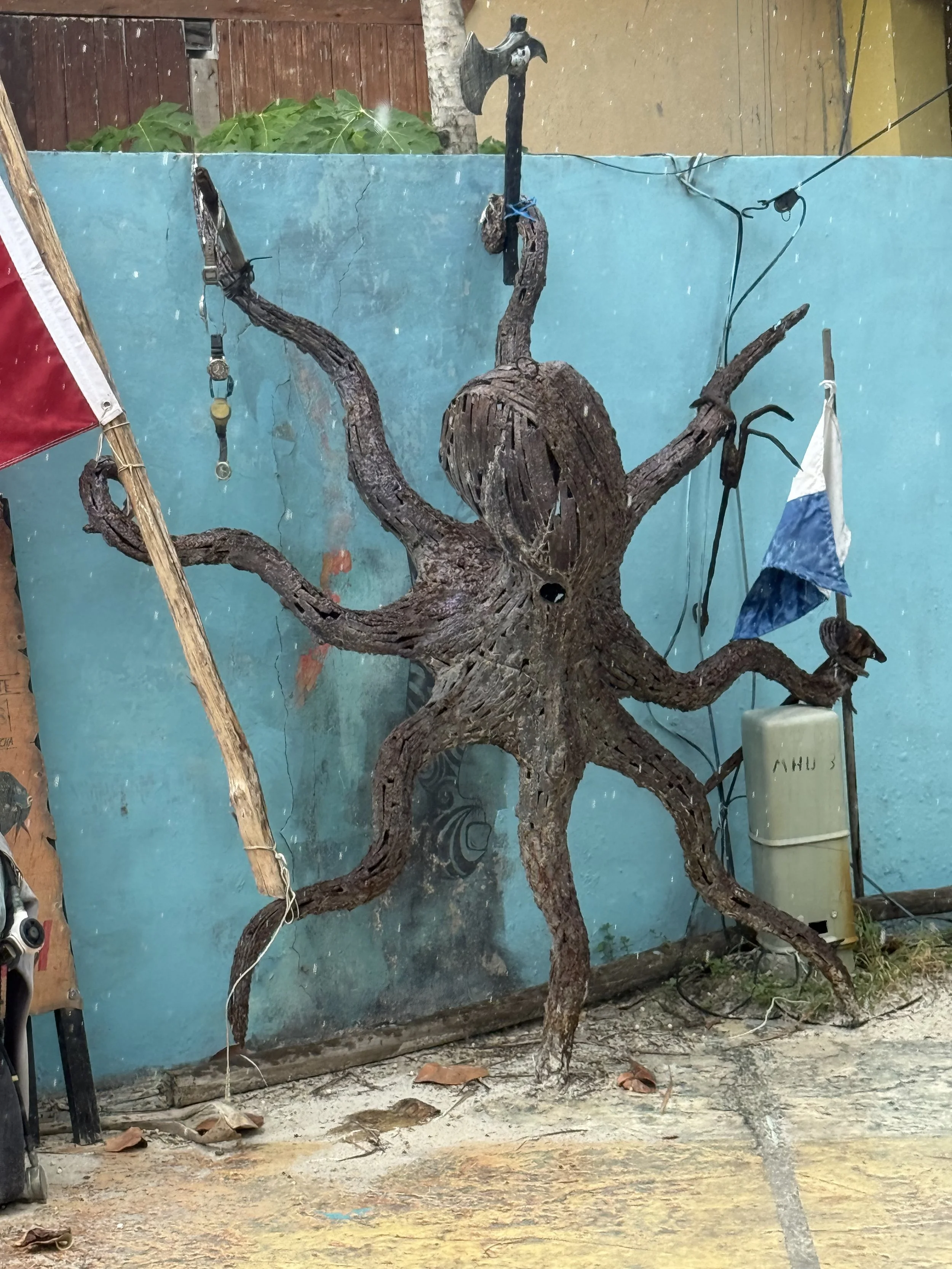
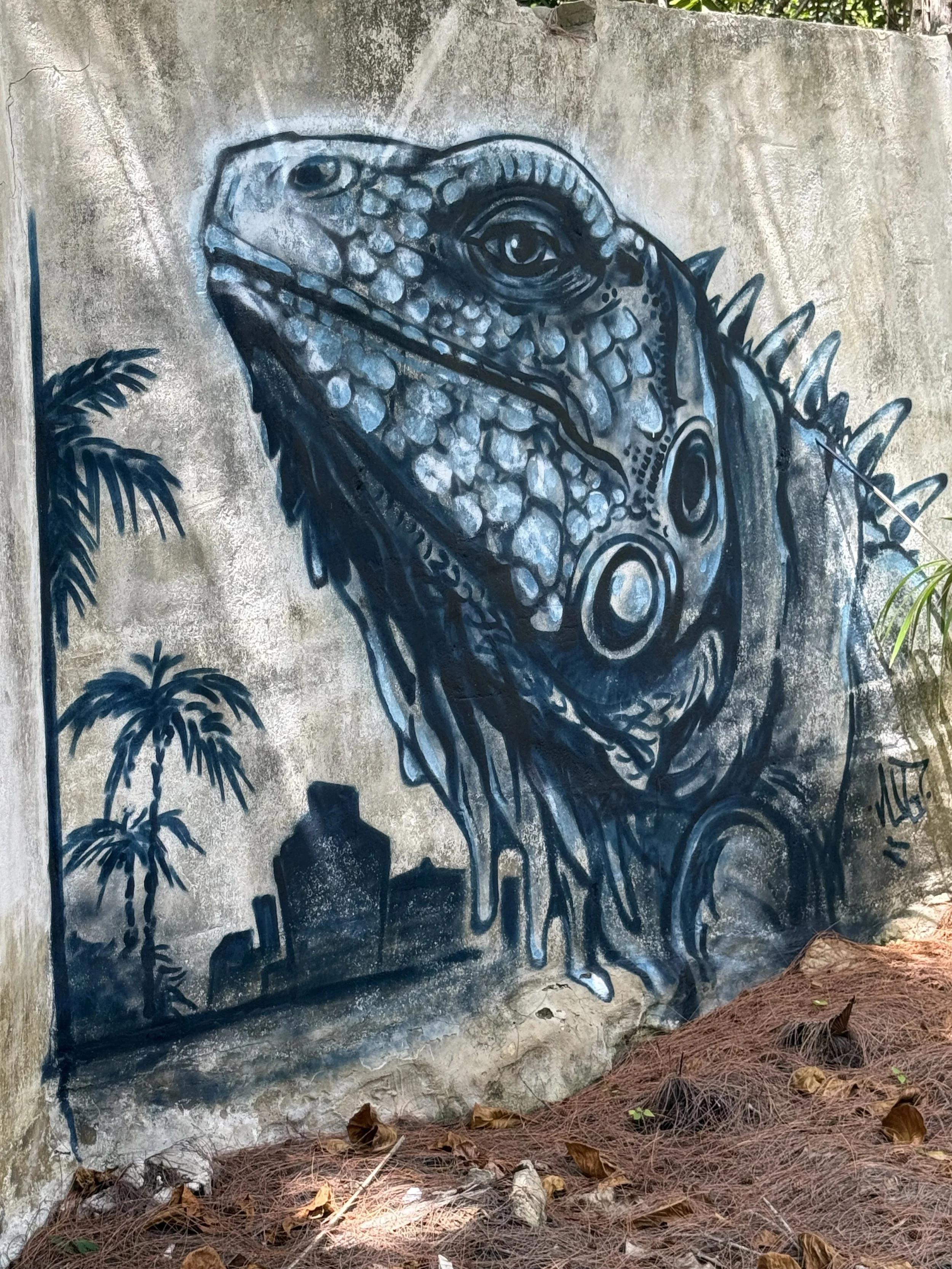
We entered the boardwalk at an intersection where restaurants and scuba operators lined both sides of the street, surrounded by tropical plants and decorations. One enormous octopus caught my eye immediately. Of course it did. In a town where everything seems to eventually lead back to the sea, even the decorations seem to have tentacles.
It is difficult to gauge just how much the tourism industry here is affected by the sargassum.
It is a real problem.
Our beachfront property is lined for metres out to sea with a strange, shifting mixture of dried sargassum, fresh sargassum and decomposing sargassum, all tangled together like some enormous patch of quicksand. Add the plastic garbage and the strange objects delivered endlessly by the sea, then mix it all with heat, bacteria and whatever it is in that decomposing mass that can give you a wicked rash and send you looking for the nearest pharmacy.
It is not pretty.
And it is difficult not to think about climate change when you see it.
Yet the irony is that the tour operators seem quite happy with their workload, at least from what I hear. The cruise ships keep coming. The excursions keep going. Snorkeling, fishing, diving. The calendars fill up, the boats leave, and the passengers return to their floating hotels.
As for the fishermen and the locals, they tell me the cruise industry has had little impact on their lives.
They go out to sea every day. Sometimes several times a day.
The sea still feeds them.
And perhaps that is what feels so different about Mahahual. Behind the cruise ships, the souvenir stalls and the carefully packaged excursions, there is still a small fishing village here. A place where dinner can be as simple as a fish caught that morning and fried by someone’s wife while you are out having your coffee.
The enormous ships may have arrived, but the sea still seems to belong to the people who have always known how to read it.
Yesterday, on our daily drive to get caffeinated, we encountered a local, freshly out of the water, his harpoon squared across his shoulder and a bucket filled with… well, we had to stop and chat.
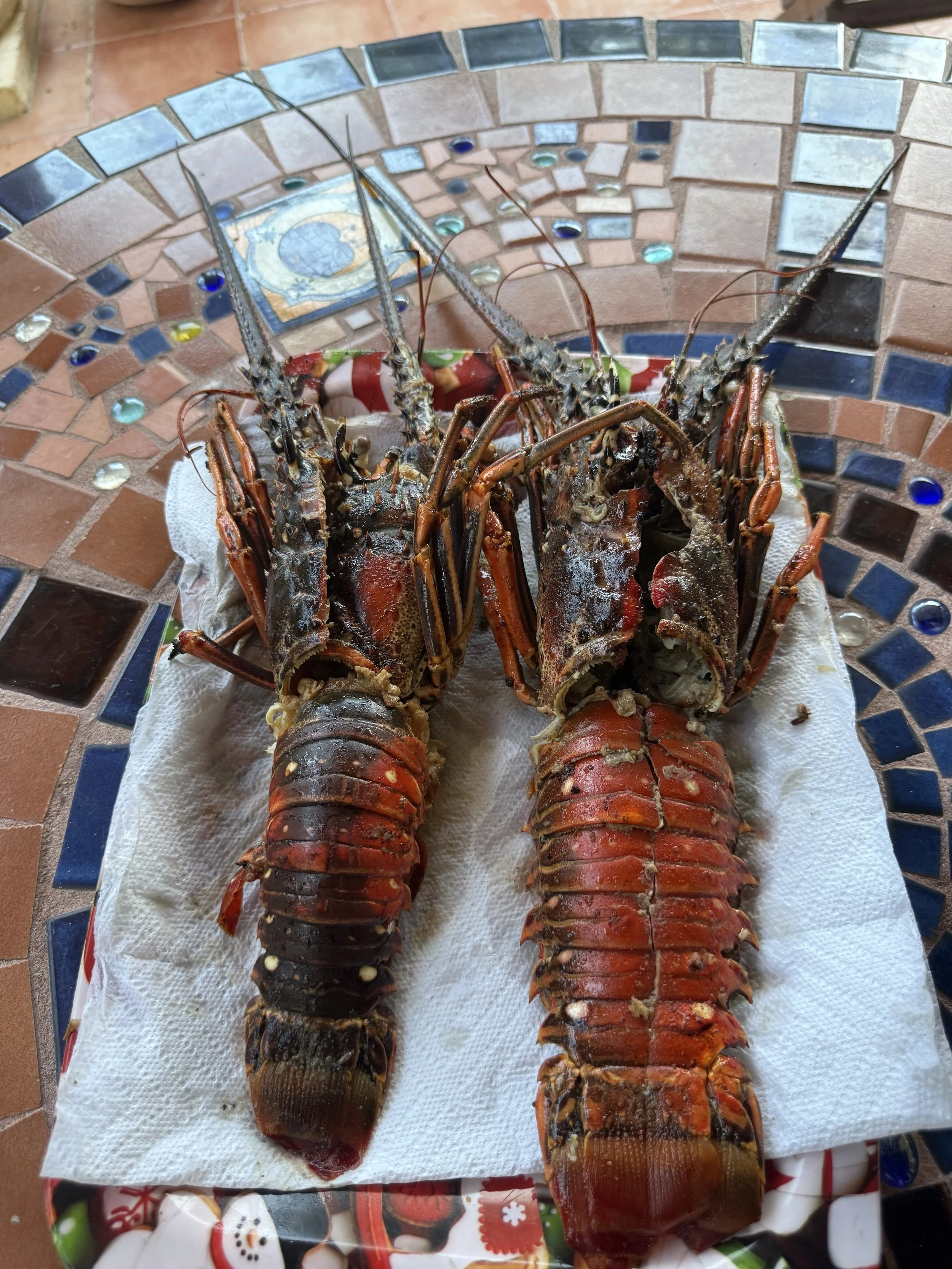
He was indeed heading home after a good morning of fishing, carrying about two kilos of beautiful lobsters. We bought two, about a kilo’s worth, straight from him.
Imagine them over firewood. Smoky, buttery, garlicky, with that unmistakable sweetness that only comes from something pulled straight out of the sea.
Upon our return to the house, Irma was happy to cook them for us and drop them off on the patio around 7:00 p.m.
And then they arrived.
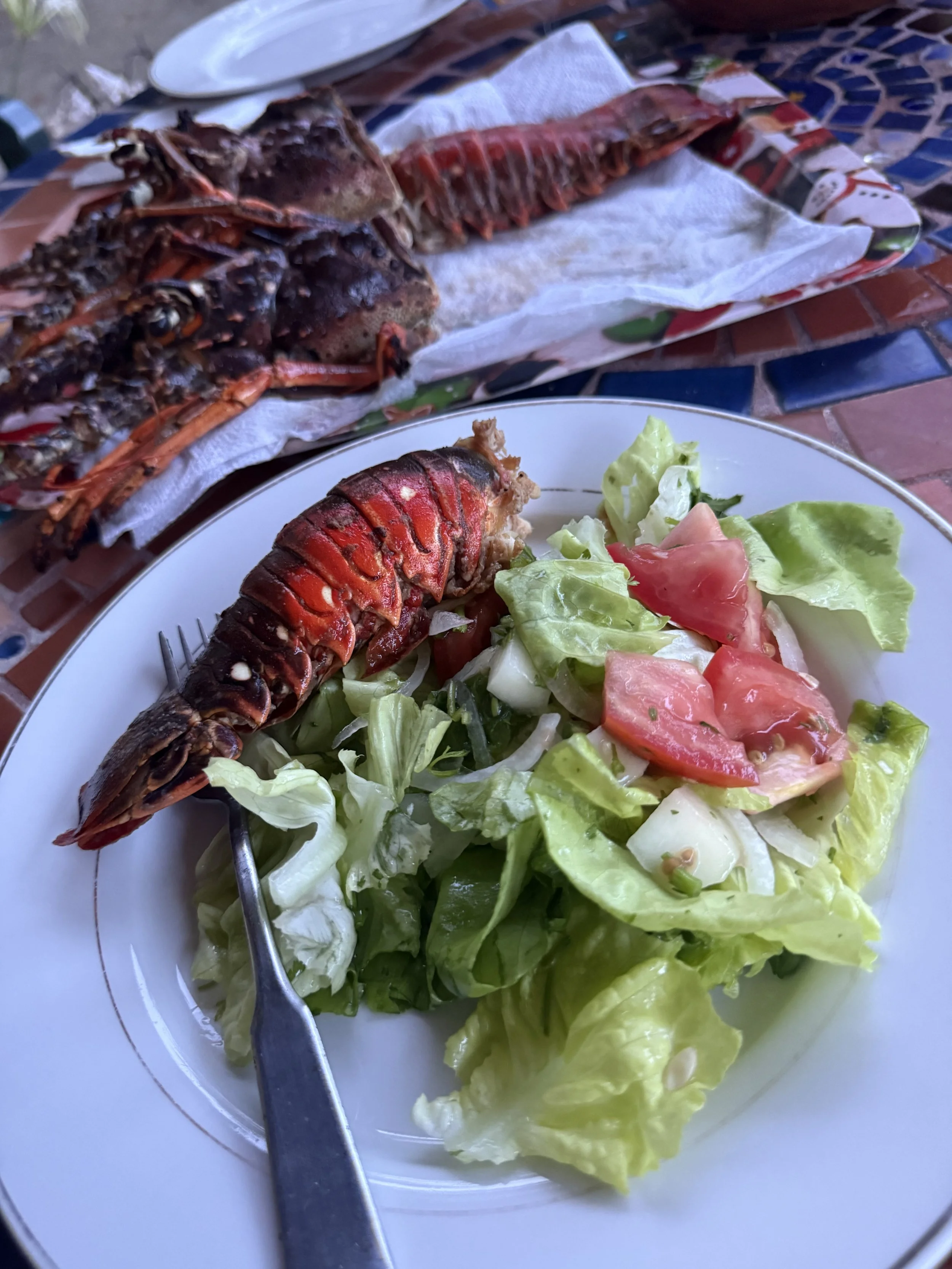
A beautiful charred pair, every limb glistening with butter, their shells blackened in places from the fire. They looked almost absurdly muscular, like they had just stepped off a lobster bodybuilding stage.
I prepared a light salad with a spicy serrano and cilantro vinaigrette and opened a bottle of wine.
We sat down.
No words
Mahahual still has one more adventure waiting for you. Tomorrow. I headed out onto the reef to see what the Caribbean has to offer from the other side of the line. I have spent days eating what the sea provides, watching fishermen return with their morning catch and discovering just how much of life here revolves around the water. Now it was my turn to get a little closer to it. I had no idea what I would catch, or whether I would catch anything at all. But somehow, I suspect that is exactly the point. In Mahahual, the sea decides what you get.