
Last day in Mérida
Today I leave my cherished Mexico having found exactly what I needed for the next steps of my life, even if I had absolutely no idea that was what I was searching for when I arrived.
John said it best: sometimes you do not come to Mexico to escape life — you come so life can finally catch up to you.
And somehow, between ancient lands, long conversations, laughter that arrived unexpectedly, and moments that felt almost written for me before I existed, something inside of me shifted. Quietly. Permanently.
I board this plane fuller than when I arrived, yet carrying a strange ache in my chest. The kind that only appears when a place has loved you back.
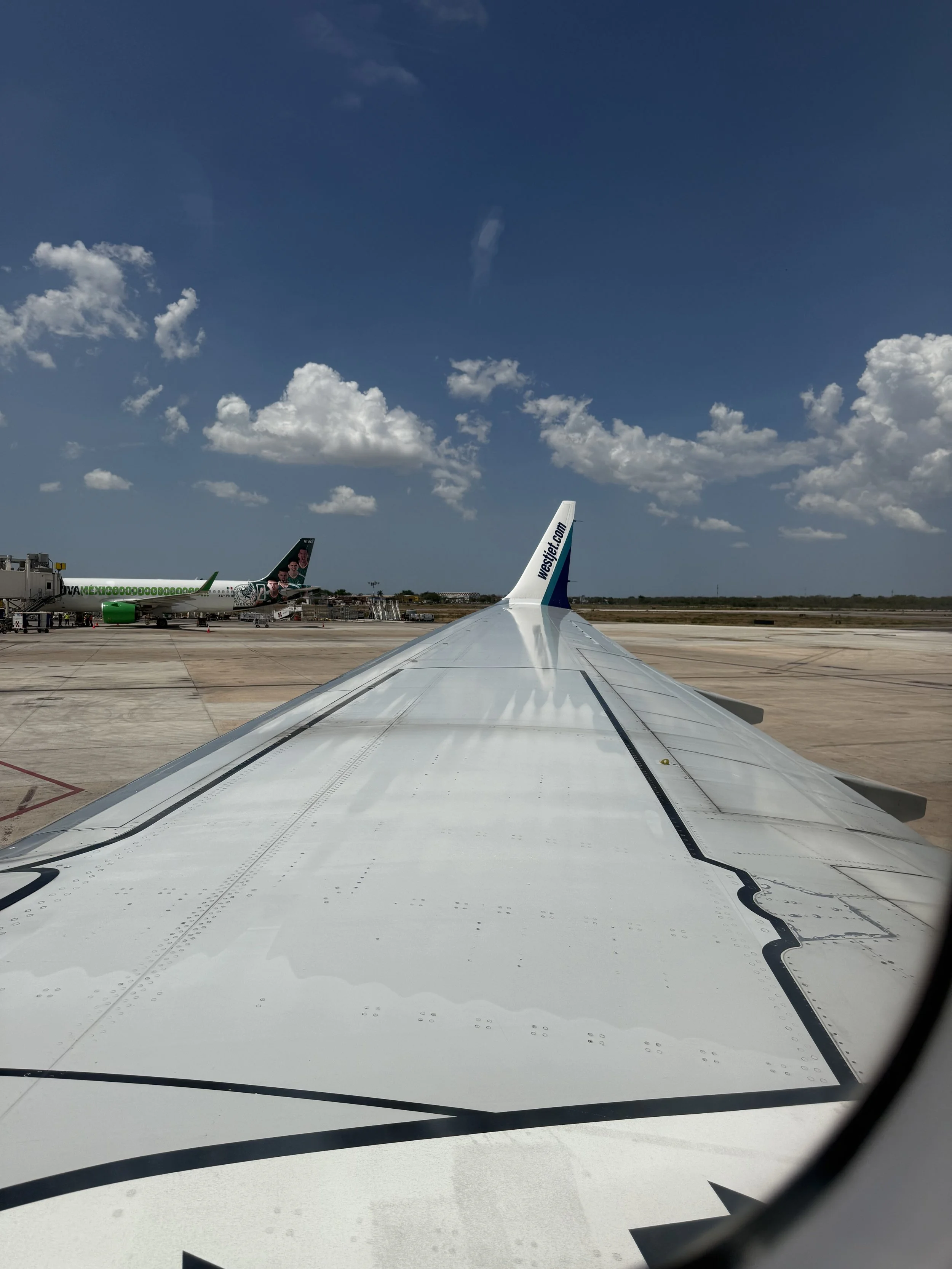
Yesterday was so good that I wanted to live every minute of it before attempting to turn it into a well-rounded tale for you. I took fewer photos and allowed myself to be entirely present.
As usual, John picked me up around seven, across the street from my hotel. The heat was already beginning to rise from the pavement, and we wanted to leave early to a) pack as much as possible into one day and b) because it was my last full day after all.
We headed first toward Acanceh and its market in search of something typical to eat. There, I discovered tamales colgados — “hanging tamales” — unlike any tamales I had eaten before. Instead of the dense, compact texture I was used to, these were soft, airy, almost spoonable in places, steamed while suspended so the masa settled differently, becoming lighter and more delicate. The filling melted into the dough rather than sitting apart from it. They felt deeply rooted in the region: humble, comforting, and impossibly satisfying at that hour of the morning. John ordered one of each and we shared them all, leaning against the market counter while the town slowly woke around us, chatting with the Maya woman who works all day selling, making, cooking tamales only to start over the next day. I love making them but we both agreed that it is a lot of work.
There are Maya ruins scattered all over the peninsula in ways that almost stop surprising you after a while — until suddenly they do again. One man had apparently discovered both a cenote and part of a pyramid wall on his property and tried to sell the land to me for three million pesos. A bargain compared to prices in Oaxaca City, perhaps, but standing out there surrounded by dry brush and endless land, I could only imagine the relentless work required not only to make such a place welcoming, but simply to maintain it.
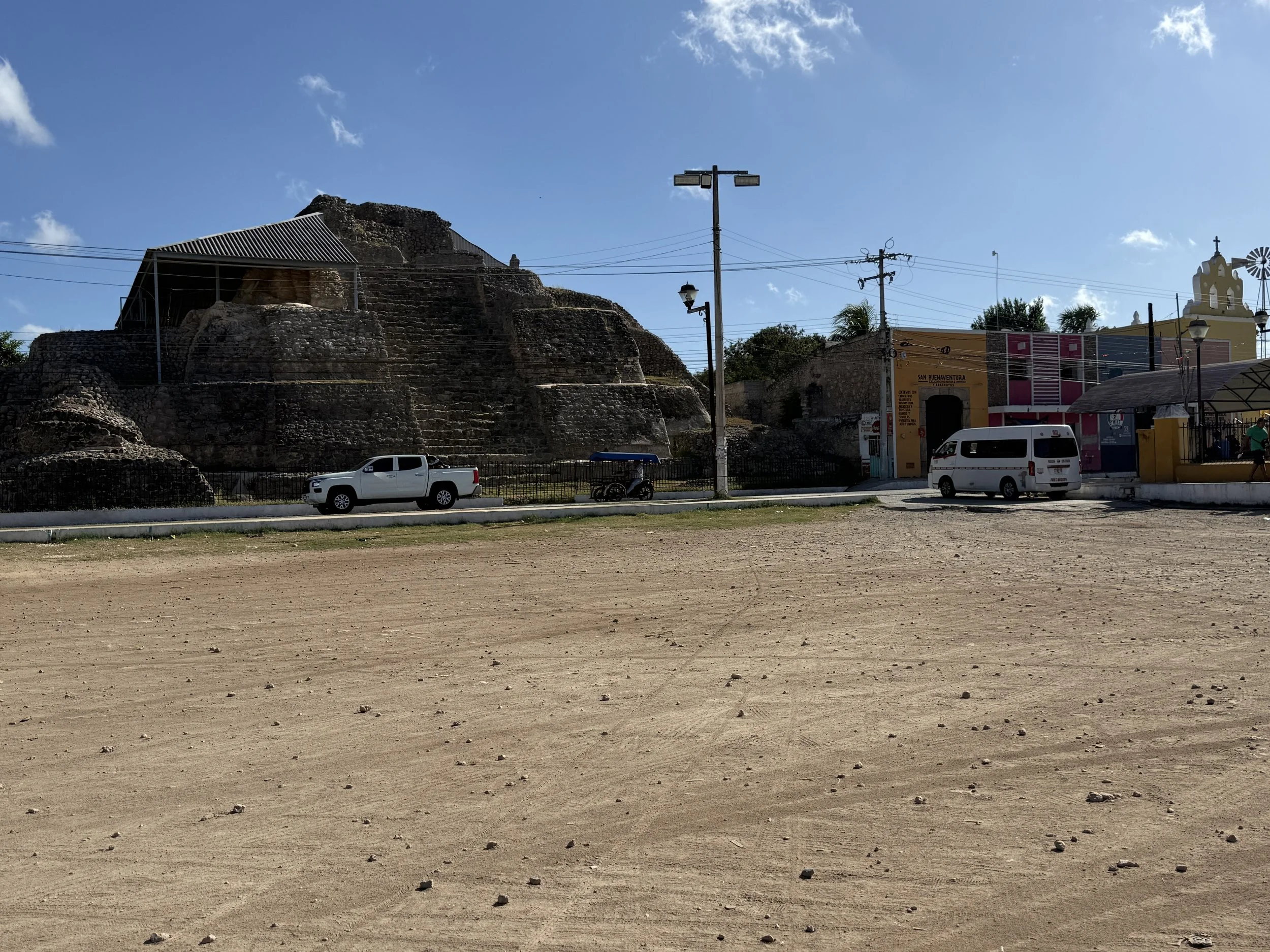
And then there was the pyramid in Acanceh itself. Standing in the parking lot of the market, I looked up and there it was — enormous, ancient, directly alongside the street as though it had never stopped belonging there. No dramatic gates, no theatrical reveal. Just history woven naturally into daily life. A reminder that in Yucatán, the ancient world does not feel buried. It breathes beside you.
From there we headed toward Chunkanán, a tiny rural pueblo shaped by old henequén routes and the quiet rhythm of countryside life. The landscape there feels dry and sun-worn, with low vegetation, stone walls, and roads that seem to disappear into the bush. We drove through town before stopping beneath a tree to catch a small rail cart pulled by a tiny horse with practiced ease. The animal guided us steadily down the old tracks and into the brush, moving through the heat as though it had done this journey a thousand times before.
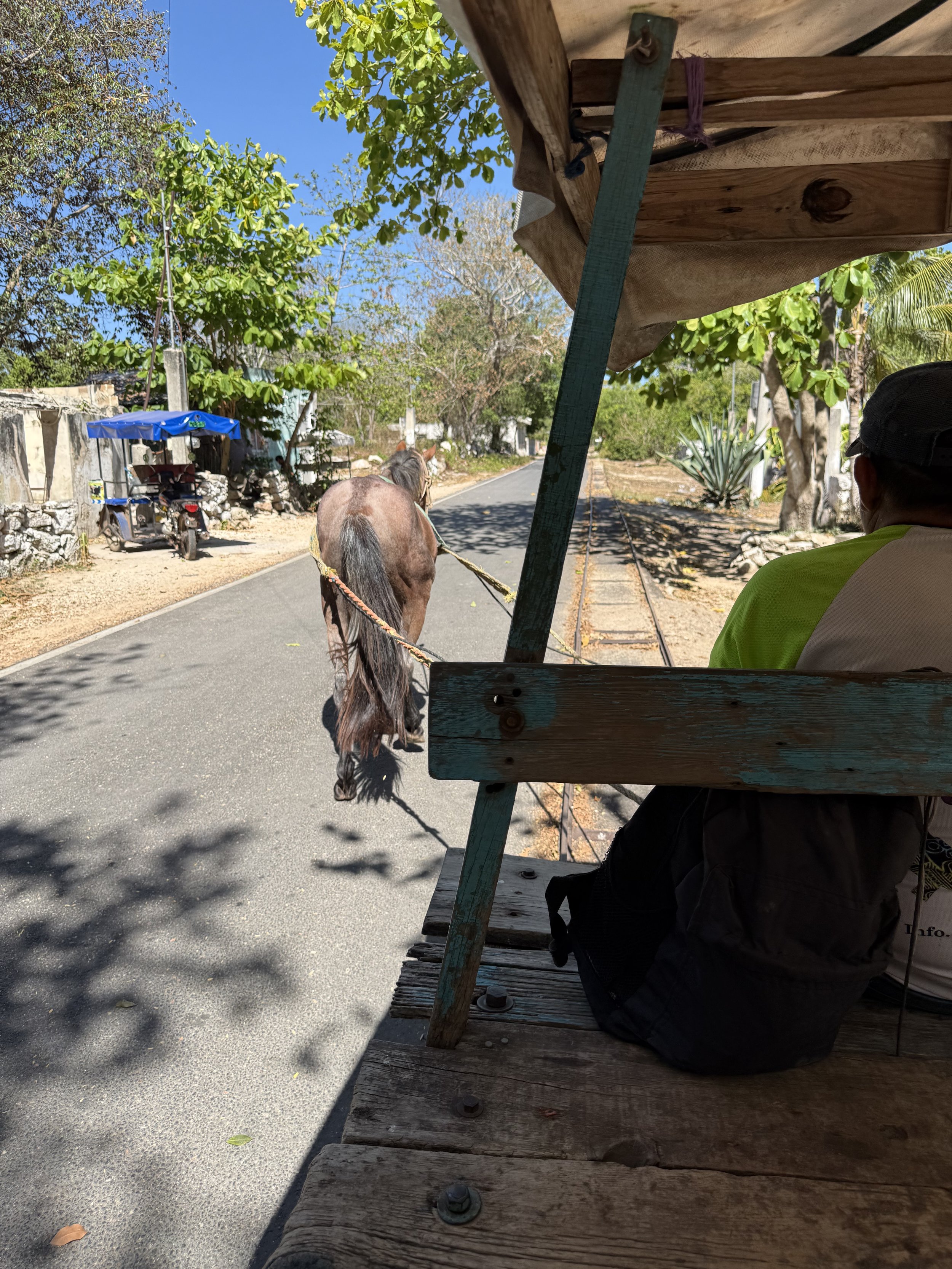
When we arrived, the man told us he would wait nearby for security reasons but that there was no rush. We ended up spending nearly three hours floating there.
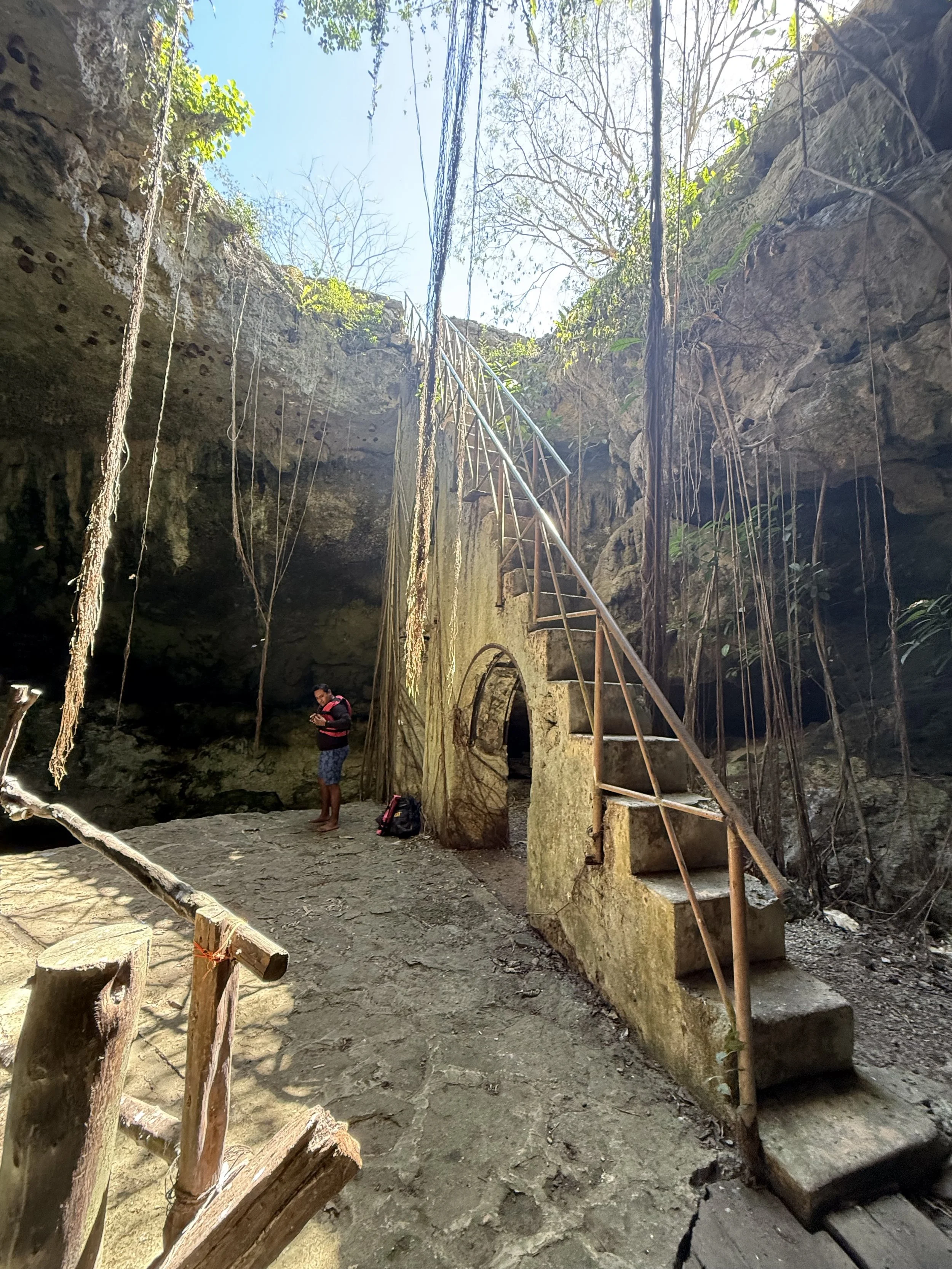
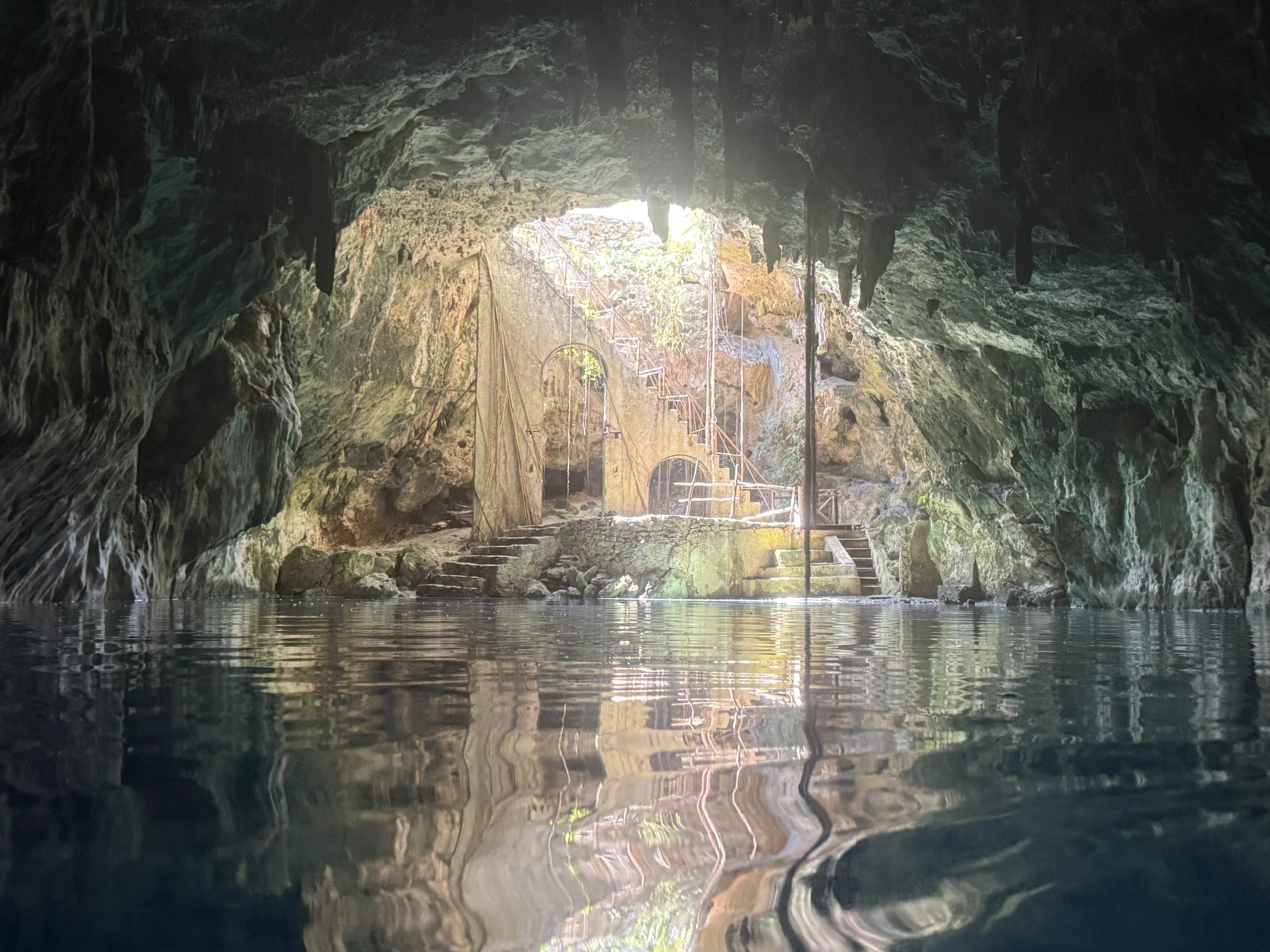
To my relief, the stairs descending into the cenote were concrete. After climbing that steep ladder at another cenote earlier in the week, I was more than happy to see something gentler on the body. The staircase eventually transformed into a wall lined with arches, giving the place an entirely different feeling from the other cenotes I had visited. There was something almost monastic about it — ancient and still.
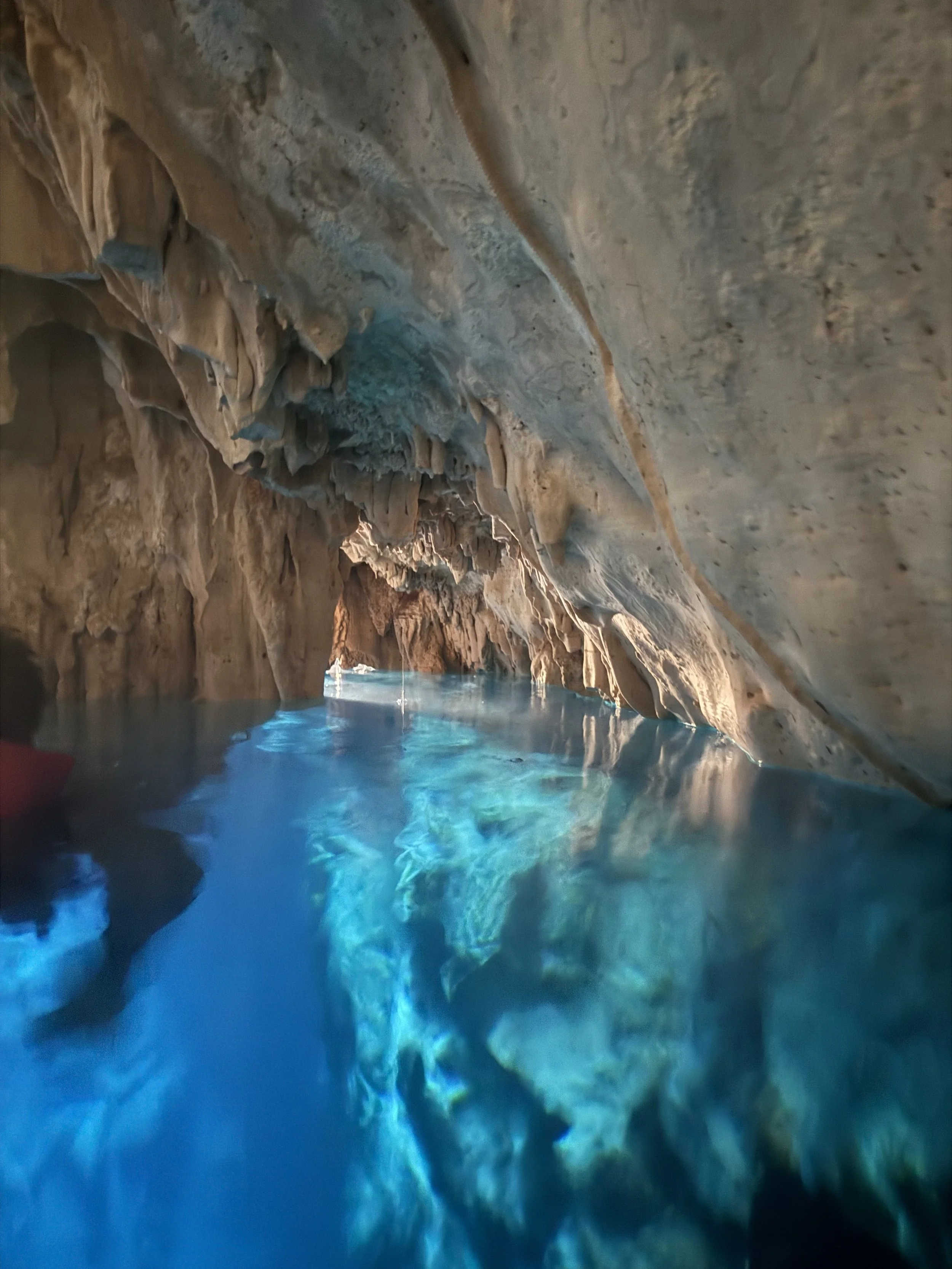
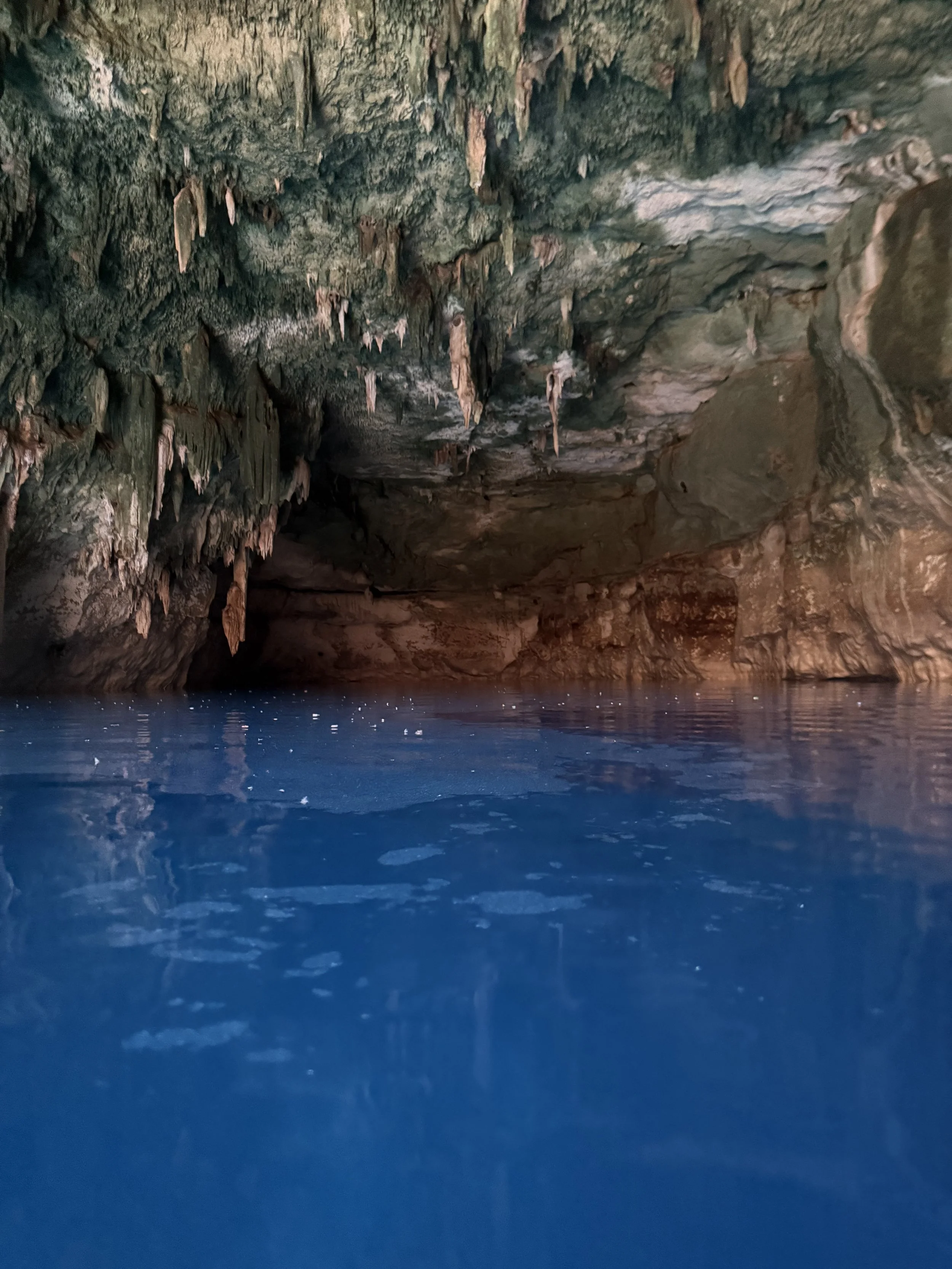
We had so much luck this week, though I suspect the universe simply sent me exactly what I needed, so perhaps luck had very little to do with it. Almost every cenote we visited gifted us solitude for the first hour or more. In Maya belief, cenotes were portals to the underworld, sacred entrances into the infra world, and each descent underground felt like its own ceremony. First the blinding blue sky above, then the cool mineral-rich air below, the earthy scent of wet stone, roots hanging through openings overhead, silence interrupted only by dripping water.
The three phases of life existed together inside that hueco — roots reaching downward, still water suspended in darkness, and sunlight filtering through from above as if reminding you that all worlds remain connected.
Our cart driver eventually called out, we had been down below for three hours. Time to move on to another one.
Walking back toward the car, we became curious about the old hacienda behind us and wandered toward its crumbling core. The walls stood sunbaked and heavy with memory, wrapped in roots and vegetation slowly reclaiming what had once been taken. So much history lives in these lands, and with it, a complicated relationship between the Maya and their descendants, the church, and the wealthy families who overtook ancestral territories through conquest, debt, and power.
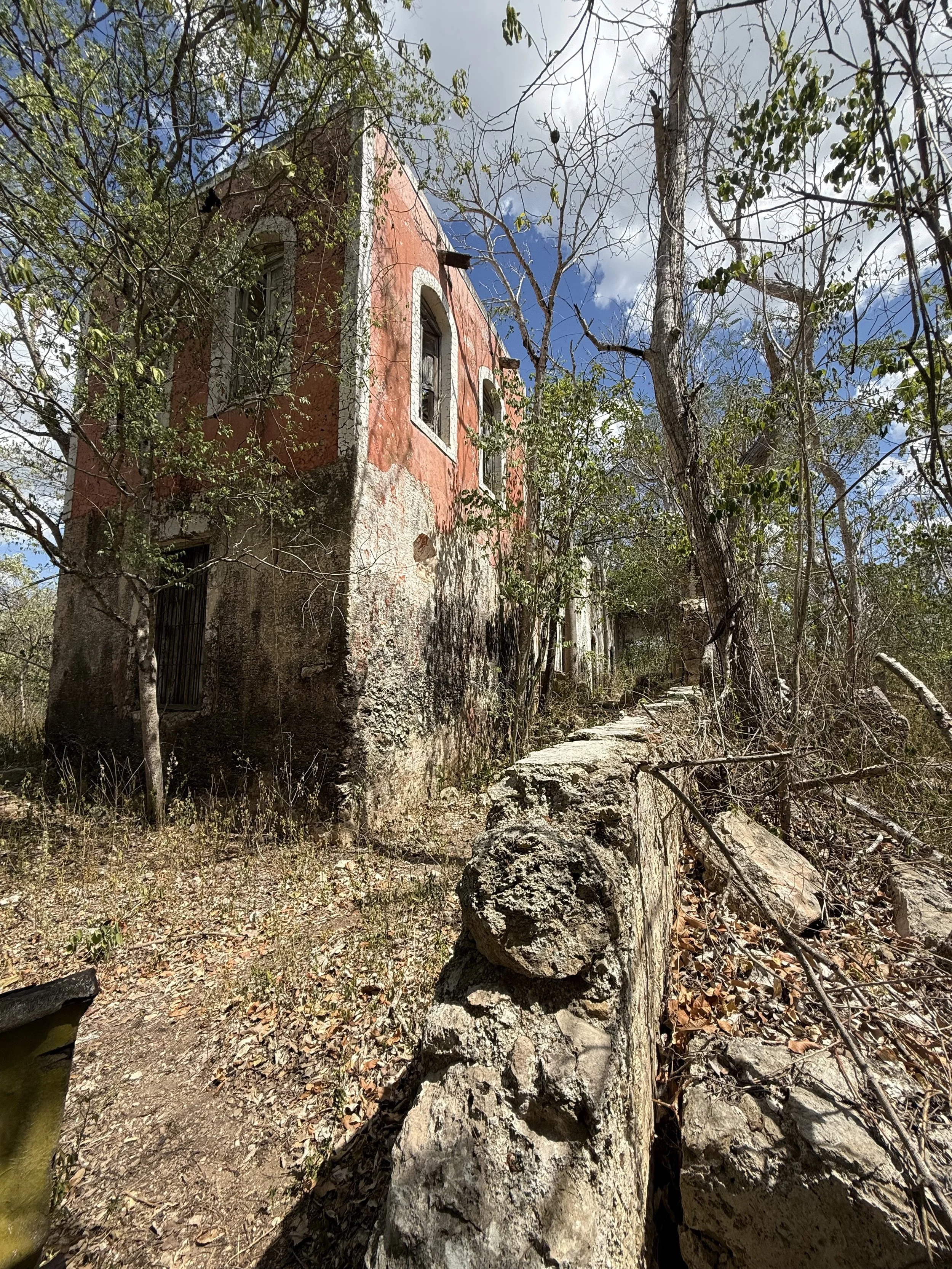
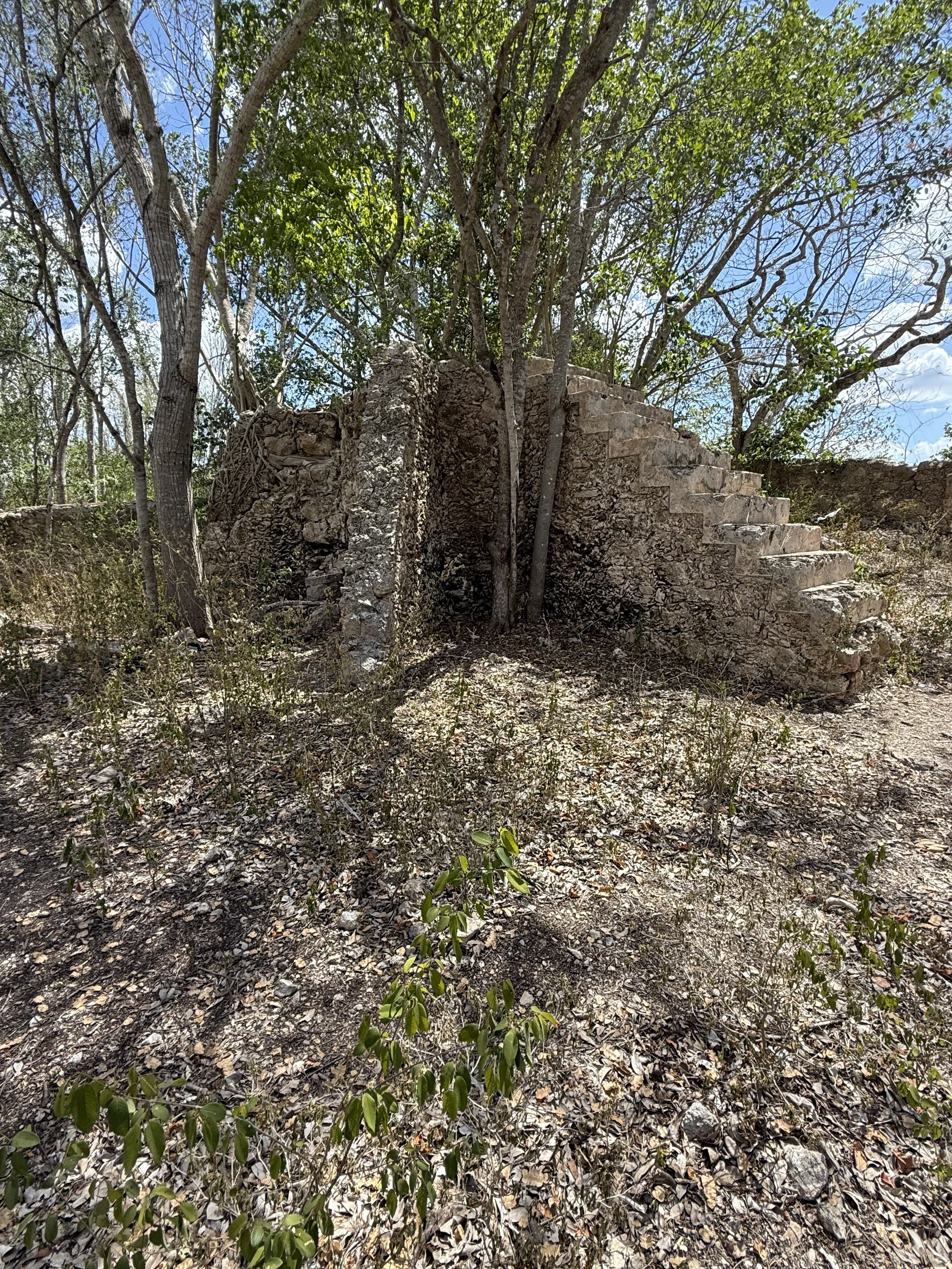
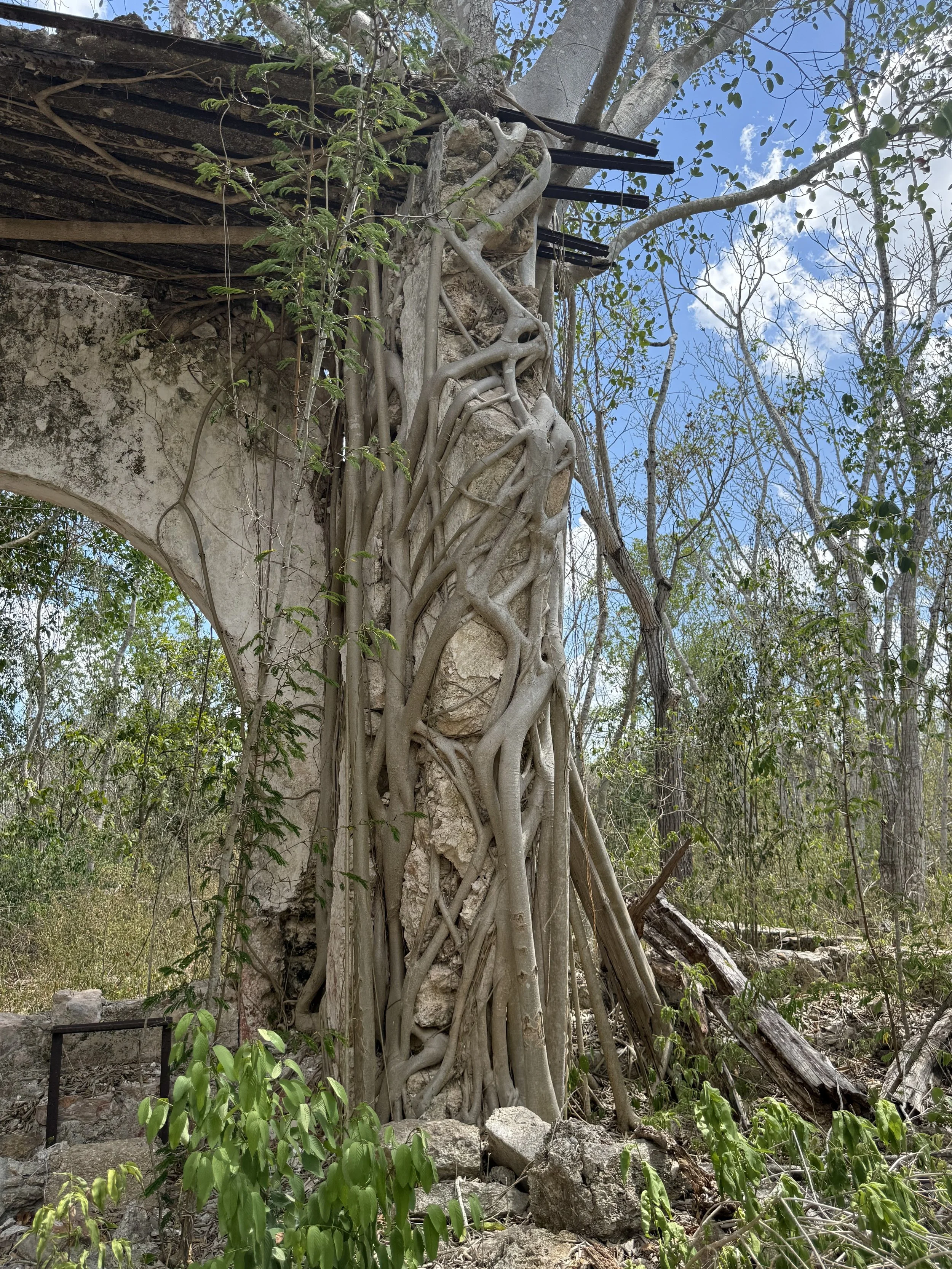
John explained that among the many Maya groups, the Pu’uc people were some of the few who managed to preserve much of their patrimonial identity, holding tightly to traditions, language, and ways of life despite centuries of pressure to assimilate. Their resilience seemed woven directly into the land itself.
As we walked, John shared one of the darker stories passed down through the region. When newcomers arrived and sought to control the population through fear, one man was reportedly mutilated in such a way that he would suffer but not immediately die. Parts of him were sent to neighboring villages as a warning of what awaited anyone who resisted. The cruelty was meant to break the spirit of the people before rebellion could even begin.
But the story did not end the way the oppressors imagined. The violence eventually united the surrounding communities rather than silencing them. People organized, protected one another, and resisted together. According to the story, the man responsible ultimately died by his own bullet — unable to imagine that the people he believed powerless would ever rise against him.
Standing there among the ruins, surrounded by thick vegetation reclaiming stone little by little, I could almost feel the tension between destruction and endurance. Nature itself seemed unwilling to let anything remain frozen in conquest forever.
Walking through these culturally rich lands, under a heat capable of preserving both ruins and memory, I found myself in awe — not only of the constructions themselves, but of the force of life all around them. Vines climbing through cracked walls, trees splitting stone apart, birds nesting where wealth and power once stood so proudly. The jungle, patient and alive, always taking back what belongs to time.
We needed beer, water and ice, John stopped in a store and came back with all of the above and a book of Maya poetry, offered to him as a gift by the author, one known to protect the cultural heritage of the Maya written language. It called my name, I went in to buy one and support the author and his quest.
Next we drove in search of yet another cenote and eventually landed in Homún, a small town known throughout Yucatán for the countless cenotes hidden beneath its dry earth and dense vegetation. The roads there feel dusty and sun-bleached, lined with modest homes, moto taxis, wandering dogs, and signs hand-painted toward underground pools and caves. Life moves slowly there, shaped by heat, limestone, and water hidden beneath the surface.
A gentleman of true maya descendants named Ramón approached us and told us to follow him with his moto taxi. We did exactly that, laughing the entire time because we had absolutely no idea where he was taking us. His right flasher appeared permanently stuck on unless he actually intended to turn left, which somehow only made the entire chase funnier. We bounced along behind him through winding roads and brush, laughing like children following a man into the unknown.
But once we arrived, we understood immediately why he had insisted.
Hidden within a newer hacienda still used for agriculture was a stunning cenote that had opened less than a month earlier. Virgin from human contamination, untouched in a way that immediately changes the atmosphere around you. The air itself felt different. Cooler. Cleaner. Ancient.
Again, we found ourselves nearly alone inside a quiet cave system, floating silently beneath clusters of bats cuddled together overhead, hanging upside down with their tiny faces pointed toward us. They made soft little peeping sounds that reminded me strangely of dog chew toys, an unexpectedly adorable sound echoing through a sacred cavern.
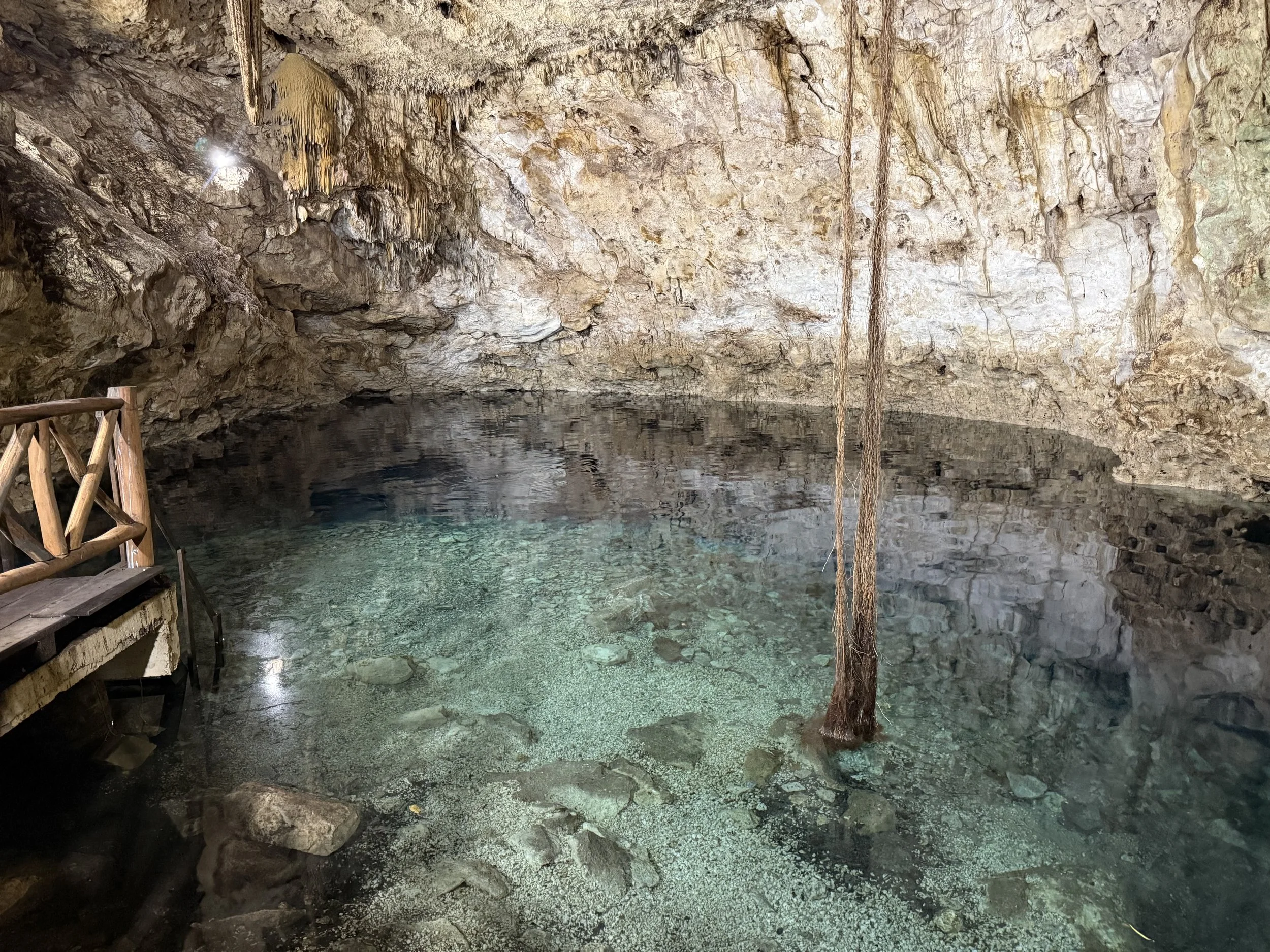
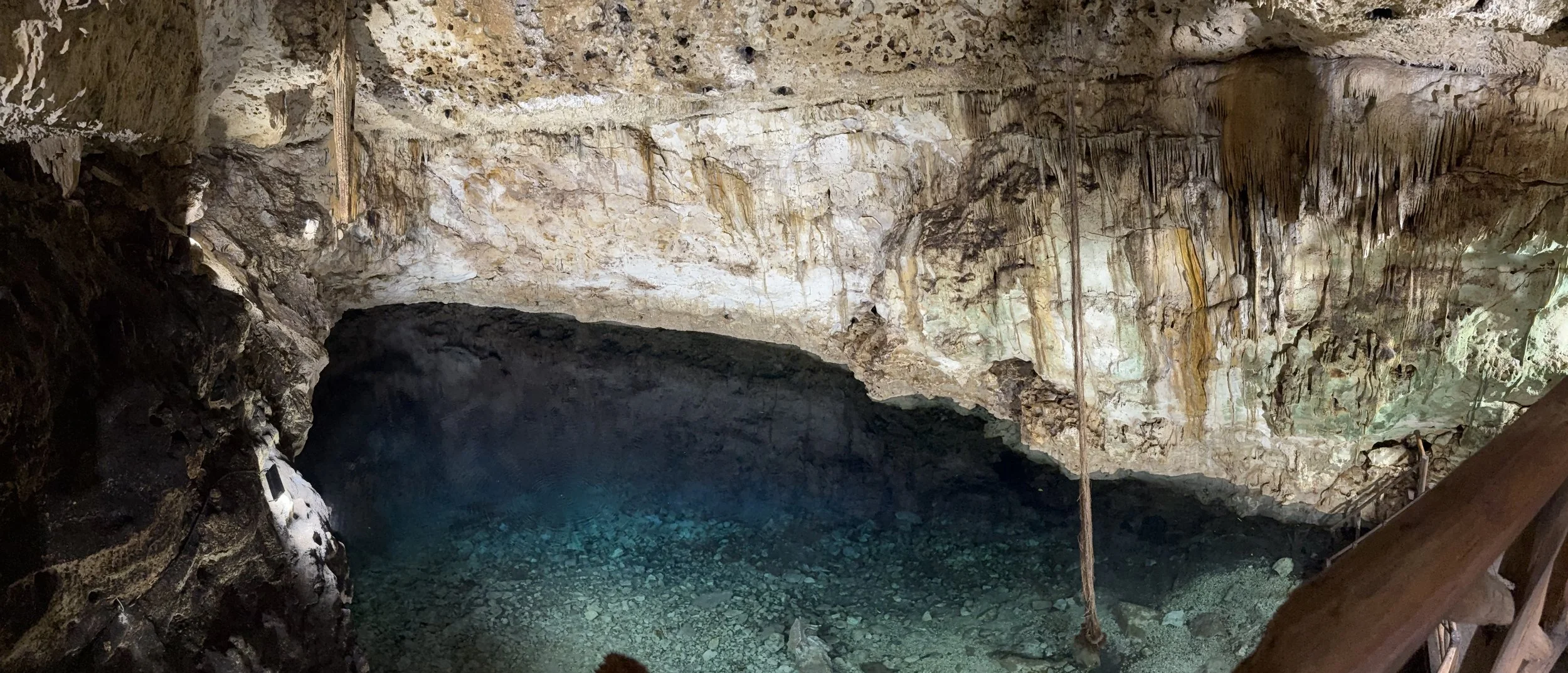
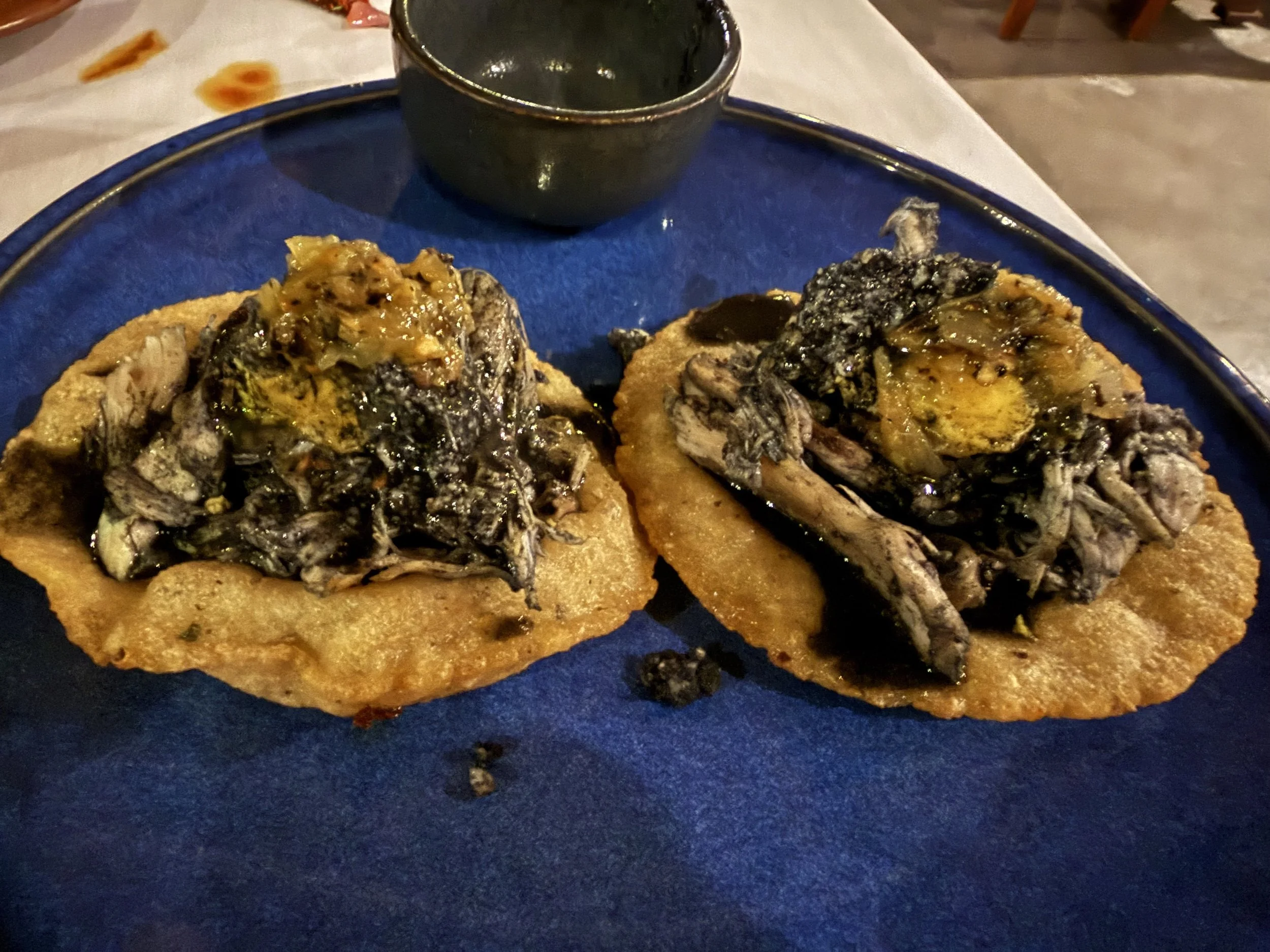
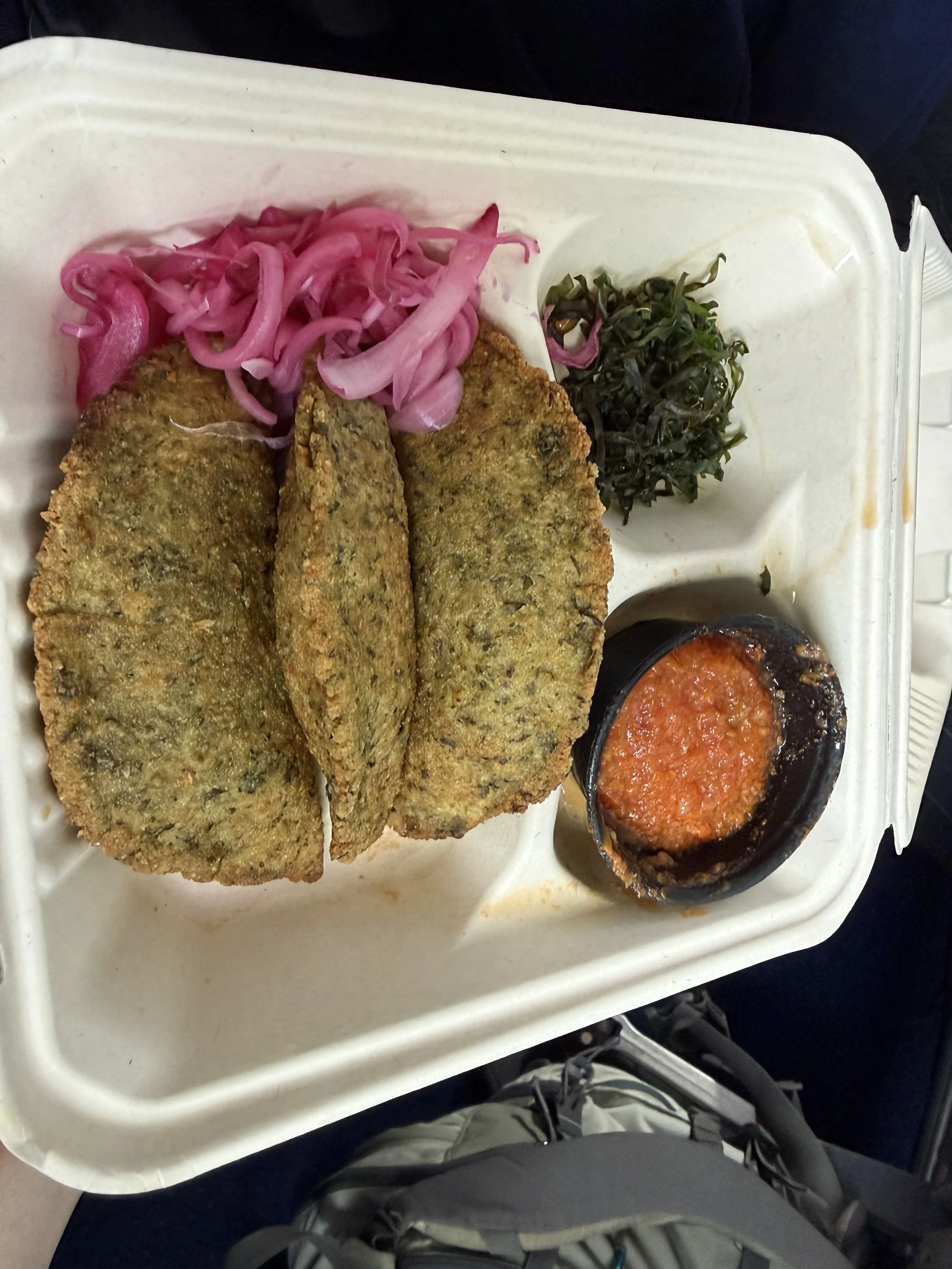
In both cenotes yesterday, I found myself needing to simply float and listen — recording the sounds of life rather than trying to capture images. A cenote is not merely a cave or a sinkhole. Each one is its own living ecosystem, delicate and complete within itself. Birds, bees, fish, insects, roots, bats, minerals, water — all existing together in balance beneath the earth. All with their own energy frequency and unparalleled beauty. I kept filing my soul with this beauty, enjoying John’s passion as he recounted history. It was getting later in the day and dinner was calling, Micaela Mar y Leña, a surprise suggestion from one foodie to another. We ate a lot but I wanted to try it all, I even ordered my traditional local lunch for the flight back arroz con plátano and empanadas de queso y Chaya. No way I will eat something less than riquísimo while still on my trip, I will lick this voyage’s plate to the last drop.
In each cenote. At first, we stayed very still because the creatures sensed our presence. The cave quieted around us as though observing us back. But eventually life resumed its rhythm. The bats began swooshing past so close to my head that I could feel the rush of wind against my skin. Tiny ripples echoed across the water. Dripping sounds returned from the ceiling. The cave inhaled again.
Floating there in darkness and mineral-rich water, listening to an entire hidden world continue around me, felt less like tourism and more like being briefly allowed into something sacred. Another recurring theme this week.
After dinner John still had the cherry on top I still had no clue what was coming. We took a walk in the neighborhood (apparently to digest) only to find myself standing in front of the largest (wide) pyramid I have ever seen.
We climbed the uneven rocks, definitely not designed for little molcajete legs like mine. The stones were irregular, steep, and sun-warmed, shaped more by centuries of weather than by comfort. At the tallest steps, John instinctively extended his hand in the most gentlemanly way, steadying me upward without making a show of it.
I placed my palms against the massive stones for balance and immediately felt something difficult to explain — a heaviness, a vibration, an energy radiating from the structure itself. The kind of sensation that makes you suddenly aware that this place was once ceremonial, sacred, alive with intention long before modern roads and churches arrived beside it.
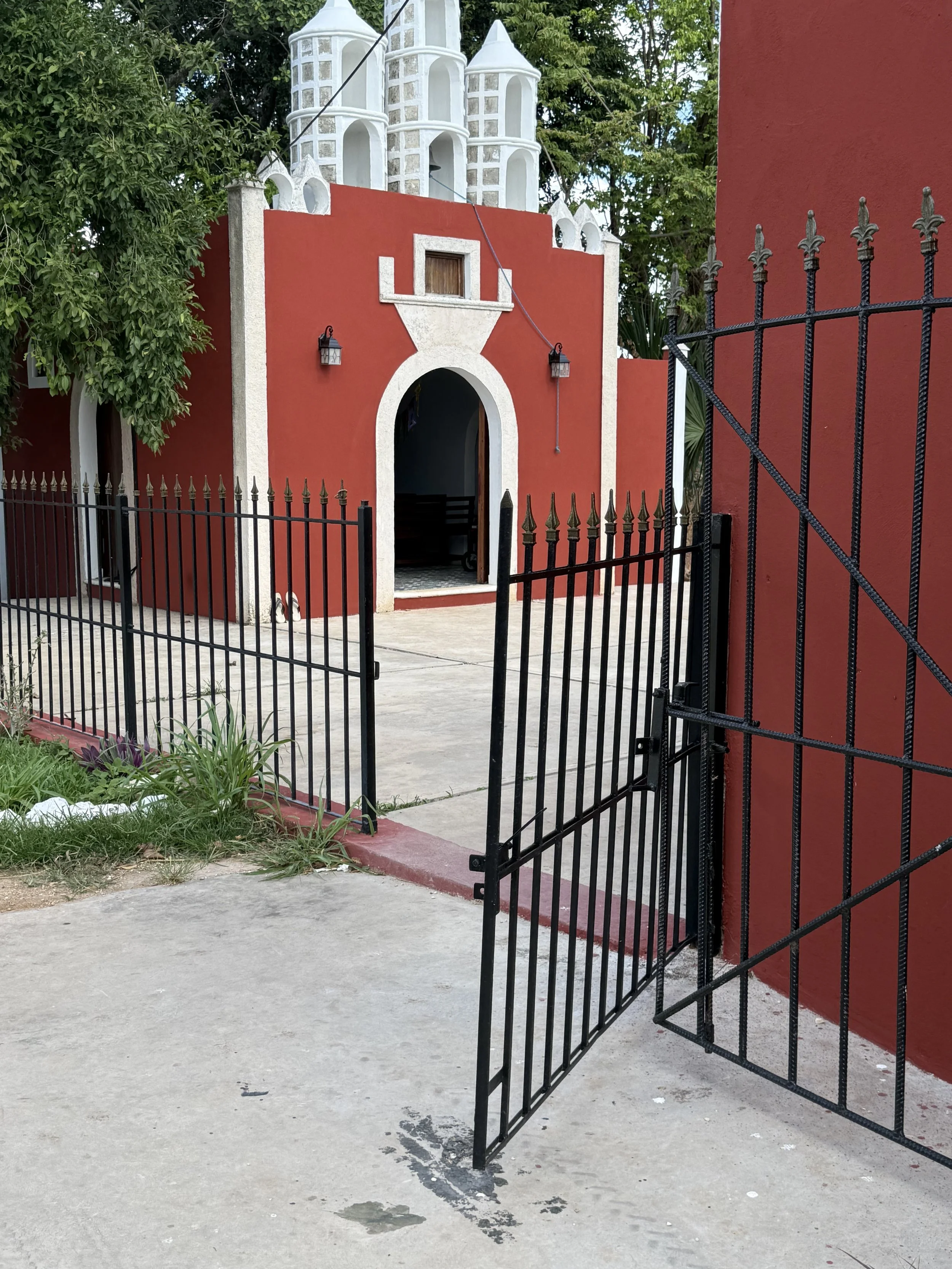
From the top we stood higher than the rest of the town. Below us sat a large church, built partly from the remains of an original pyramid during the Church’s conquest of the region. And yet, despite centuries of attempted domination, the sacred monument still towered above it. There was something deeply symbolic in that image: the pyramid refusing to disappear completely, still watching over the town like an act of quiet Maya defiance.
John explained that even today the relationship between many local Maya descendants and the Church remains deeply complicated. Faith is still held close. Families continue attending mass, honoring traditions, baptizing children, following rituals passed down through generations. But beneath it exists a lingering tension — a relationship shaped by conquest, forced conversion, abuse, and mistrust.
Standing there between pyramid and church, I could almost feel those layers of history pressing against one another. Survival and adaptation. Resistance and devotion. Pain and continuity.
And somehow the land remembers all of it. We both felt it, the cooler air and the strong breeze, the insignificance of our personal lives in this perpetually evolving story of the world. We stayed quiet, enjoying the moment, not wanting to ruin the feel of it and the magic of the moment. Not wanting it to end.
Quietly we placed one foot in front of the other, found our way down without an appearance from the police.
Back in the car, John sung, baladas and old Mexican serenades, even dedicated one to me which I can still listen to when I get back to Canada and feel “homesick”.
This trip was meant to heal, I opened my mind and my heart to the signs of the universe, it showed me that it knew what my next lesson would be and that my new friend and guide really was the person to set me back on the right path. Did he ever understand me and my needs!
I am honored and grateful to be able to see the signs, follow them and trust that I am held in many’s loving arms but also trusting that the universe has always looked after me. This strong power I have within which is just now starting to reveal itself filled with love and healing. The universe still confirms I am on my path and not yet destined to finish my days “home” in Mexico.
No adios, more like hasta pronto. A bitter sweet tear and a light heart, I know I will eventually make it home for good when the time is right and now have a new friend who shared this path alongside me and found healing.
I ate so many good dishes typical of the peninsula which I will prepare in order to keep the memories alive and hopefully share a bit of this rich culture with my husband until he finally gets the chance to discover the magic of his own country with me.