
Slow day in Mérida
I woke up very late and decided that today would be a slow day, in line with the overcast, muggy Sunday morning.
I wandered the sidewalks along empty streets, admiring the ancient homes and their architecture, the murals, and the nature surviving stubbornly through the cracks in the cement. Behind tall, desolate concrete walls, you catch glimpses of treetops likely providing delicious shade in hidden personal paradises. It adds a sense of wonder to these quiet, seemingly abandoned streets because, to the knowing eye, the beauty hides behind those tall structures.
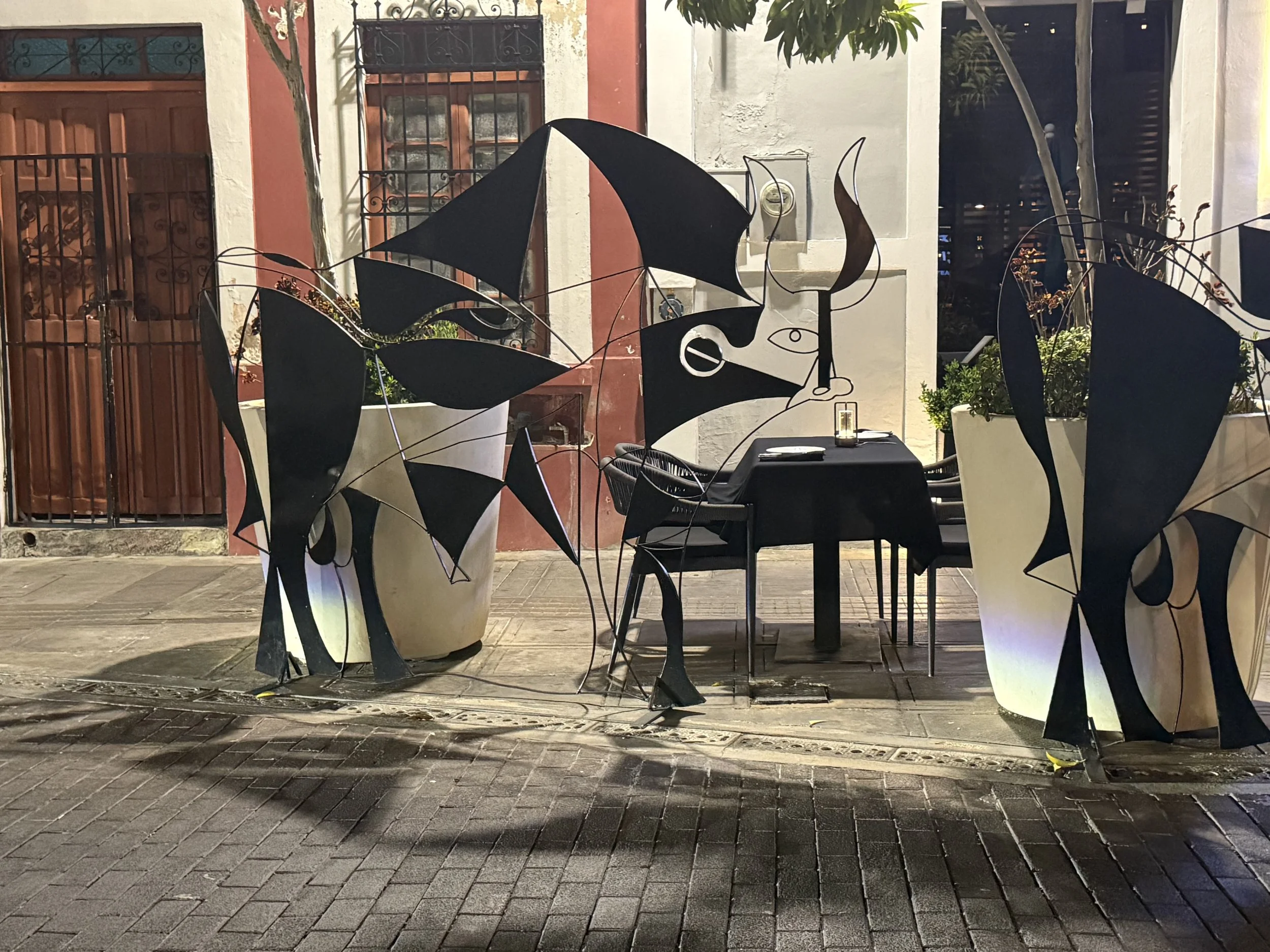
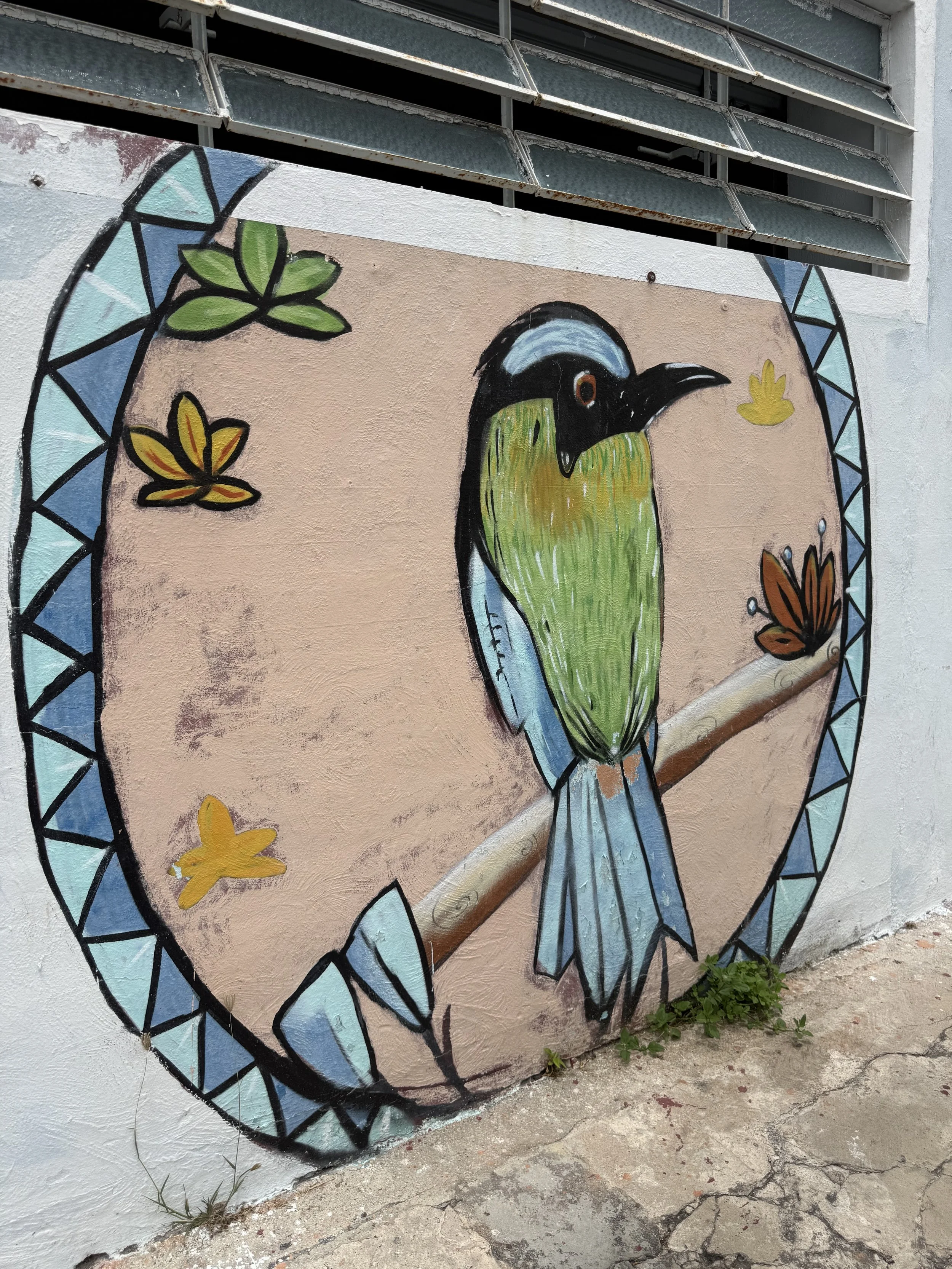
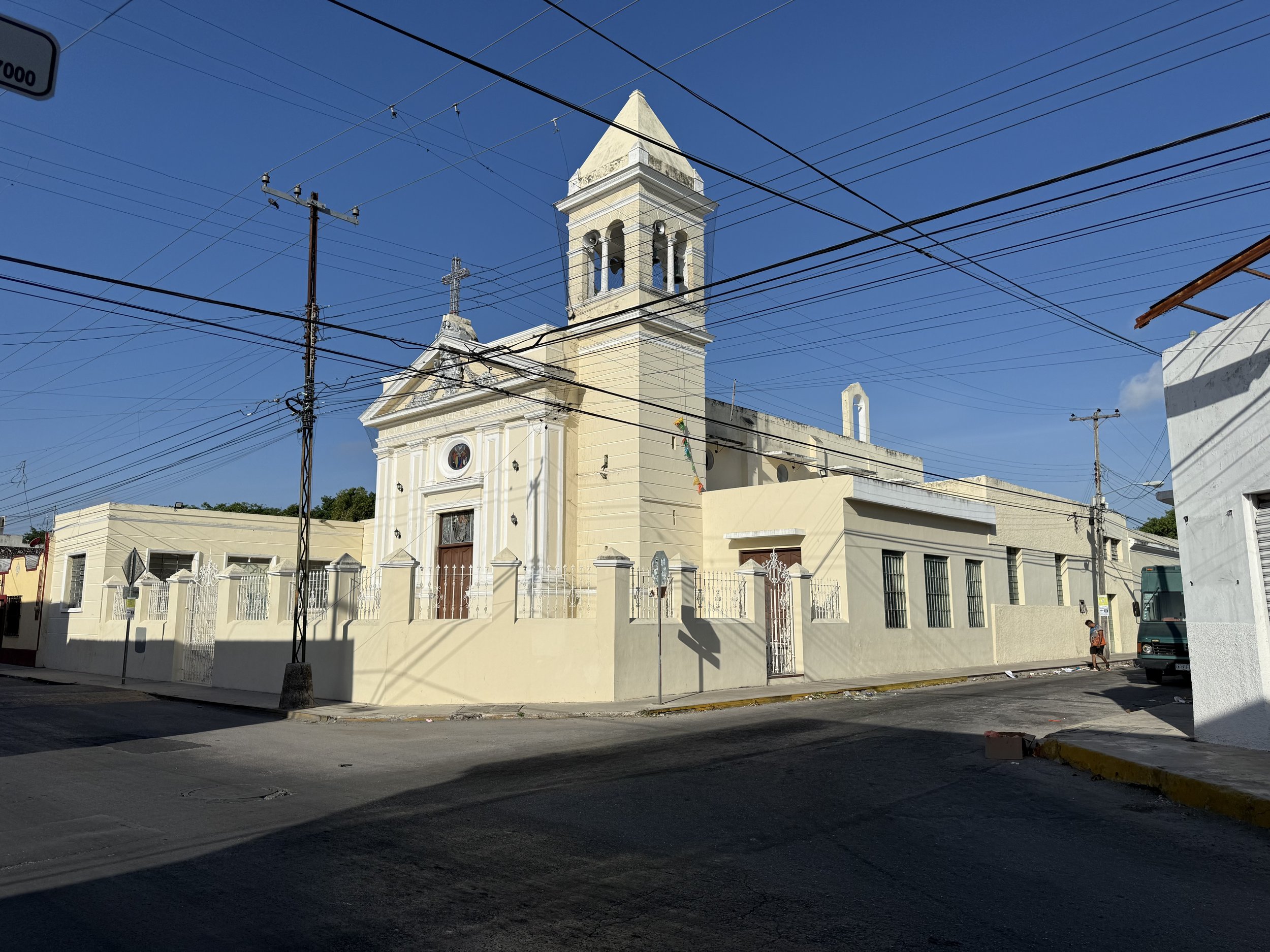
Mérida has a completely different feel from any area I visited in Yucatán. Slow-paced, with people enjoying the simplicity of their day. Funny how many dream of coming to Canada for a better quality of life, while I find myself craving almost the opposite. Life is not easier here on the peninsula, but it also does not seem much harder than back home. What they possess is a warmth we struggle to find in Canada — the pride they radiate when speaking about food, the welcoming conversations, the way people here are accustomed to hard work yet approach it through an entirely different lens. They work hard, yes, but there is never any visible rush. They work together, in groups, and you can feel the deep-rooted connection to Mother Earth and to their ancestors. Even the language itself feels like a direct reflection of an ancient culture still pulsing through the veins of the Maya descendants.
What a perfect lesson for me today. I, who always seems to plan ahead, evaluating every possible scenario before it can even materialize. I find safety in knowing how I might react no matter the outcome, but by living that way, I often forget the most important thing: the now. A recurring theme throughout this journey.
Today, Mérida gently reminded me that life does not always need to be optimized, solved, or anticipated. Sometimes it is enough to simply wander beneath cloudy skies, listen to distant conversations echoing from behind old walls, and allow yourself to exist without urgency.
Many residents here are from other parts of the country. I met several originally from the Federal District, Ciudad de México. One restaurant owner shared that one evening, while driving home, armed men approached their car and threatened them at gunpoint. Within a week, they sold everything and moved to Mérida, where they have now lived for the past six years. What a perfect place to start over, to retire, or simply to disconnect from the heaviness of the world.
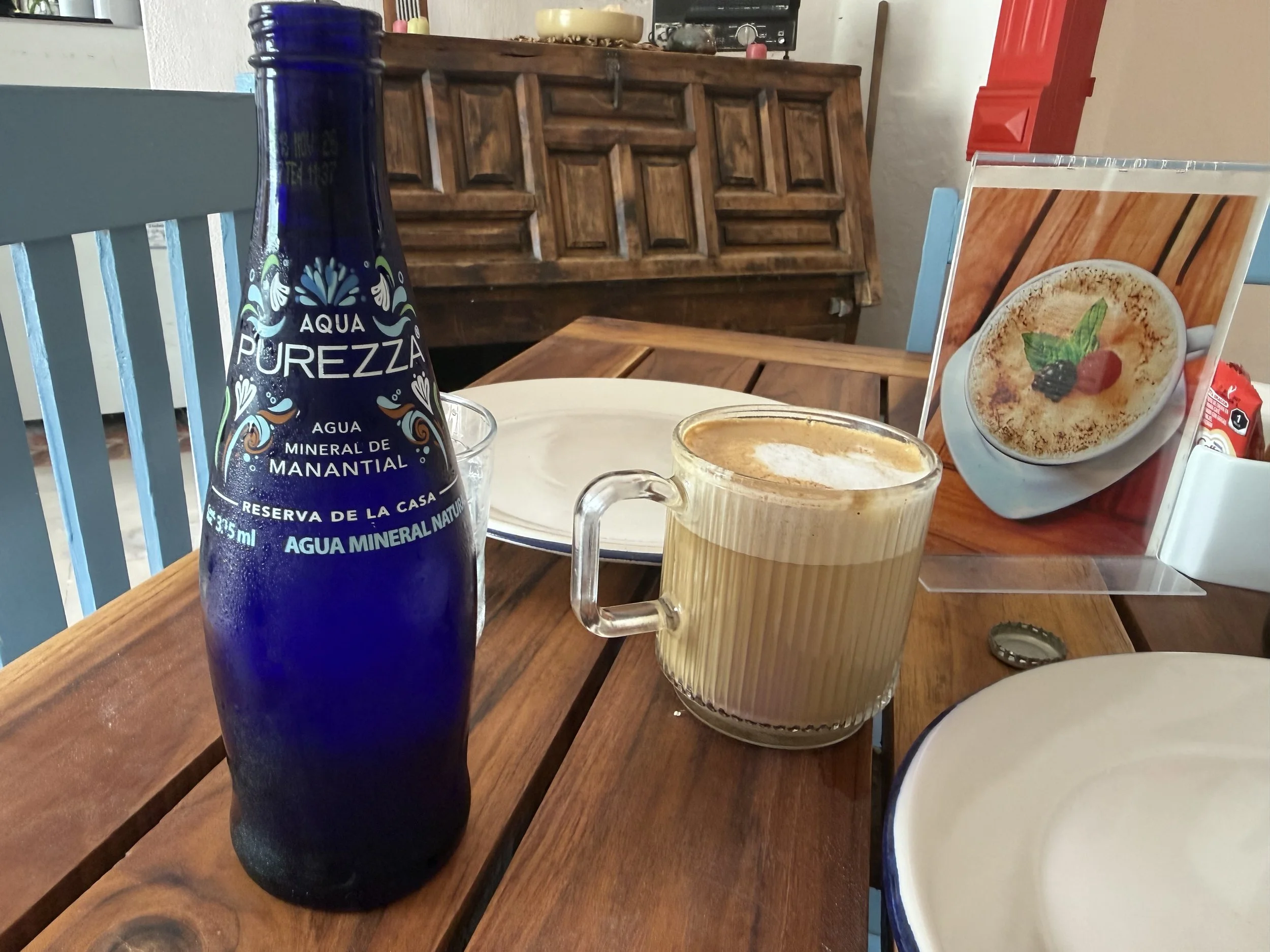
Coffee at Lumera
This week itself was barely planned. Beyond a place to rest my head and a driver, I really needed very little. Even the parts I did organize unfolded completely differently than expected.
Take my driver, for example. When I booked him, I assumed I was simply hiring someone to take me from one place to another while I figured out the rest on my own. Little did I know that John is far more than a driver. He keeps himself immersed in new discoveries, cultural events, and the significance behind them. He has a gift for making you truly live the maravilla of every experience the peninsula has to offer. He does not simply explain history — he carries you through centuries, sometimes millennia, of stories and traditions. Much like my own desire to share my adventures with friends back home, he has the rare ability to make others feel the experience alongside him. I would spend a month following him around and still I would only get a glimpse of the magic of this part of the world as with all other places I have visited in the last 15 years. https://discover-yucatan.com
If you ever wish to discover Mexico through adventure at your own rhythm, John is your man. He understands my need for slowness, for quiet spaces, for moments without pressure. He noticed the shift in my demeanor after the limpia and commented on how drastically my energy had changed. I even suggested he experience a limpia himself someday. He had never done one before and seemed genuinely intrigued.
In many ways, we are both learning from each other. My quiet rhythm of travel seems to offer him a few rare days of rest and decompression as well. What began as a professional arrangement in tourism slowly transformed into something much more human — a few days spent with a friend, being silly, laughing until we could barely breathe, and sharing pieces of ourselves in the spaces between destinations.
I had expected this trip to be a quiet week of solitude and introspection. But as I said before, I truly had no idea what I was stepping into the moment I met him at the airport. What was supposed to be two simple days of transportation and personal exploration evolved into a very real human connection. His life story shaped the perspective he carries today, creating a man who deeply appreciates the small things in life — something I myself have only truly begun to understand since my stroke.
This was never simply a contract to drive me around. It felt more like a divine intervention, one that gently shifted the course of my life toward something softer, lighter, and infinitely more meaningful. I did not know what I was searching for when I arrived here, but somehow, I found it anyway.
Truthfully, I could return home today feeling complete, carrying only what mattered and leaving behind everything that no longer serves me. Yet I am not ready to leave just yet. I still have a few more days to fill my soul to the very last drop, and I intend to do exactly that.
Community can be felt here and, in many ways, it is precisely what has shaped this region and protected its roots and way of life. Yes, there are areas rapidly growing with beachfront hotels and modern developments, but most of the small towns we drove through have not yet surrendered themselves to large tourism companies. They hold tightly to who they are and fight fiercely to preserve their traditions, their rhythm, and their connection to the land.
In Mérida, tourism can still be felt even during the off-season. But the moment you leave the city behind, there is a gradual return to simplicity. Life slows down again. In Motul, for example, they do not traditionally eat cochinita pibil. As I mentioned yesterday, the food there feels deeply rooted in ancient culture, recipes carried through generations rather than adapted for visitors.
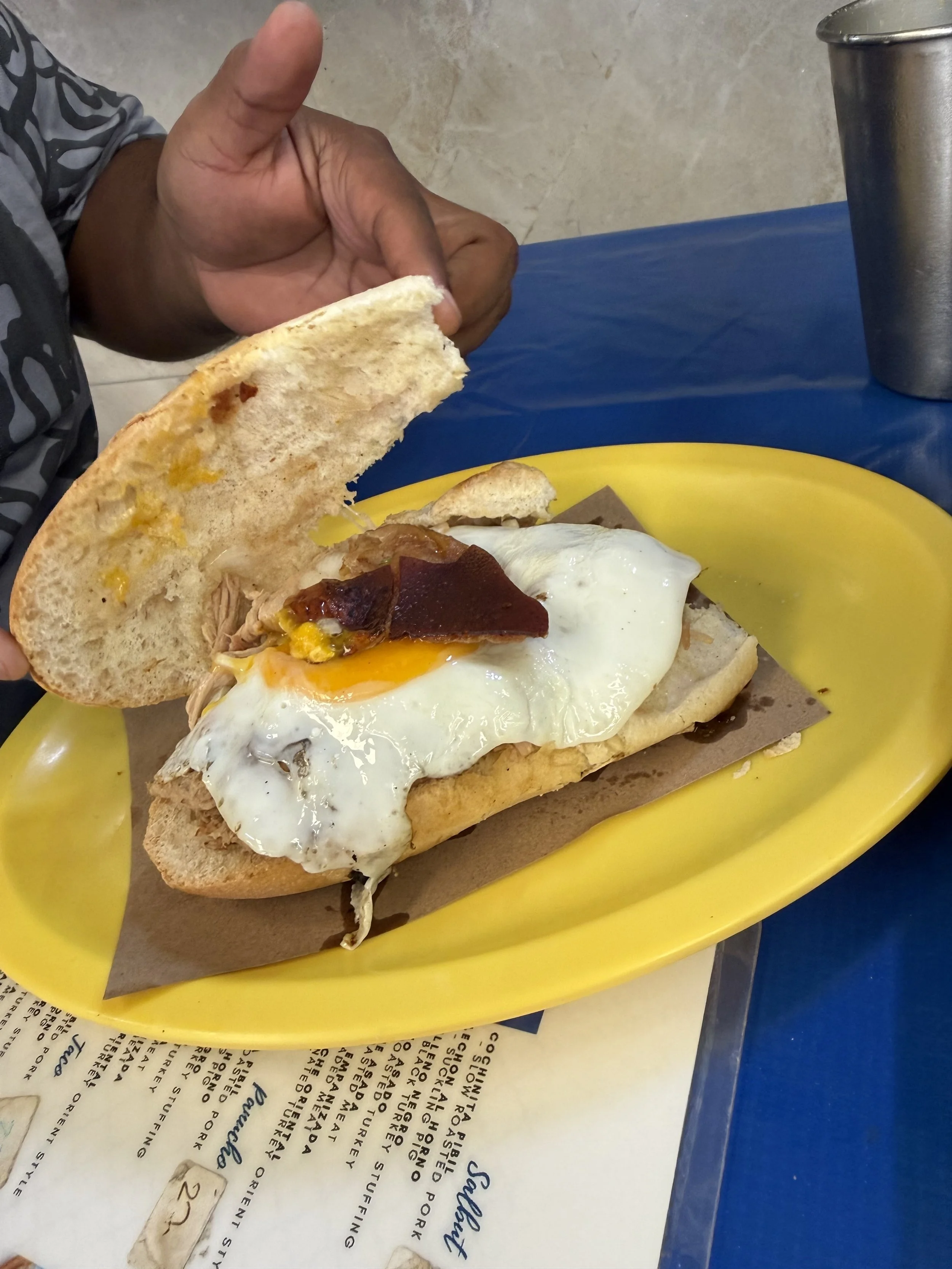
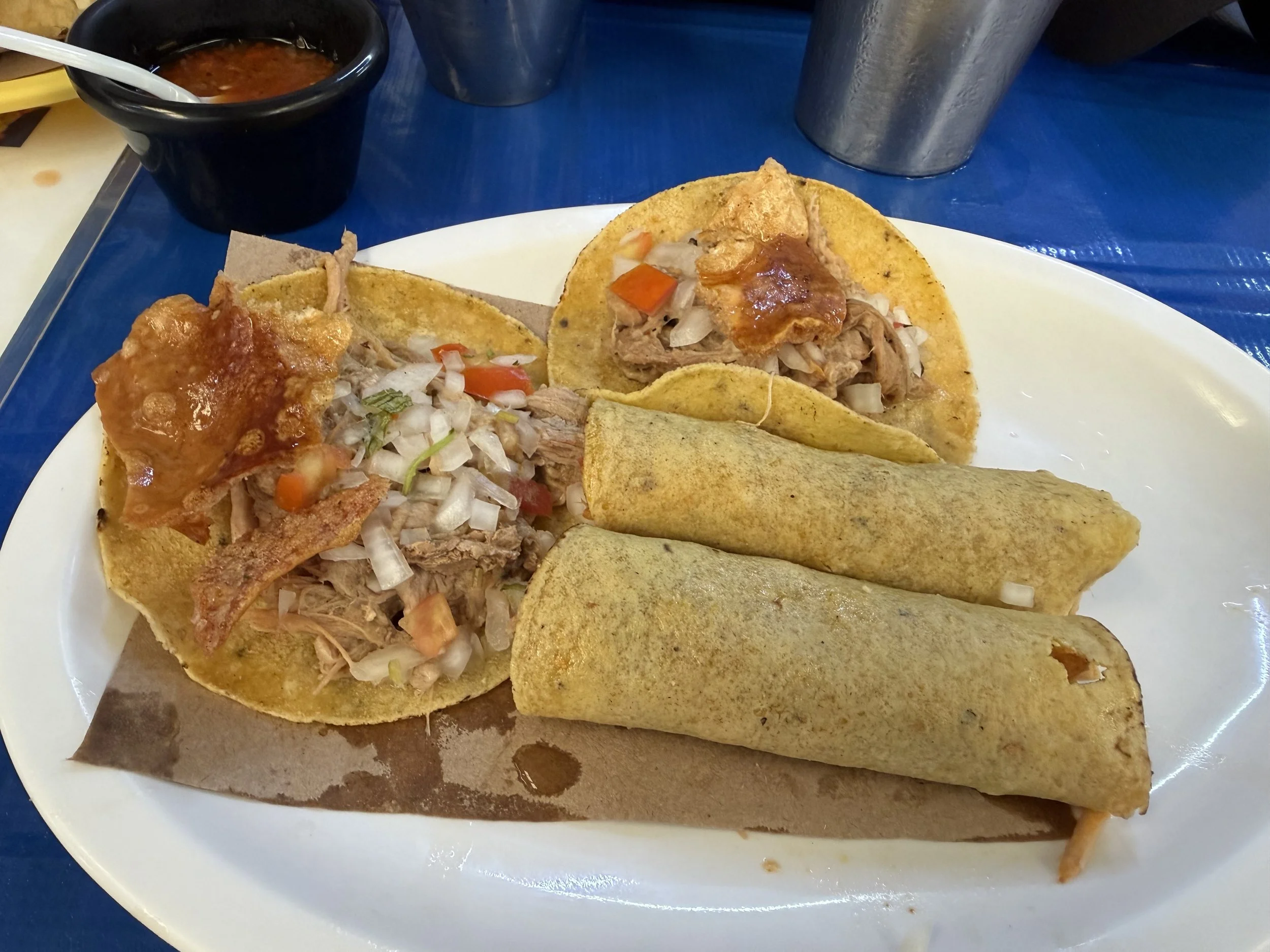
I had read about the strong Lebanese influence in this part of Yucatán, but it became real to me in the simplest way. John returned to the car carrying bottles of water and a kibi — pronounced kee-bee — the Yucatecan adaptation of Lebanese kibbeh. Made with cracked wheat and seasoned meat, then fried until crisp outside while remaining soft inside, it was one of those rare bites where texture and flavor completely surprise you. I devoured it with the local salsa he casually dropped onto my lap.
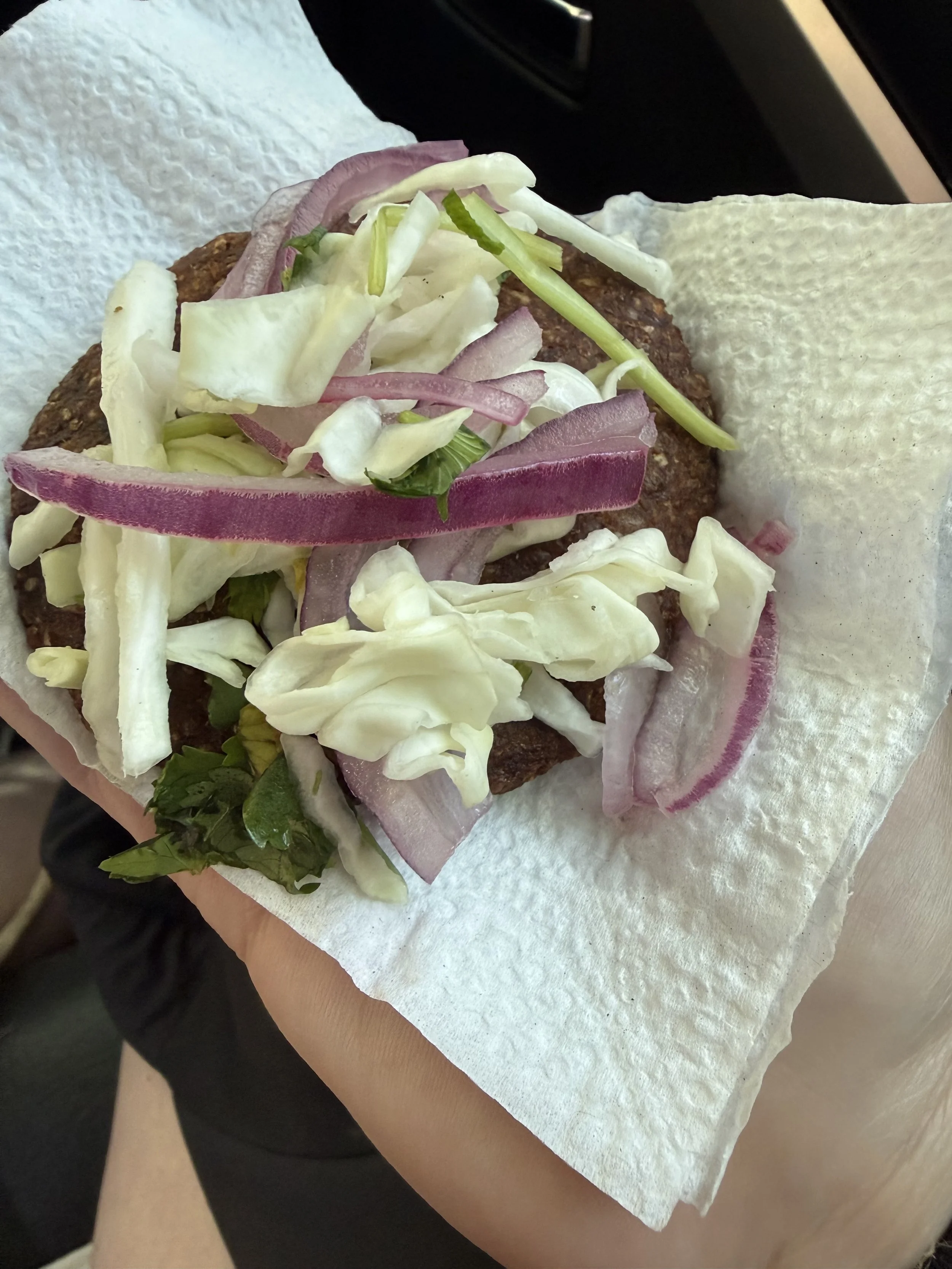
Picosa.
Qué rico.
Later, I found my way to a small restaurant tucked along a quiet street.
The restaurant is named Lumera — LUM for Luisa María, ER for his son Eric, and A for Alexandro, the dueño himself. Together: Lumera.
The name instantly reminded me of luz — light.
How fitting for this day, for this journey, and for a place that somehow managed to nourish both my belly and my soul. In a city where so much beauty hides quietly behind walls and within fleeting encounters, even the name of this little restaurant felt symbolic. A soft light tucked away on a quiet street, waiting to be discovered slowly, without rush.
It was already late for breakfast, but they were still serving it. I ordered huevos motuleños, a dish originally created in the town of Motul and beloved throughout Yucatán. A tortilla layered with black beans, topped with eggs, tomato-based salsa, peas, ham, plantains, and often crumbled cheese — a combination that sounds almost unusual at first, yet somehow comes together perfectly. Like so much of Yucatecan cuisine, it reflects layers of history and outside influence woven into local tradition. Sweetness from the plantain, acidity from the tomato, richness from the beans and eggs — comforting, filling, and deeply tied to place.
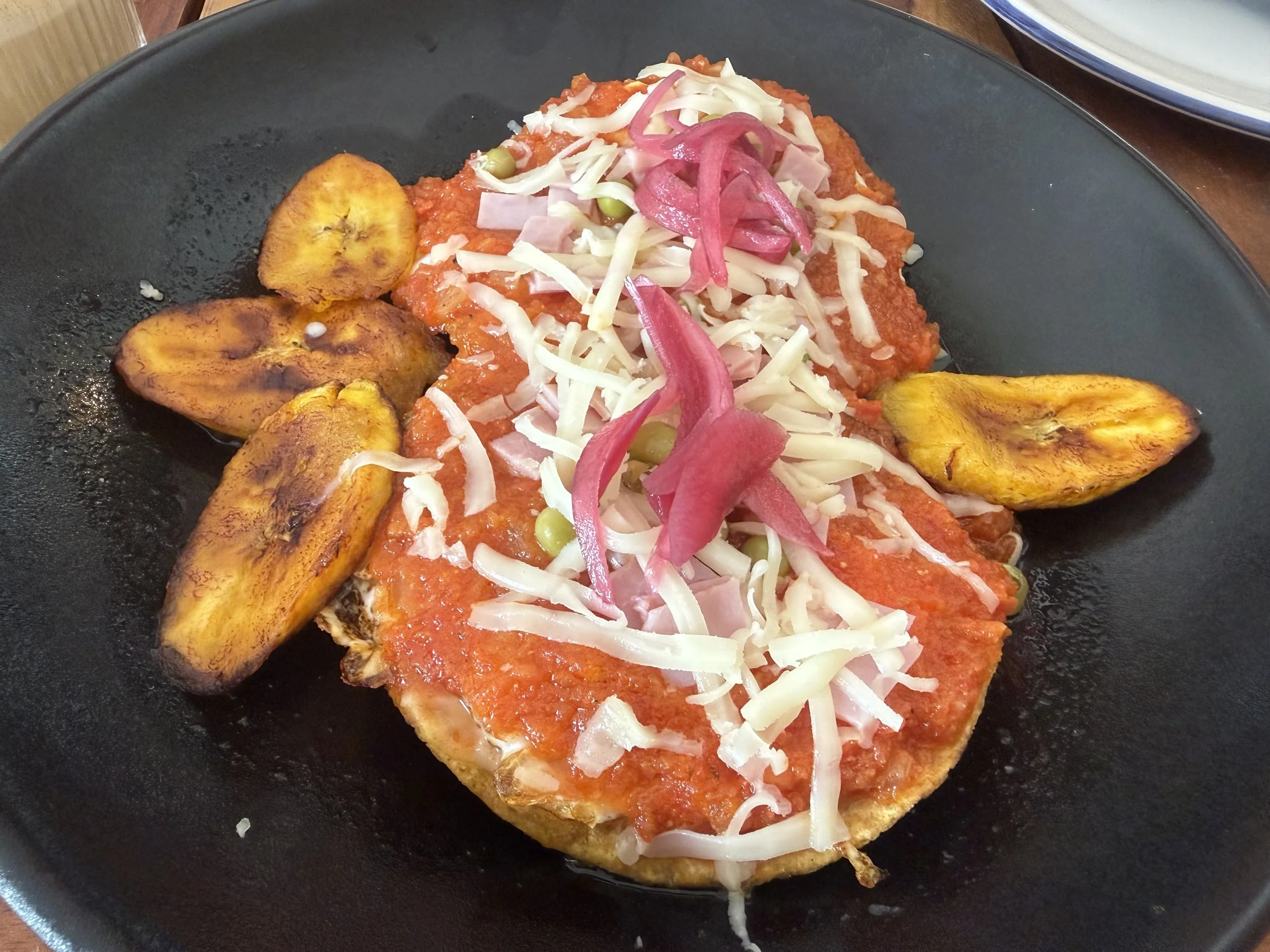
Huevos Motuleños
Yucatán is not considered one of Mexico’s spiciest regions, but they absolutely adore their habaneros. Naturally, I asked for extra chile with my dish, and before long the owner and I were deep into a conversation about salsa. He proudly explained that one of the young men working there (his son Eric as it turned out) is the secret conductor behind their perfectly balanced sauce — habanero, oil, salt, acidity, all somehow dancing together without overpowering one another.
“I want the recipe,” I laughed.
“Do you sell it?” I asked hopefully.
He smiled and explained that they are in the process of bottling them properly, but if I return Tuesday morning, he will prepare two small containers for me to bring home — carry-on approved.
I am already excited.
You are probably wondering about the pepino de mar story. Somehow, it became the root of our uncontrollable laughter fits throughout the trip.
While spending a quiet afternoon at the beach, a tiny, scrawny man wandered over to us. At first, it seemed like he was asking for money, but in truth, he appeared far more interested in conversation. He had once been a fisherman and spoke openly about his life, even lifting his shirt at one point to reveal the medical bag attached after surgery — a little more information than we expected, perhaps, but his enthusiasm made us quickly forget the awkwardness of it all.
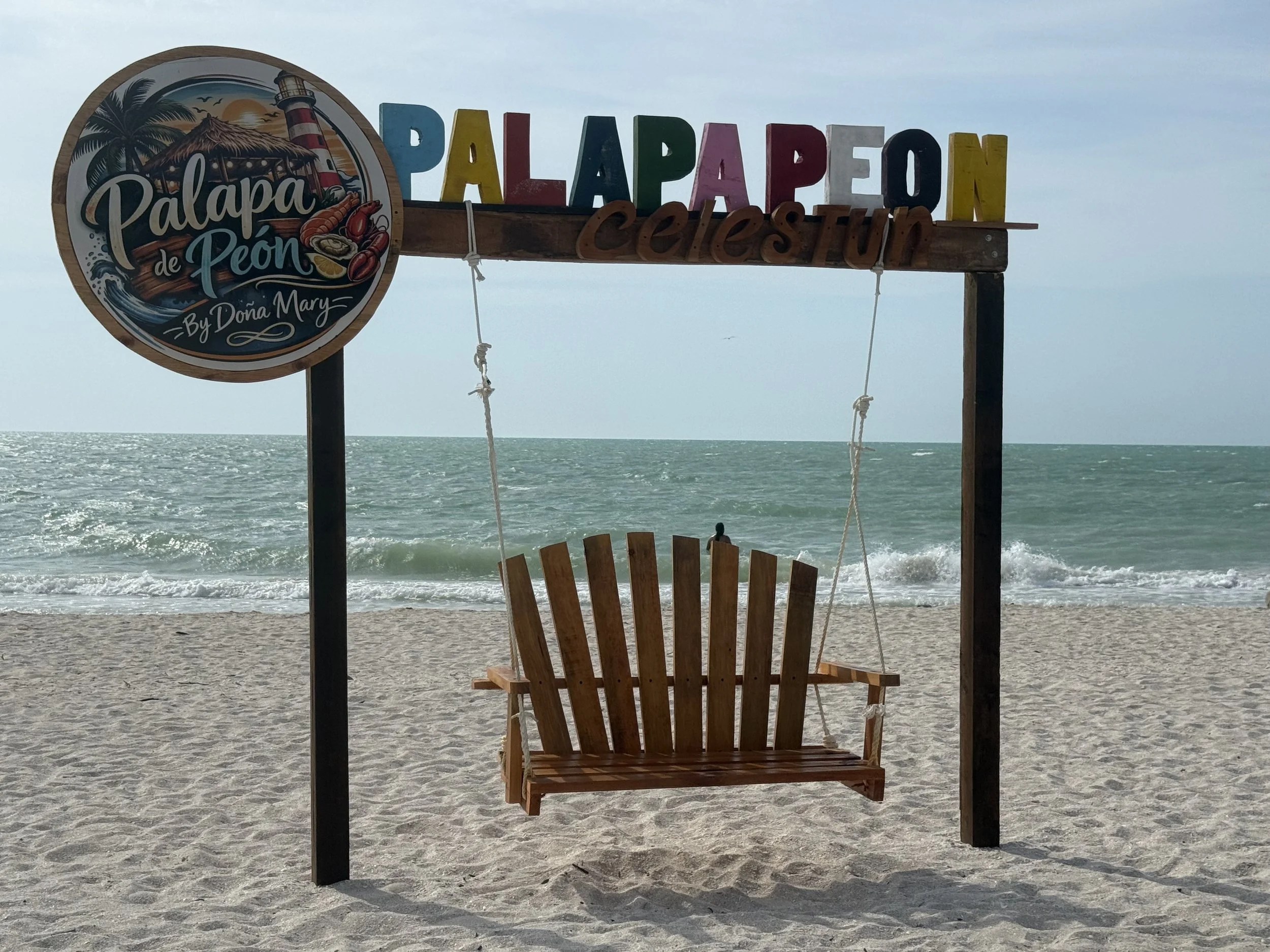
He began talking about the fish he used to catch, especially one called Pox — pronounced Posh— a humble local fish often eaten in coastal communities because it is affordable and plentiful. What captivated us was not only the food itself, but the way he described preparing it. His entire body became part of the recipe. His hands mimed chopping tomatoes, garlic, and onions; layering ingredients carefully; stirring pots slowly as though he could already smell the aromas rising into the air. His passion was so vivid that I could practically taste the invisible dish he was creating in his imagination. I remember wishing I had asked permission to record him because the performance itself was pure art.
Then the conversation shifted toward seafood believed locally to have aphrodisiac qualities, one of which was the famous pepino de mar — the sea cucumber. According to him, it would make you caliente, full of energy and desire. He launched into a dramatic explanation of how to prepare it: slicing it thinly, covering it with vinegar and salt, and leaving it to ferment until tiny bubbles appeared when opening the jar. Honestly, the recipe itself sounded suspiciously similar to making pickles, but what truly sold the story was the sheer intensity of his delivery. His gestures, his expressions, his absolute conviction — we were completely finished.
What started as a funny conversation quickly evolved into an inside joke between John and me. Every mention of pepino de mar would send us spiraling into another fit of laughter. I was snorting, hiccuping, trying unsuccessfully to breathe, while John would attempt to regain composure only to collapse into even deeper laughter himself. Naturally, our humor deteriorated into the kind of ridiculous immaturity usually reserved for teenagers, where every double meaning became funnier than the last.
And that is another thing I adore about Mexican Spanish. It is full of doble sentido — double meanings where words can carry both an innocent interpretation and a mischievous one at the exact same time. Conversations become layered, playful, and endlessly entertaining. It is something I first learned through my husband, but here in Yucatán it feels woven naturally into everyday life.
What stays with me most, though, is not simply the humor. It is the strange mixture of admiration and tenderness I felt for this man speaking so openly, without vergüenza, sharing pieces of his life with complete sincerity. Beneath all the laughter, there was something deeply human happening: two people understanding each other through humor, stories, and shared absurdity. And somehow, for reasons entirely different for each of us, that laughter itself became a kind of healing.
Honestly, though, today felt less about “arriving” somewhere and more about letting the streets carry me slowly between Santiago and Santa Lucía. That corridor is where Mérida quietly breathes.
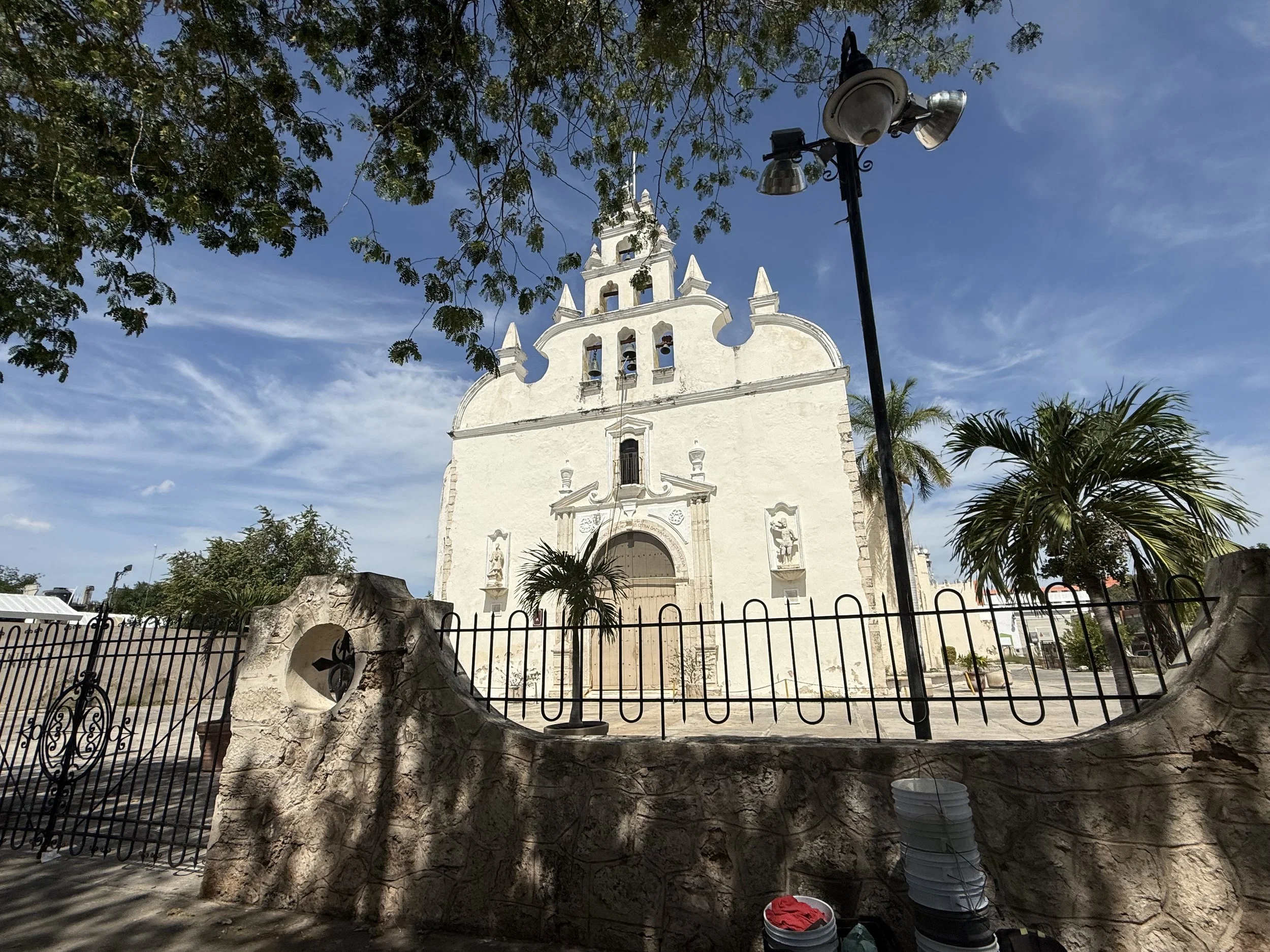
I took a slow stroll through Santiago in the direction of Parque Santa Lucía, only to accidentally wander into a shaded park overflowing with trees so numerous they seemed impossible to count. Before I realized it, I had stumbled into a small zoo tucked within the greenery. White tigers pacing silently in the heat, peacocks proudly displaying their magnificent tails in full fanfare, monkeys leaping and calling to one another from every direction.
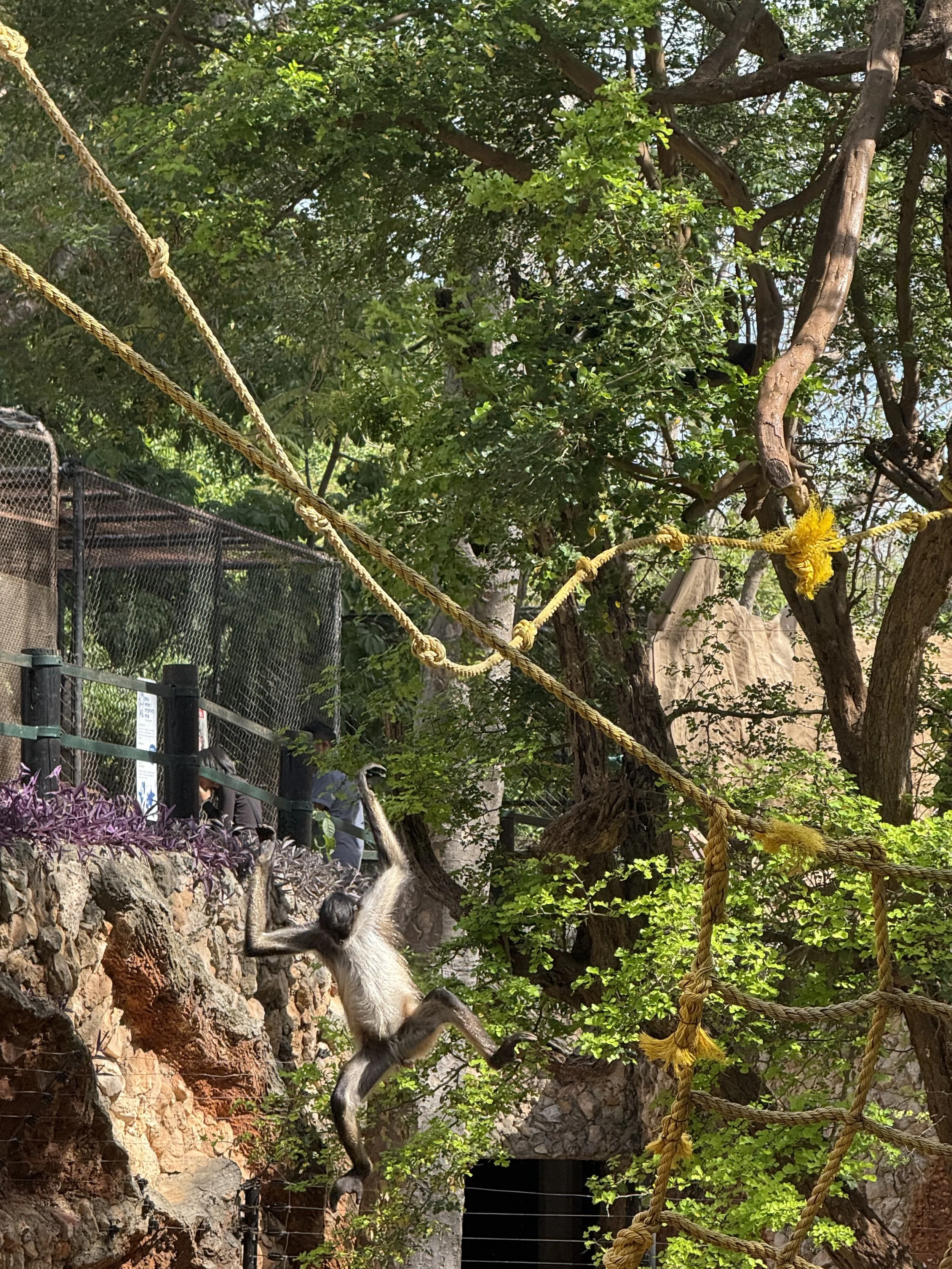
But it was the zebra that held my attention the longest.
He stood calmly near the fence, his left eye wide open as though genuinely searching for connection. Using his hooves with surprising delicacy, he held a branch covered in leaves that appeared, at least from his expression, to be the greatest delicacy imaginable. There was something oddly human in the quiet concentration of the moment, the simple pleasure of eating in peace beneath the shade.
I eventually found a bench and sat quietly for a long while, listening to the sounds around me. Families wandered past with their children, laughter echoing through the trees. Some of them — adults included — wore little artisanal monkey hats perched on their heads, adding a strange and playful charm to the afternoon.
The park itself felt frozen somewhere between nostalgia and dreamscape. Statues scattered through the pathways reminded me of our old Storyland back home, now long defunct. There was that same slightly surreal feeling: faded whimsy surviving the passage of time, still capable of sparking wonder despite its age.
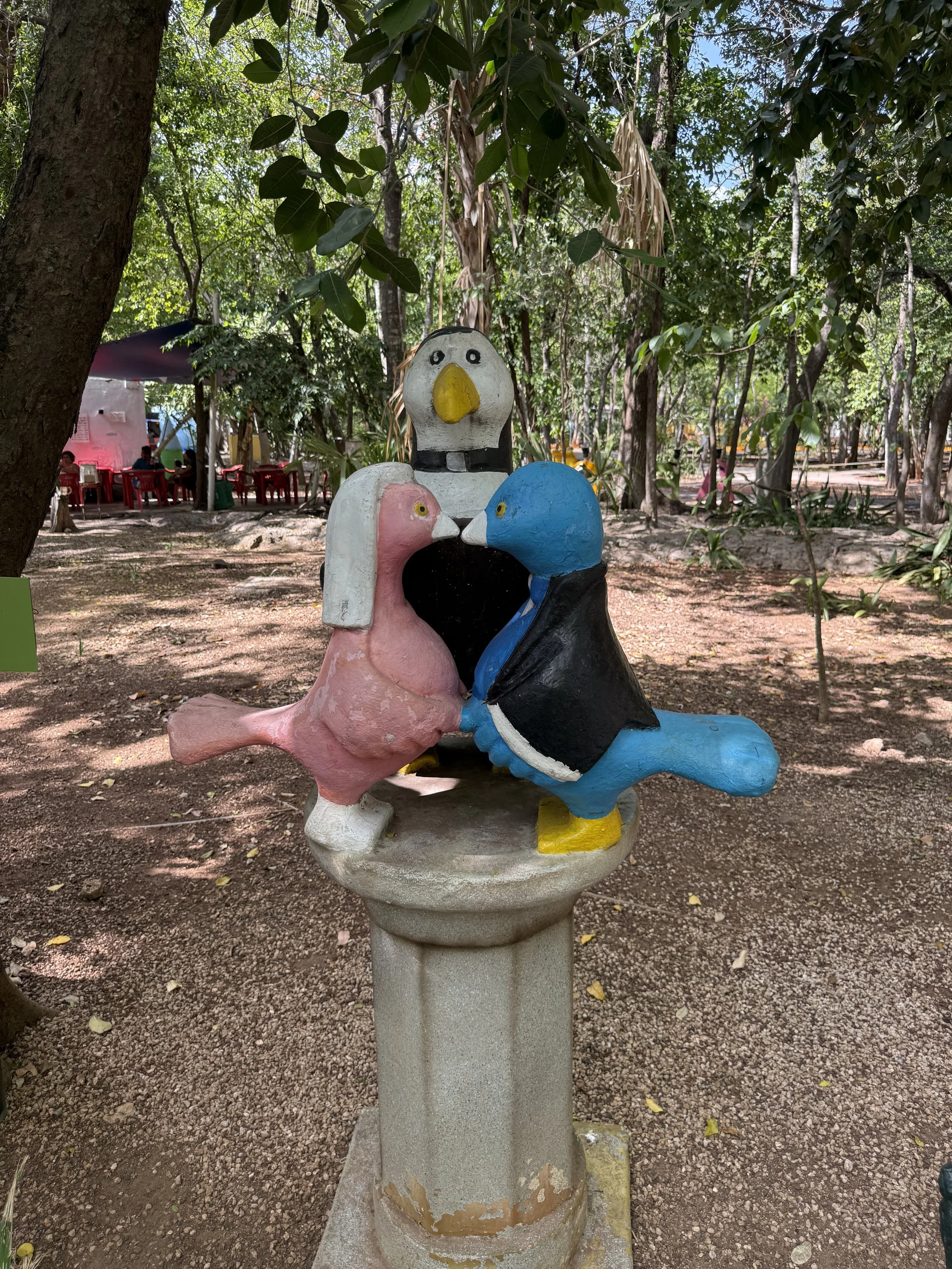
And there I sat, beneath the heavy Yucatán sky, surrounded by children’s laughter, animal calls, old statues, and tangled trees, feeling strangely at peace with the slowness of the day.
Where to next? I wish I still were hungry, the smell of tortillerías and slow cooked meat calls my name quietly but sadly I must ignore or I will burst or have to pay for an extra seat on the return home.
The heat is heavy but enjoyable under the shaded breeze. I will let Mérida guide my feet to continue to be amazed by all the sensory delights it has to offer.
Happy Sunday my friends, I hope you are enjoying every second as I am here