
Never made it to Celestun
This morning, I met John outside my hotel at 7 a.m.
The plan?
Find a cenote, then maybe head toward Celestún and the biosphere.
Maybe.
First: coffee.
Coffee in hand and a sandwich packed “just in case,” we hit the road while John told me he knew of a few cenotes nearby. The closer we got, the more excited he became. At one point he looked over at me and smiled.
“You have no idea what’s coming.”
He was absolutely right.
We pulled into a desolate stretch of land. Life out here feels hard. The terrain itself seems resistant to softness—rocks, limestone, boulders piled over soil that appears robbed of anything capable of giving life. Harsh. Dry. Almost lunar.
John jumped out to grab the chalecos—life jackets—while I stayed behind for a moment, finishing my coffee under the infernal morning sun as it kissed my still blue-white winter skin.
John was practically vibrating with excitement.
“¡Vámonos!”
I left the coffee in the car—there was a 100% chance it would still be hot when we got back—and followed him toward what looked like nothing more than a mound of rocks.
As we rounded the path, bees buzzed heavily around the entrance.
And suddenly… there it was.
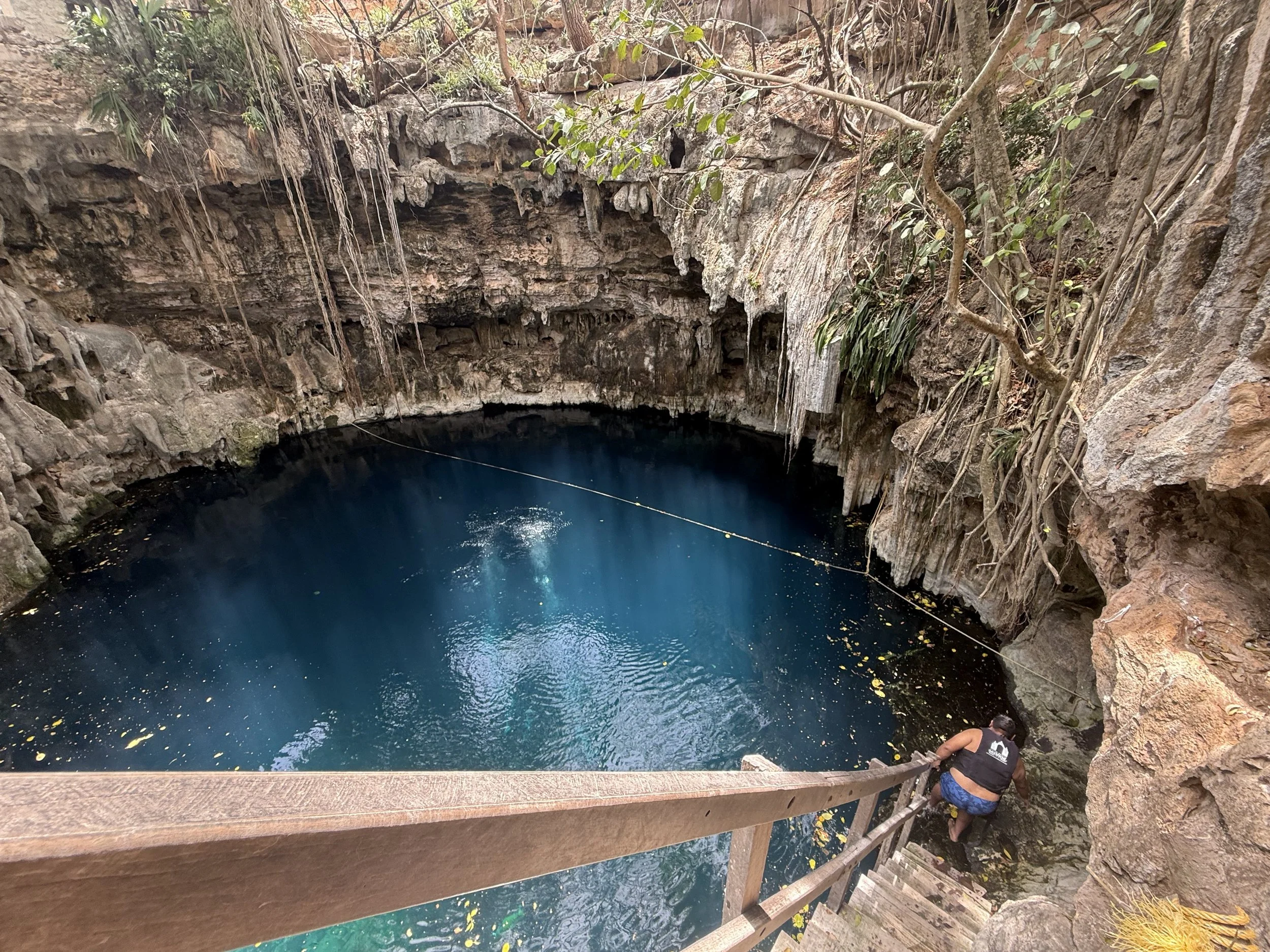
A hole in the earth.
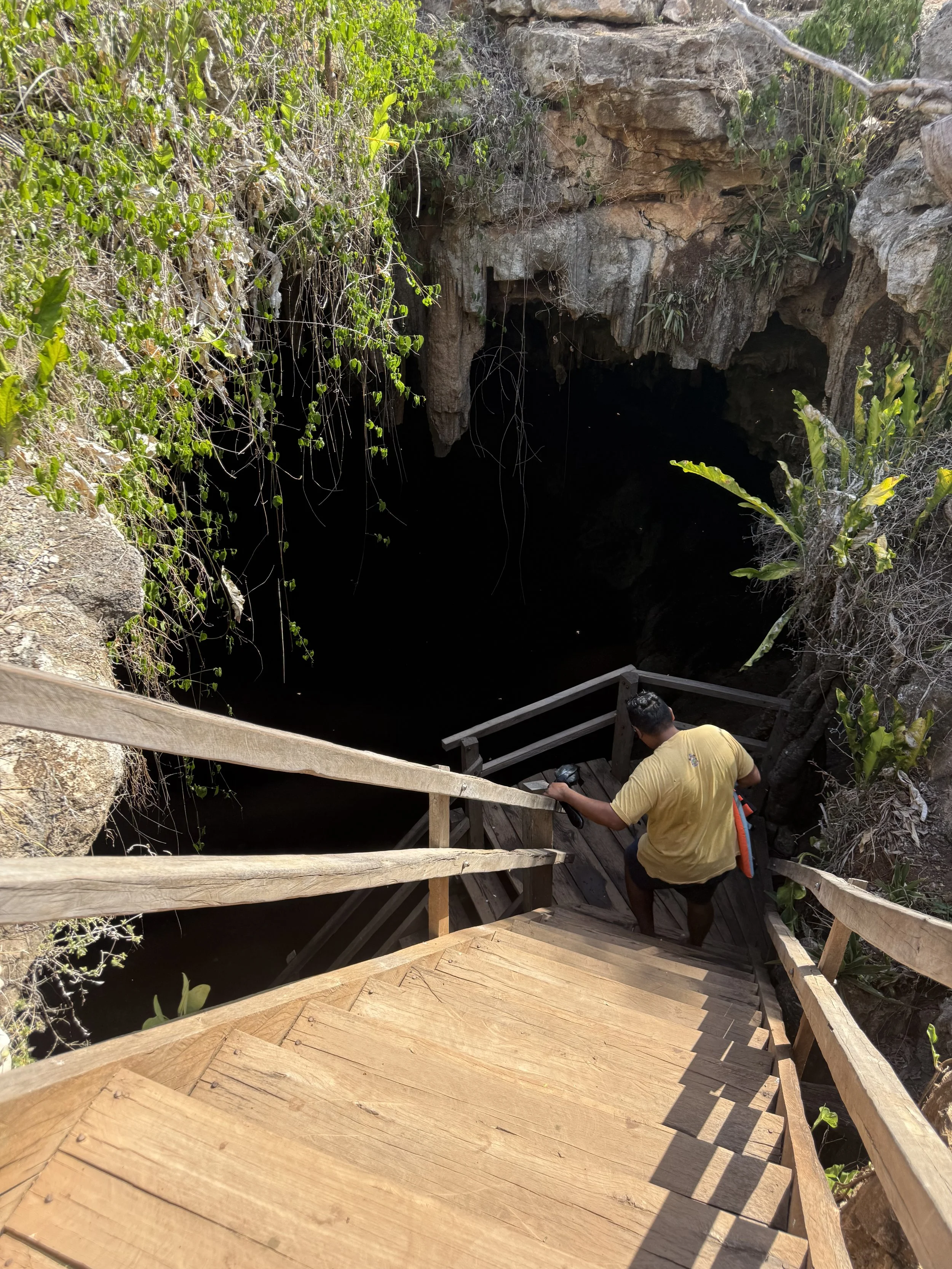
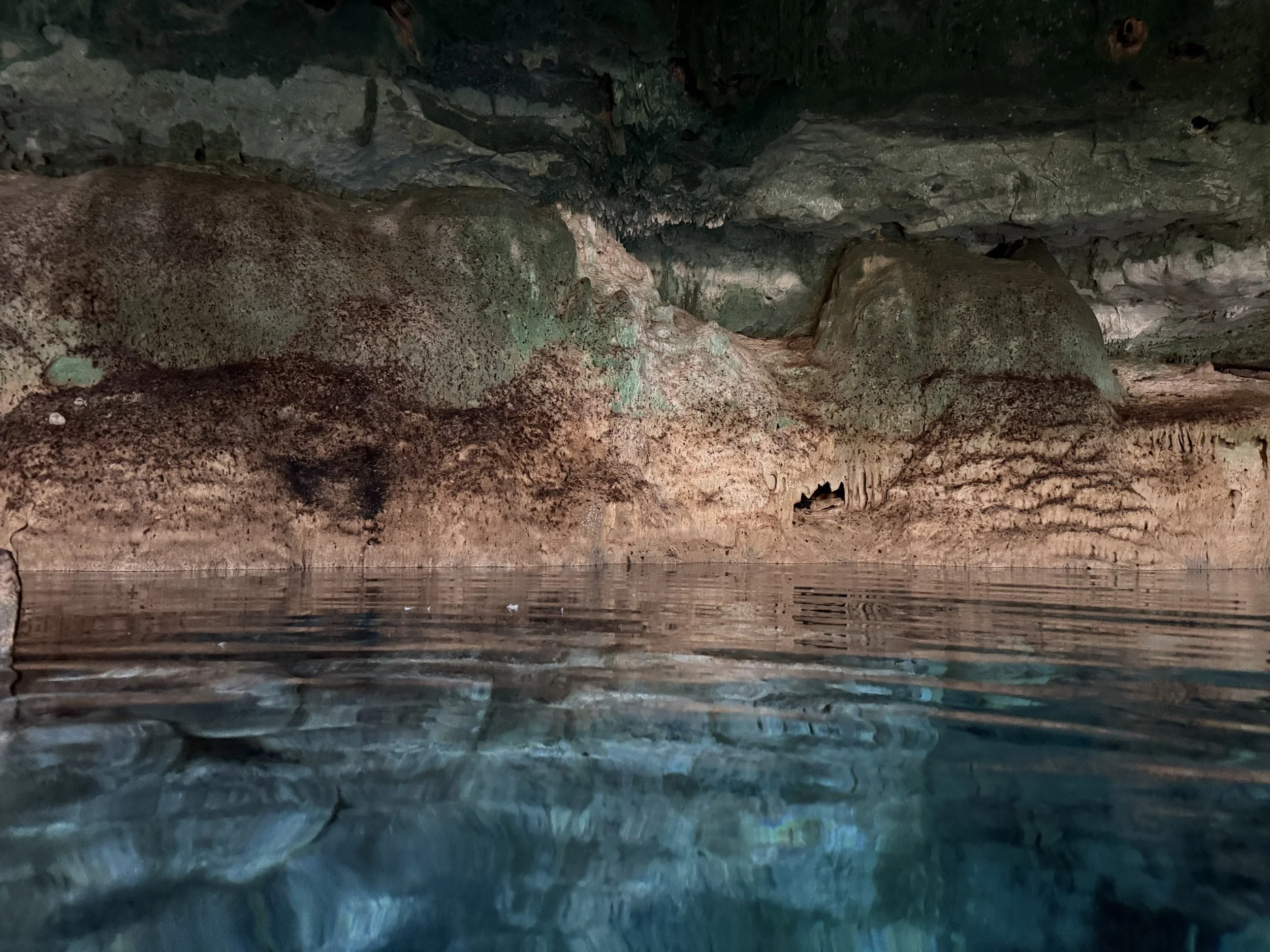
A wooden staircase disappearing into darkness, ending at a small platform where people left their belongings before entering water so impossibly clear it barely looked real. Golondrinas darted through the cavern air. Blind catfish glided silently beneath the surface. Above us: at least a forty-meter opening to the world above.
I jumped in immediately.
The water was fresh, cool, delicious against the crushing heat outside.
And then believe it or not, I ran out of words.
I finally understood John’s anticipation.
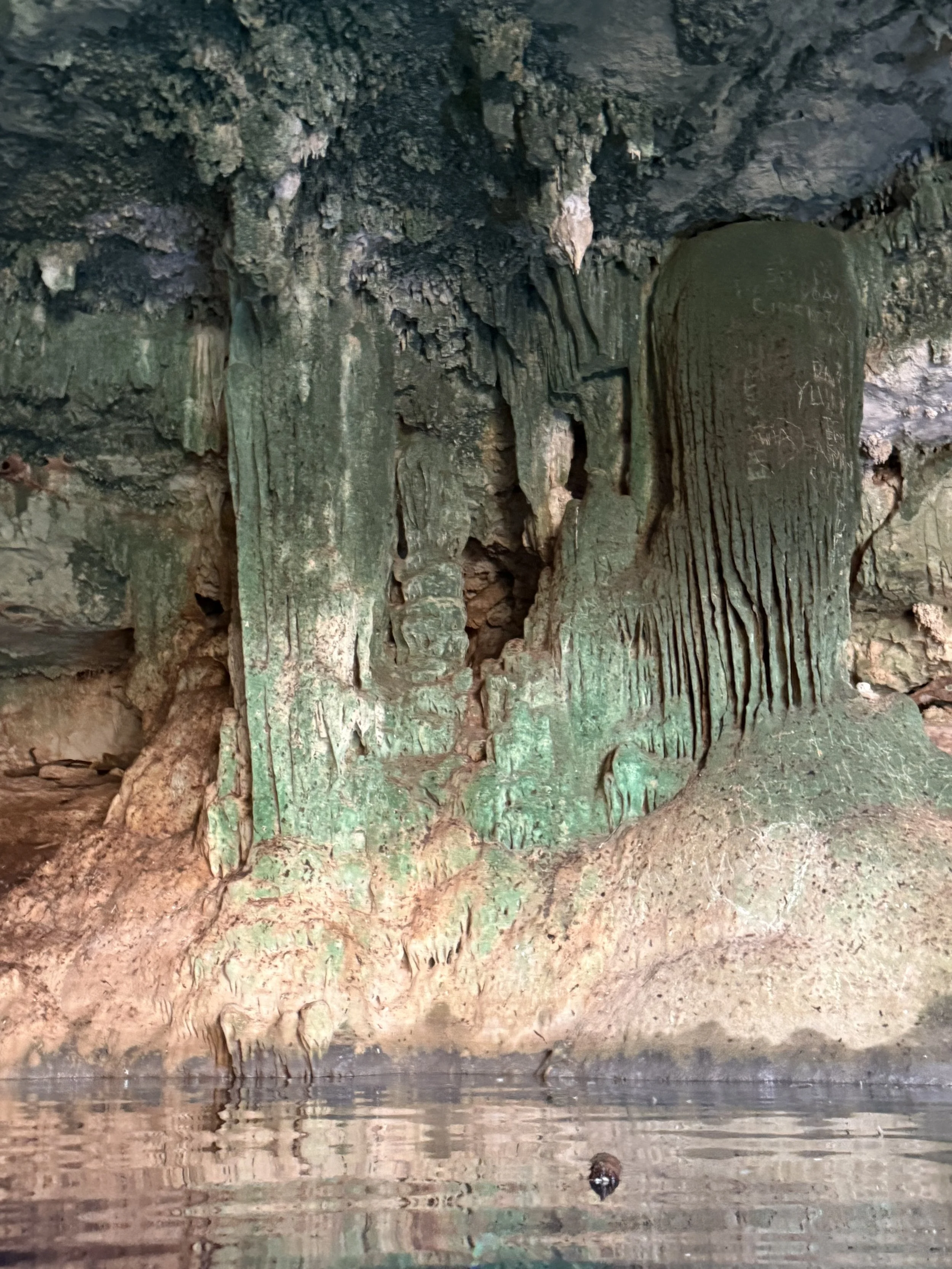
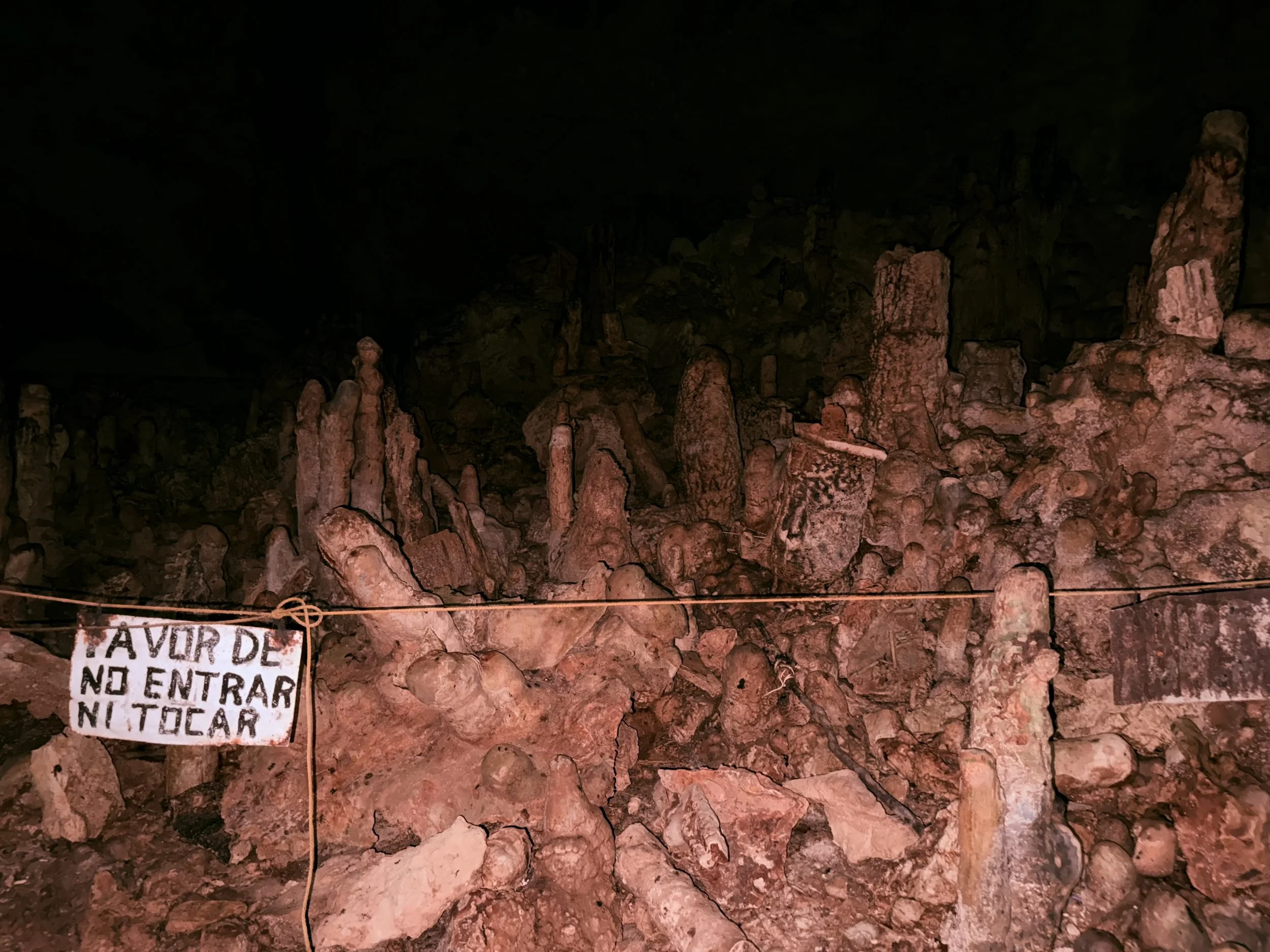
The stalactites and stalagmites looked almost unreal, sculptural in a way that made the cave feel less geological and more sacred. Still, language kept escaping me. Some places resist description because they demand presence instead.
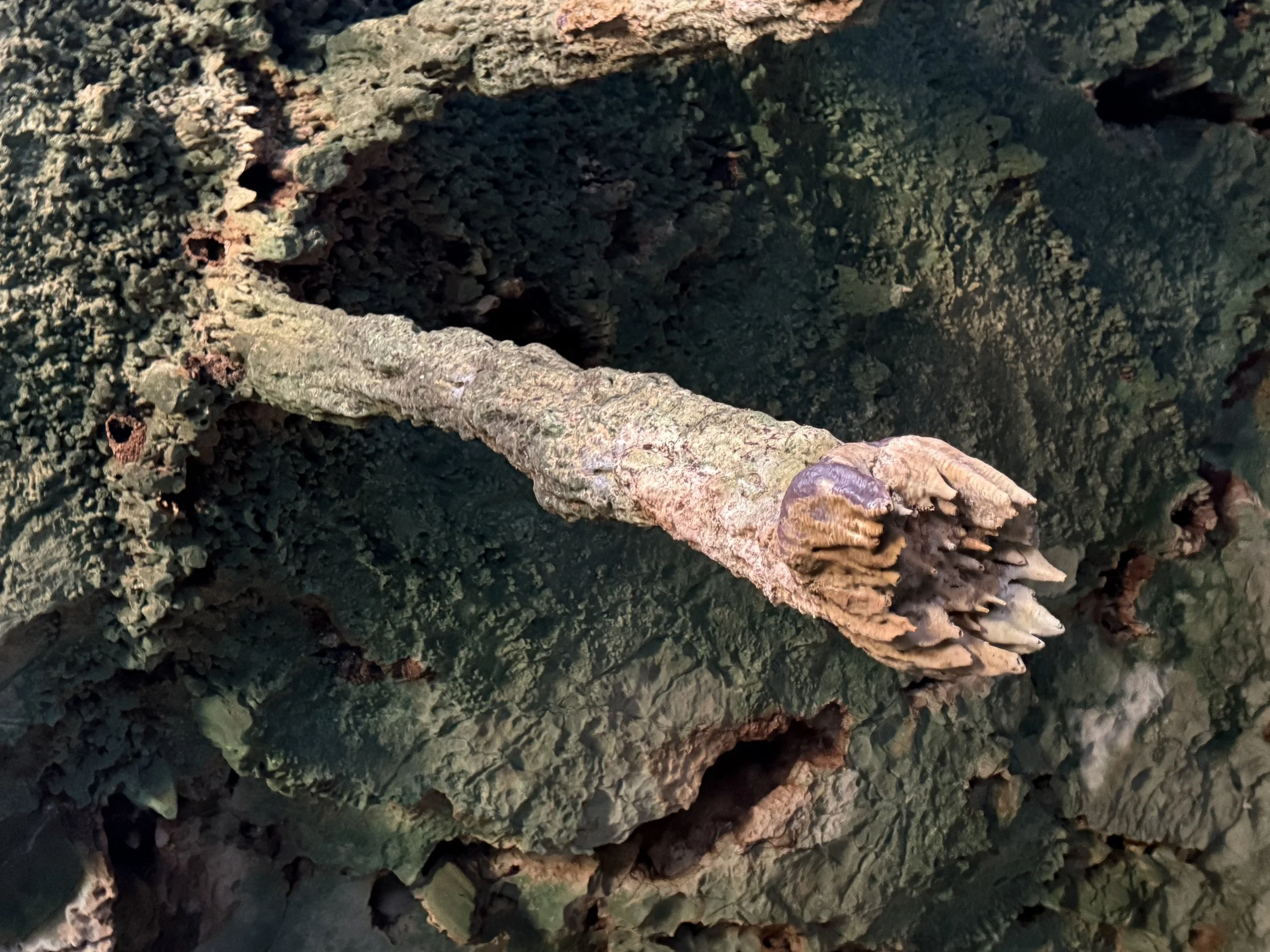
The energy of this cenote felt gentle. Softer than the one from yesterday, which carried a heavier, more intense force.
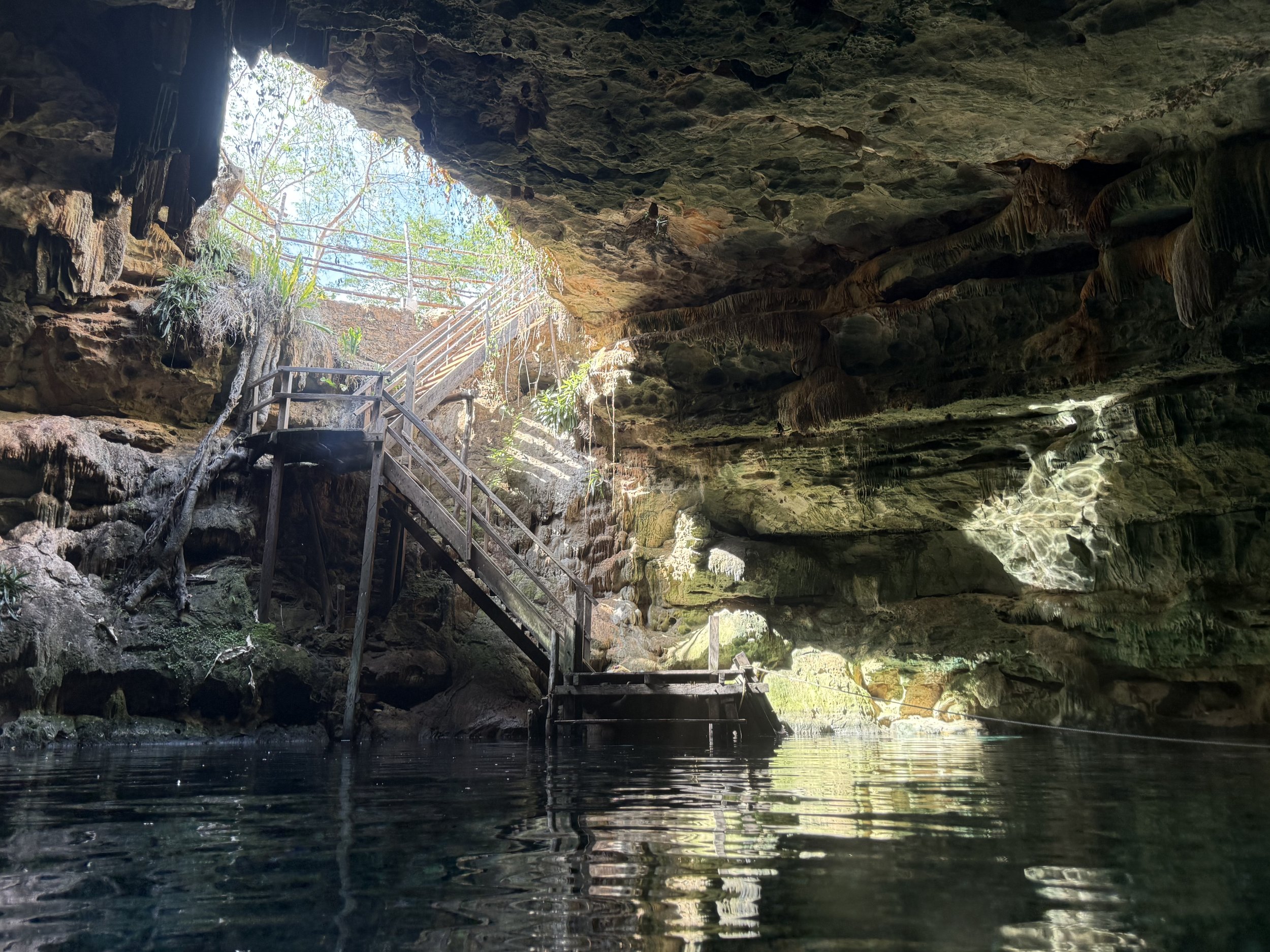
Here, I simply floated.
Quietly.
We were alone, and the sun was just beginning to break through the opening above us. John explained that this was the magical moment—the birds know it is time to wake, to emerge, to begin the day. Entire ecosystems live inside these cenotes. Fragile, ancient worlds hidden beneath the limestone of the Yucatán peninsula.
The bees were everywhere around the cenote entrance, drawn by the cool air.
Some began falling into the water, exhausted.
Normally, these bees sting—one had taken a decent chunk out of my arm the day before—but down there, submerged in the cool darkness of the cenote, they seemed almost fragile. Vulnerable. Tiny living things simply trying to survive another scorching day beneath the Yucatán sun.
Without hesitation, John began helping them.
One by one, the bees would weakly climb onto his fingers after being lifted from the water. They clung there delicately, barely moving at first, before slowly beginning to shake their wings dry. Then, suddenly, they would take off again like tiny airplanes disappearing back into the cavern light.
At one point, he had nearly ten bees gathered on a single finger.
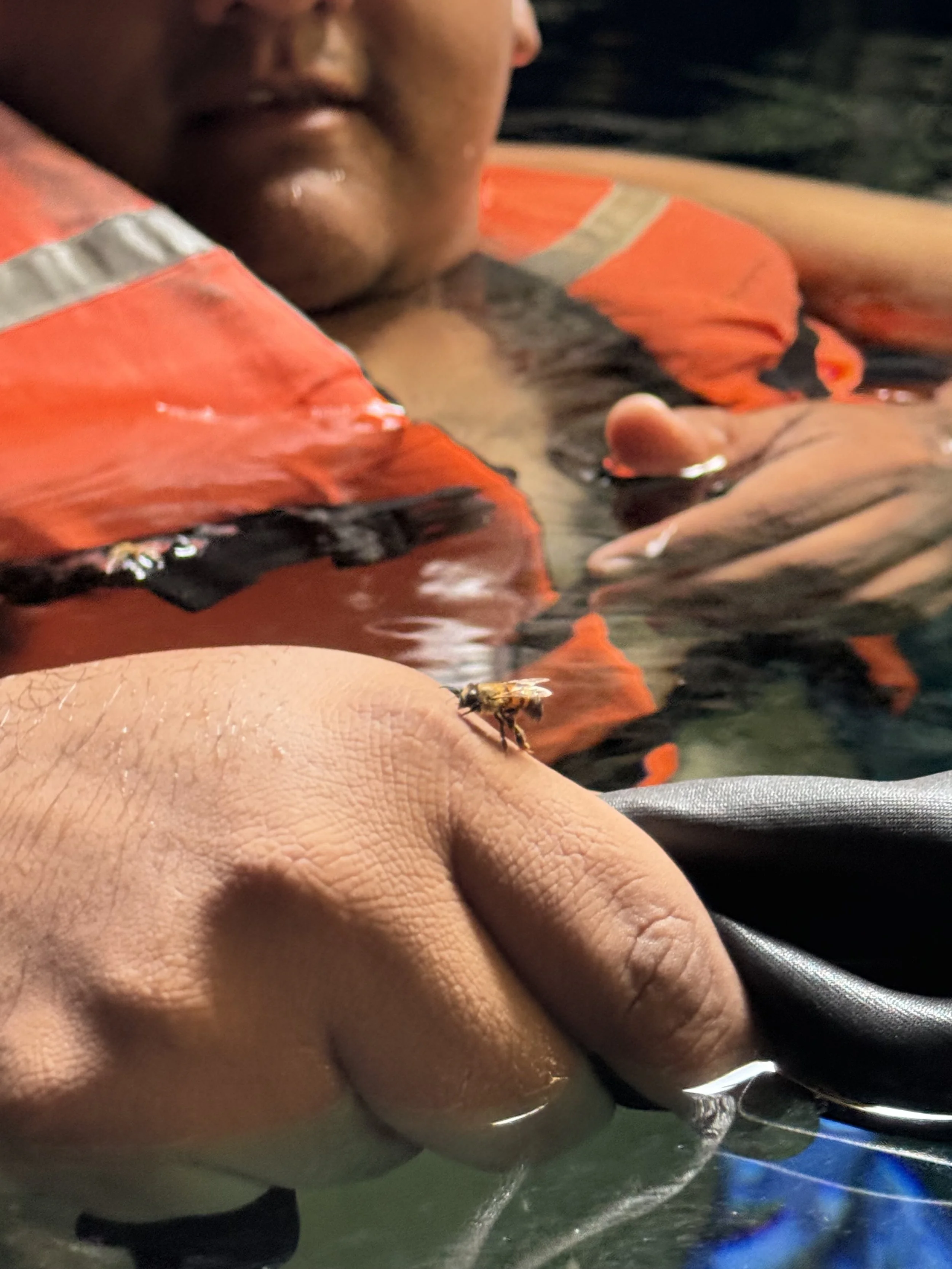
I watched them closely.
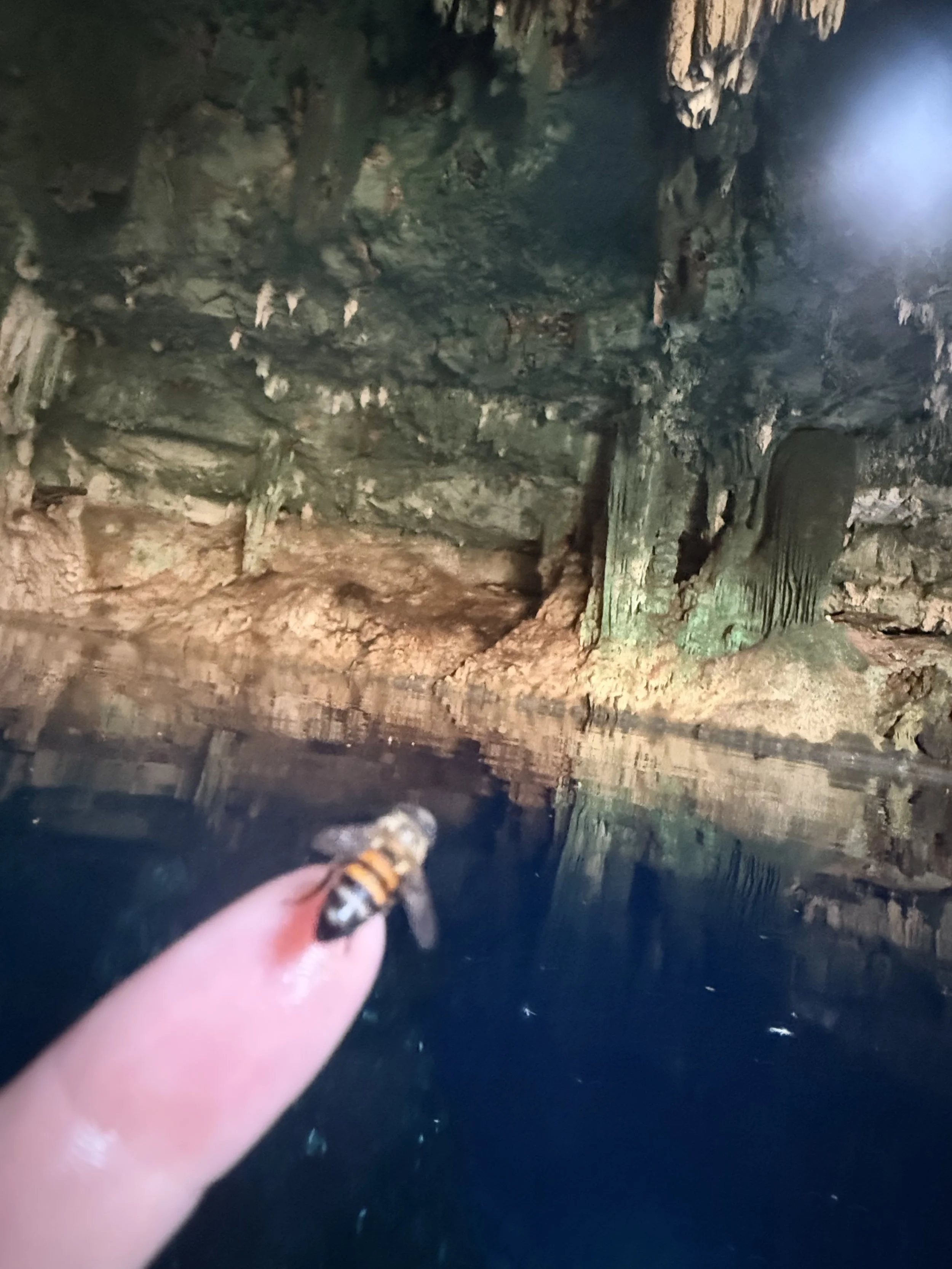
They seemed to help one another dry off, touching each other gently with their tiny legs, adjusting themselves, waiting patiently for strength to return before flying again. There was something strangely emotional about witnessing it. These creatures I normally associate with pain and honey suddenly appeared cooperative, exhausted, alive.
Grateful for rest.
Grateful for another chance.
And we need them, too.
Watching John care for something so small inside this immense ancient cavern reminded me again that we are not separate from nature. We are part of the ecosystem, whether we choose to acknowledge it or not.
But somewhere along the way, our kind forgot.
We behave as though the Earth belongs to us, when in reality we are only guests here.
Temporary visitors.
And sacred places like these cenotes make that truth impossible to ignore.
As overwhelmed as I was by the geological beauty surrounding me, I also felt deeply honored to be welcomed into these sacred places.
And then, finally, I understood something.
This was never just a visit.
Not tourism. Not sightseeing.
This journey into the cenotes is part of my healing.
Part of this strange transition between the life I left behind and whatever waits ahead for me now.
A few hours later, people slowly began arriving. Voices echoed through the cave. The spell gently broke.
John looked over at me.
“So… what comes next?”
I laughed.
“Find me another cenote.”
I wanted to float again. To feel wonder take over every one of my senses.
The second cenote carried an entirely different vibration. Different light. Different textures. Different energy altogether.
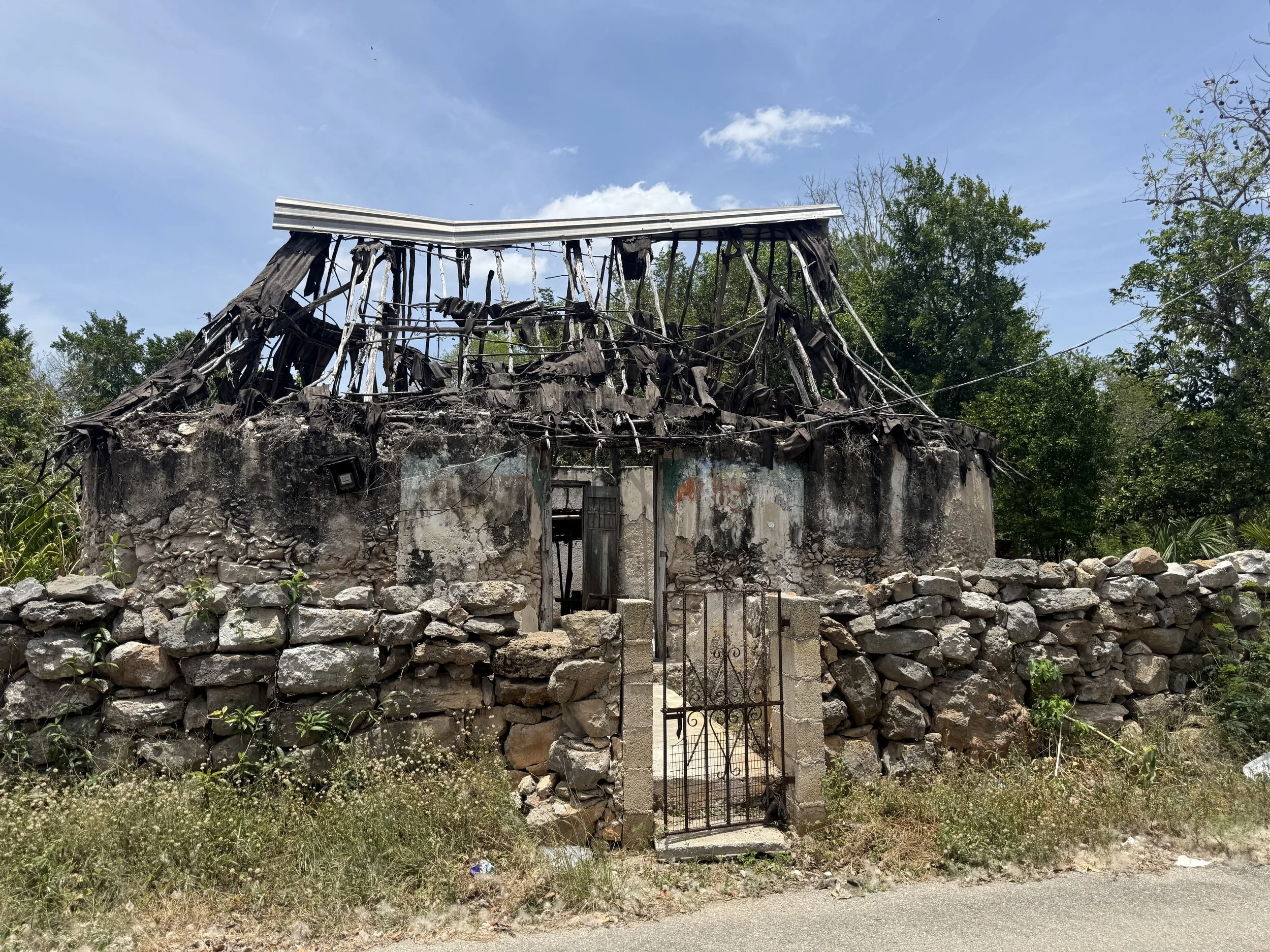
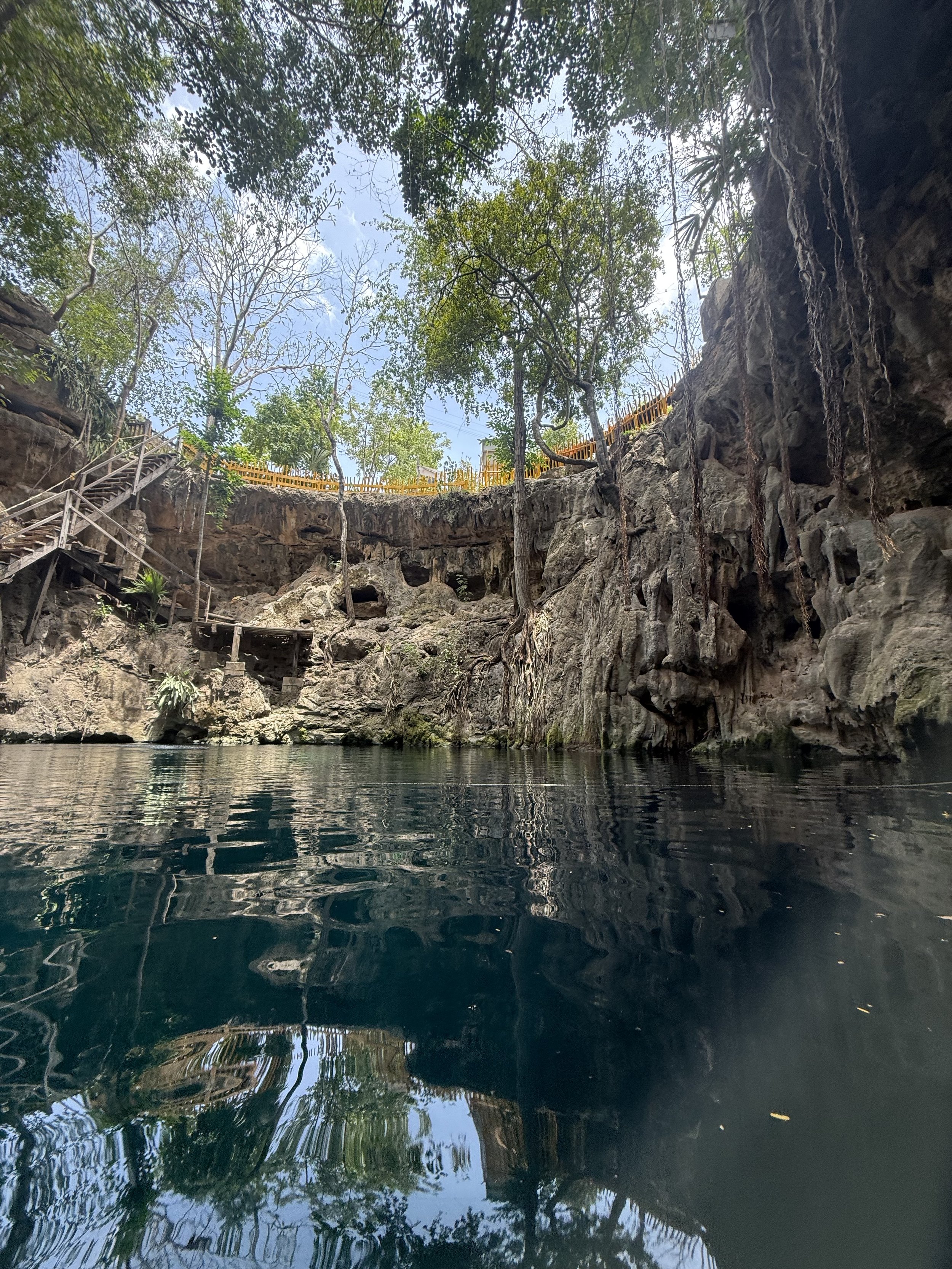
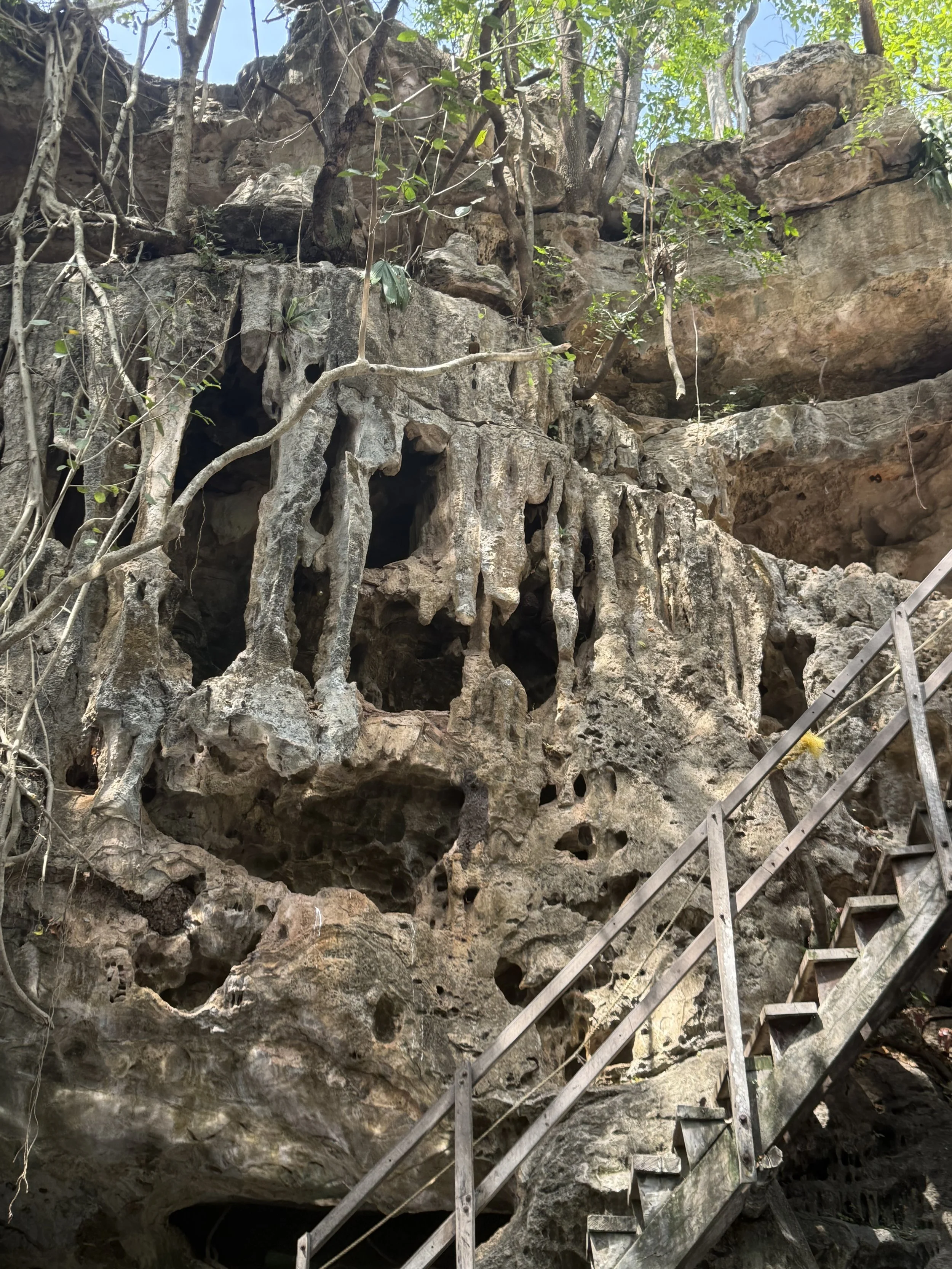
Throughout the day, John spoke endlessly about the formations surrounding us—how they were created, how long they took to form, the legends connected to them. Somehow, our conversations always circled back toward life, religion, humanity, and the many ways people interpret the world around them.
I realized something today.
I have never opened a Bible.
And yet these conversations, these reflections we share about culture, spirituality, history, and the state of the world… they nourish something deep inside me.
Interactions have always fuelled me.
And slowly, after shedding what I no longer needed during yesterday’s limpia, all of this—the conversations, the silence, the water, the beauty, the laughter—is filling me back up with goodness.
With softness.
With positivity.
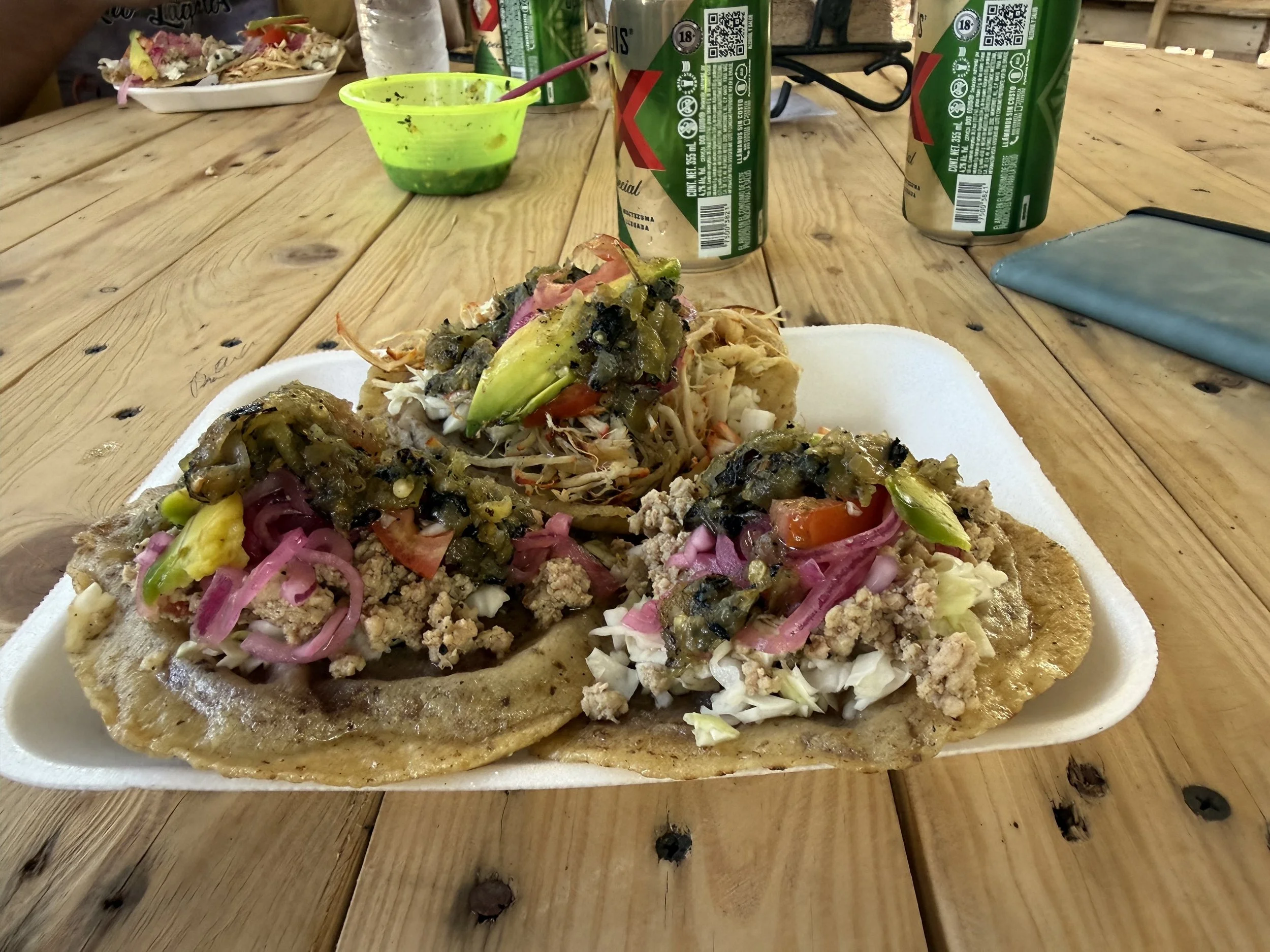
People arrived and we felt it was time to move on to something else. He has a friend who sells food near the cenote. Let’s eat there and support the community. A few beers and some delish food we head for a third cenote to end the day
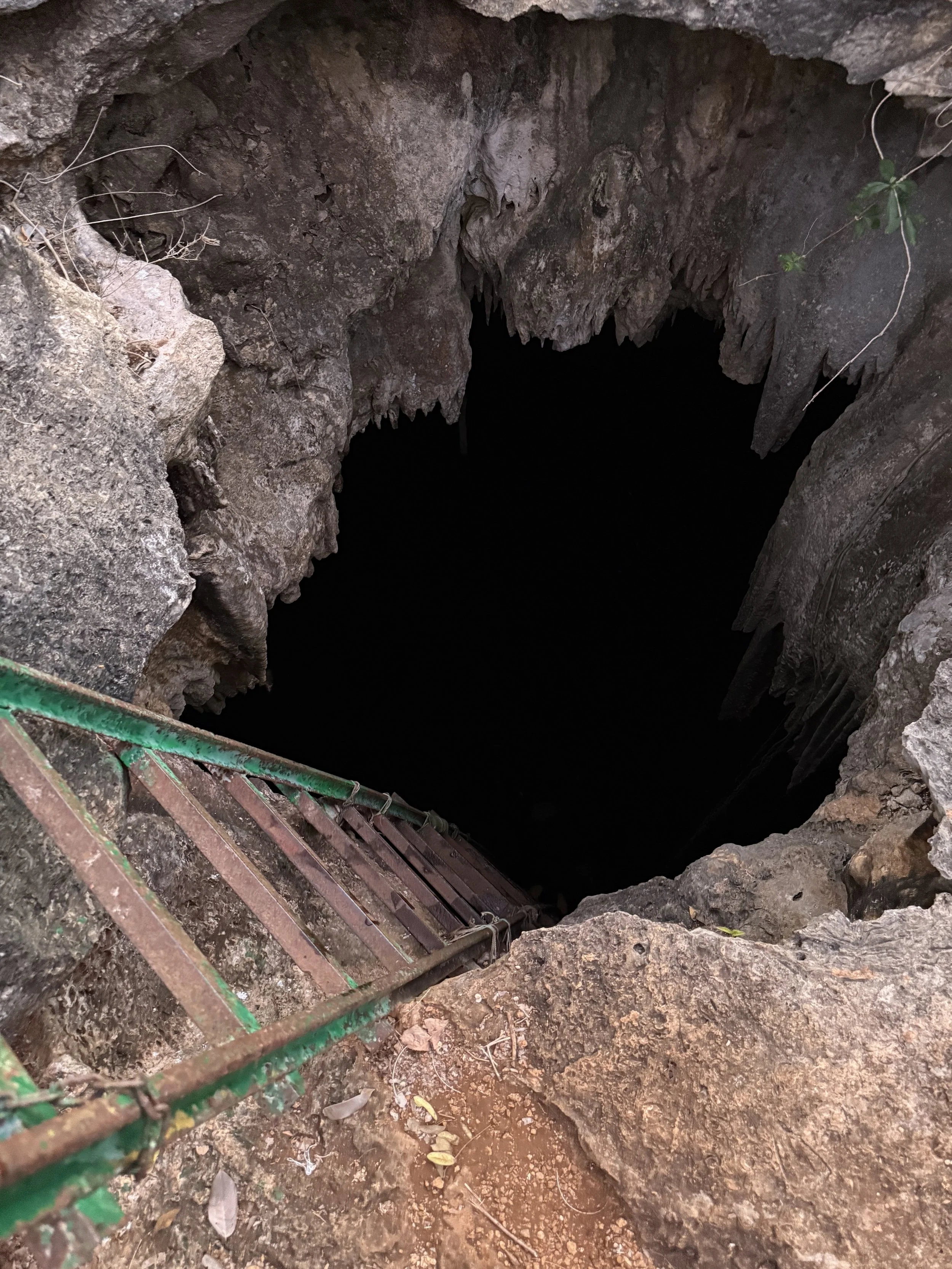
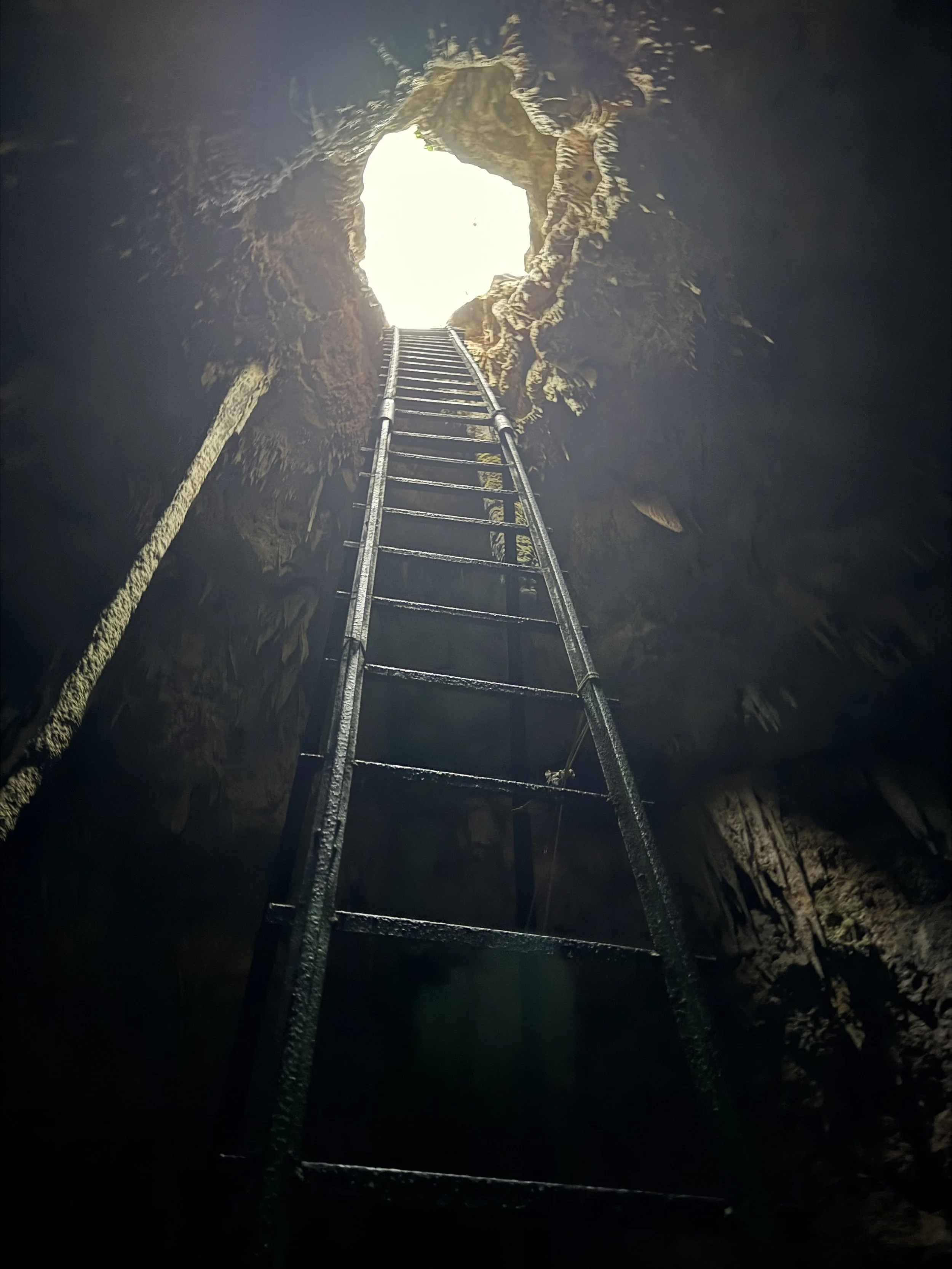
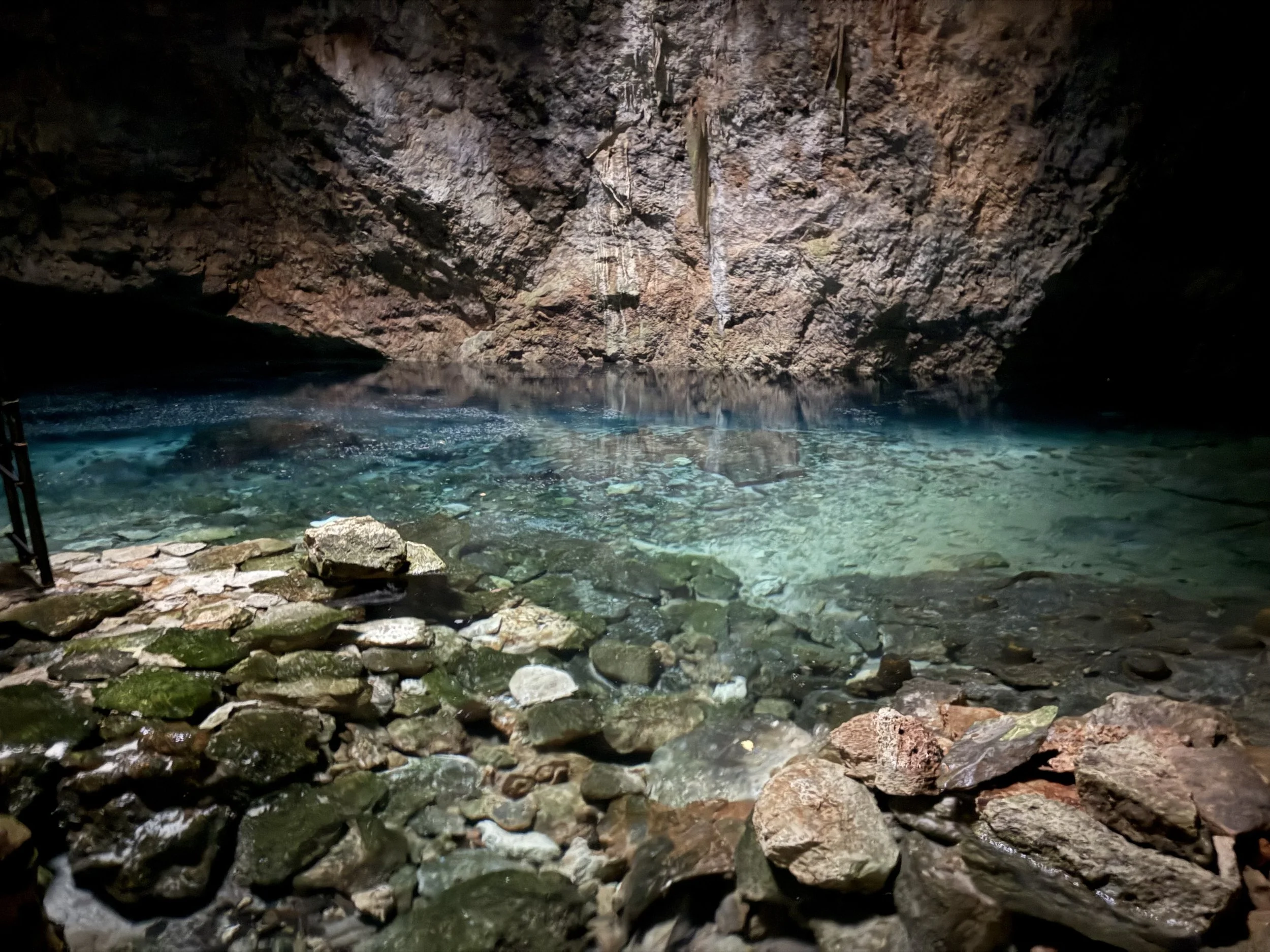
We land on of of 10,000 cenotes in the peninsula which happens to be behind a woman’s home. She leads us to a hole with a green ladder sticking out : bleh! This is scary!! The ladder looks like they took twenty ladders and put them together down a small hole and all that held with alambre. John heads down I a am strong brave woman let’s go! With a bit of terror I stretch one foot blindly in search of the next rung, my hands clasped on the side bars hoping I won’t crash and crack my head open on the rocks below - a picture is with 1000 words and I am sure you are starting to scroll down to see how long this iteration will last
Eventually, we headed back toward Japoneza Retreat.
“What time tomorrow?” John asked. “Celestún mañana?”
“How about first you find me a great breakfast spot.”
Cochinita pibil.
My new friend smiled immediately.
“Oh, I know a place.”
Back at the hotel, I climbed into the hammock outside my room to enjoy the breeze.
Qué rico.
I write these few lines now—though I know they are far longer than “a few lines”—while my body still feels weightless, almost as though I’m floating. Like the strange relief of removing downhill ski boots after an entire day on the mountain.
My body feels light.
Loose.
Completely without tension.
And tonight, for the first time in a very long time, my nervous system feels quiet.
Sweet dreams, everyone.
We’ll see where the wind takes us next