
Seven Colours and a Dog at My Feet
The house I rented for my Bacalar stay also carries something special.
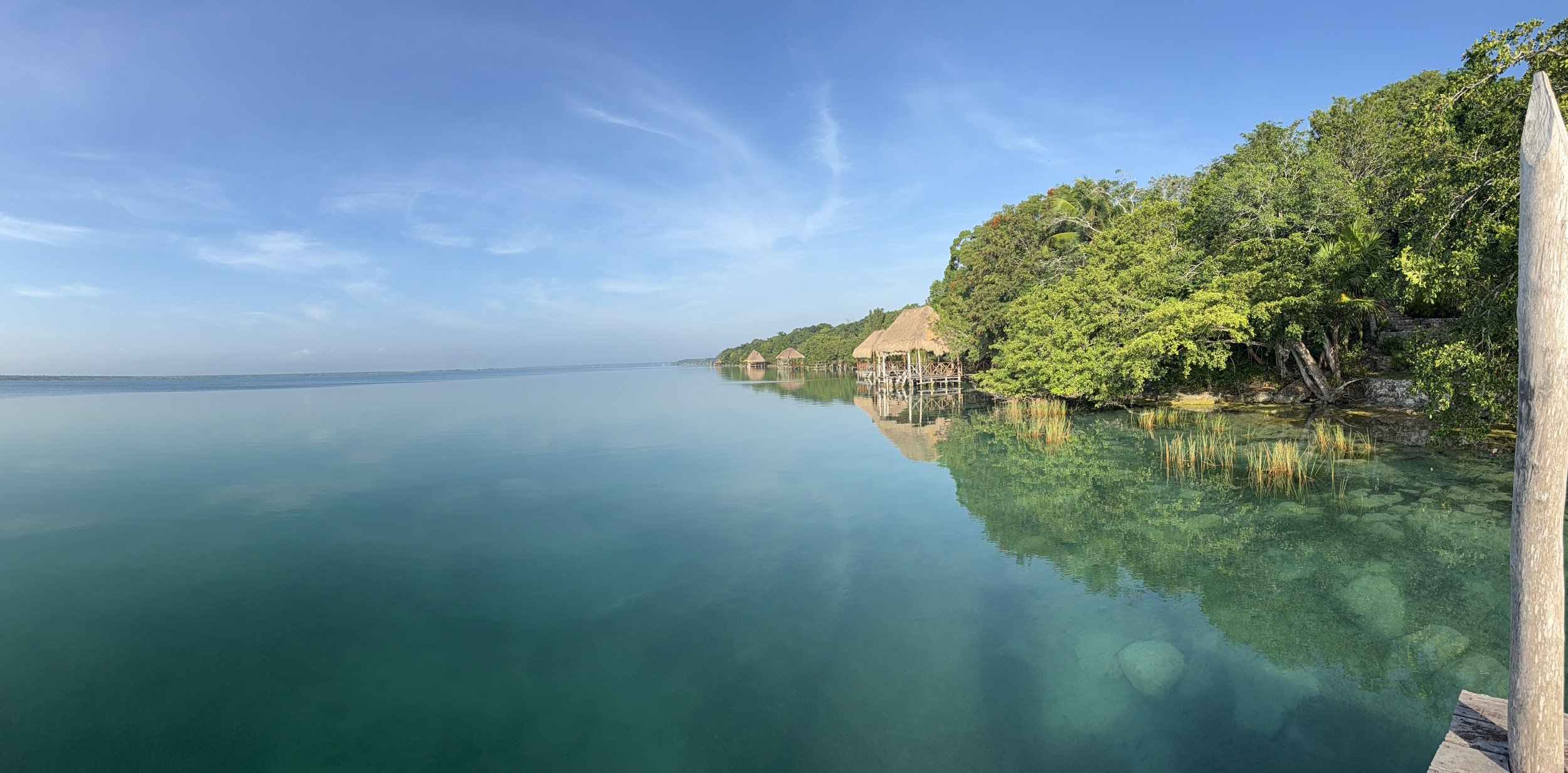
The house itself is nothing to write home about, especially after some of the extraordinary places I have stayed in during this trip. But it has a private dock on the Laguna, and that changes everything.
A fifty-metre walk brings me to what appears, at first, to be another property, except there are no houses. Just a seemingly endless flight of large stone steps descending toward the water. I stopped counting somewhere around two hundred.
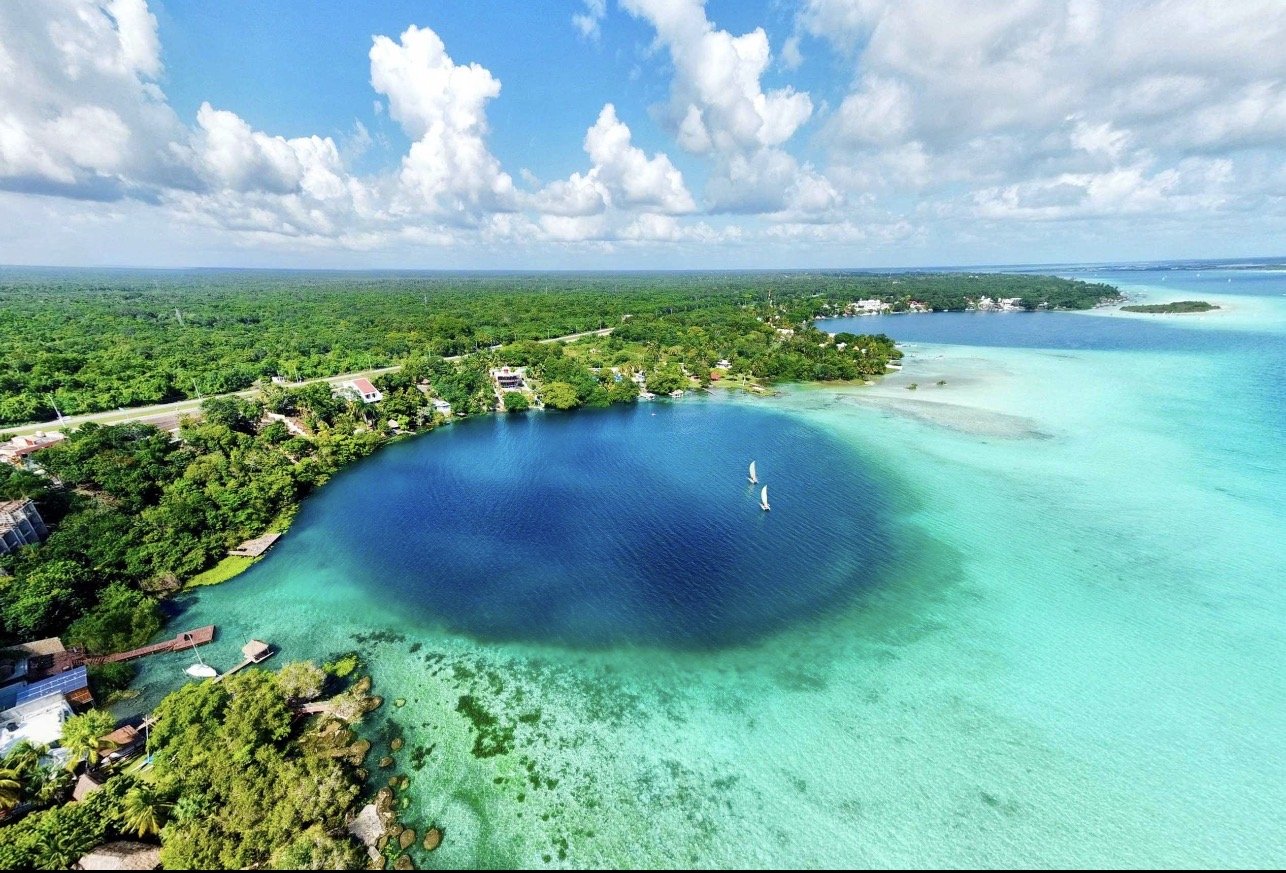
At the bottom is the Laguna de Bacalar.
Fed by an intricate system of underground rivers and cenotes, the Laguna de los Siete Colores is extraordinarily clear, with depths reaching into the hundreds of feet in places. But its magic is not simply that it is clear, or even that it contains seven colours. It is that the colours refuse to stay put.
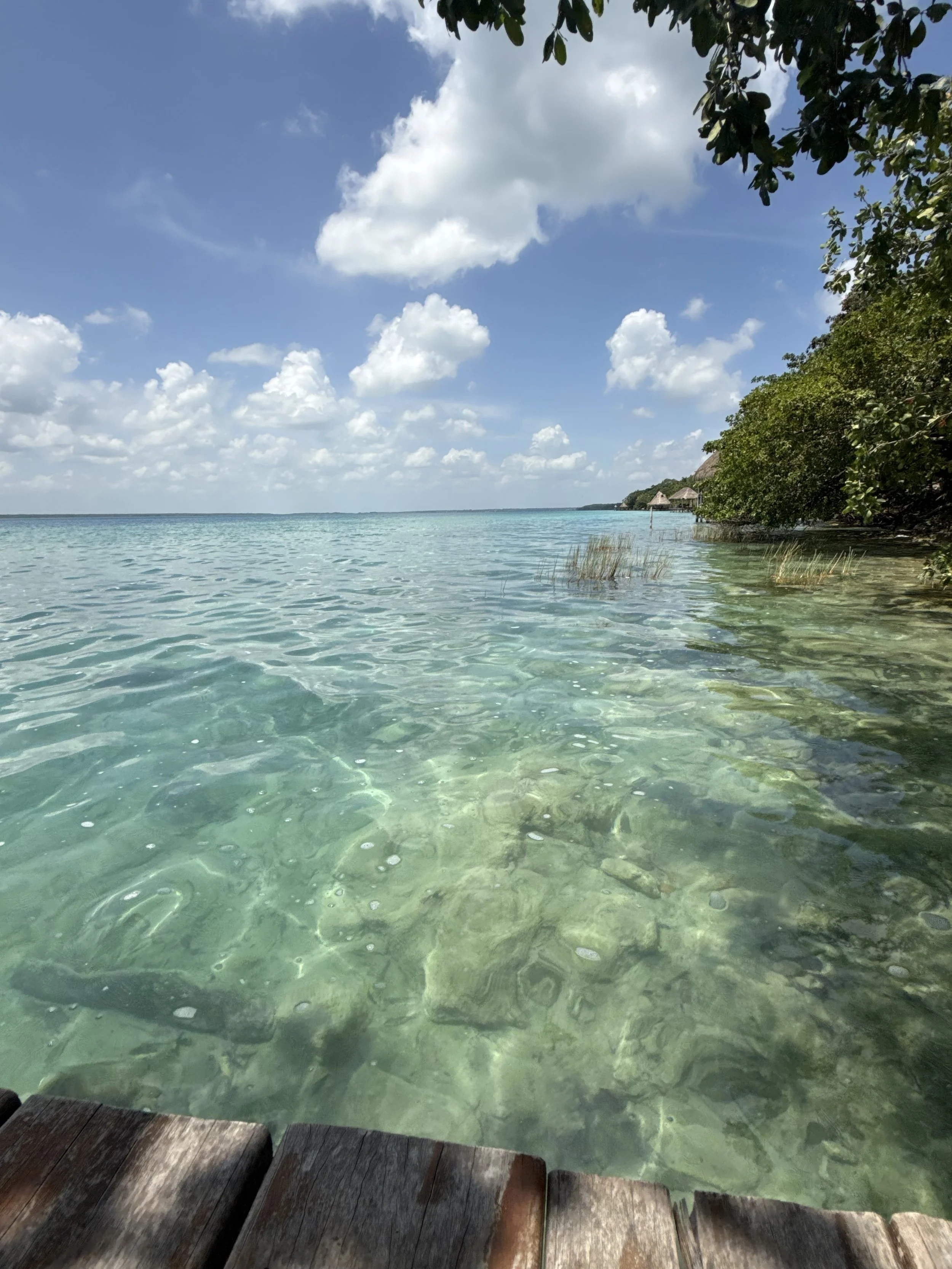
The movement of the sun across the sky changes everything. Deep blue becomes turquoise, turquoise becomes almost luminous, and then the colours shift again as the sun begins to wane. Clouds pass overhead and the surface answers them. What looks like one body of water from a distance becomes a constantly changing palette when you sit beside it long enough.
Equipped with a dry bag, snorkel and sunscreen, we headed down to the dock early for a kayak adventure through the Canal de los Piratas.
The name sounds straight out of a storybook, but the history is considerably more interesting than a simple tale of pirates hiding treasure. The waterways around Bacalar were part of an older network of trade and movement, connecting the region toward the south and the Caribbean. Later, the area became contested territory, with Spanish authorities, Maya communities, British settlers and woodcutters, smugglers and pirates all moving through this difficult frontier. The coveted palo de tinte, used to produce dyes, was one of the resources drawing Europeans into the region. Bacalar was important enough, and vulnerable enough, that the Spanish eventually built the Fuerte de San Felipe in the eighteenth century to defend it. (UNAM Global)
It seemed fitting, then, to enter this old landscape by kayak rather than by motorboat.
About half an hour in, we noticed that water was beginning to seep into ours.
The seals were in, but air could still be heard escaping, and the kayak was slowly filling. There was no great drama, no cinematic sinking into pirate waters. Just the increasingly practical realization that continuing forward would be foolish.
We turned around.
I was a little disappointed. The adventure we had planned was clearly not going to happen. But the Laguna had no intention of letting a leaking kayak dictate the day.
We stayed on the dock instead.
For hours.
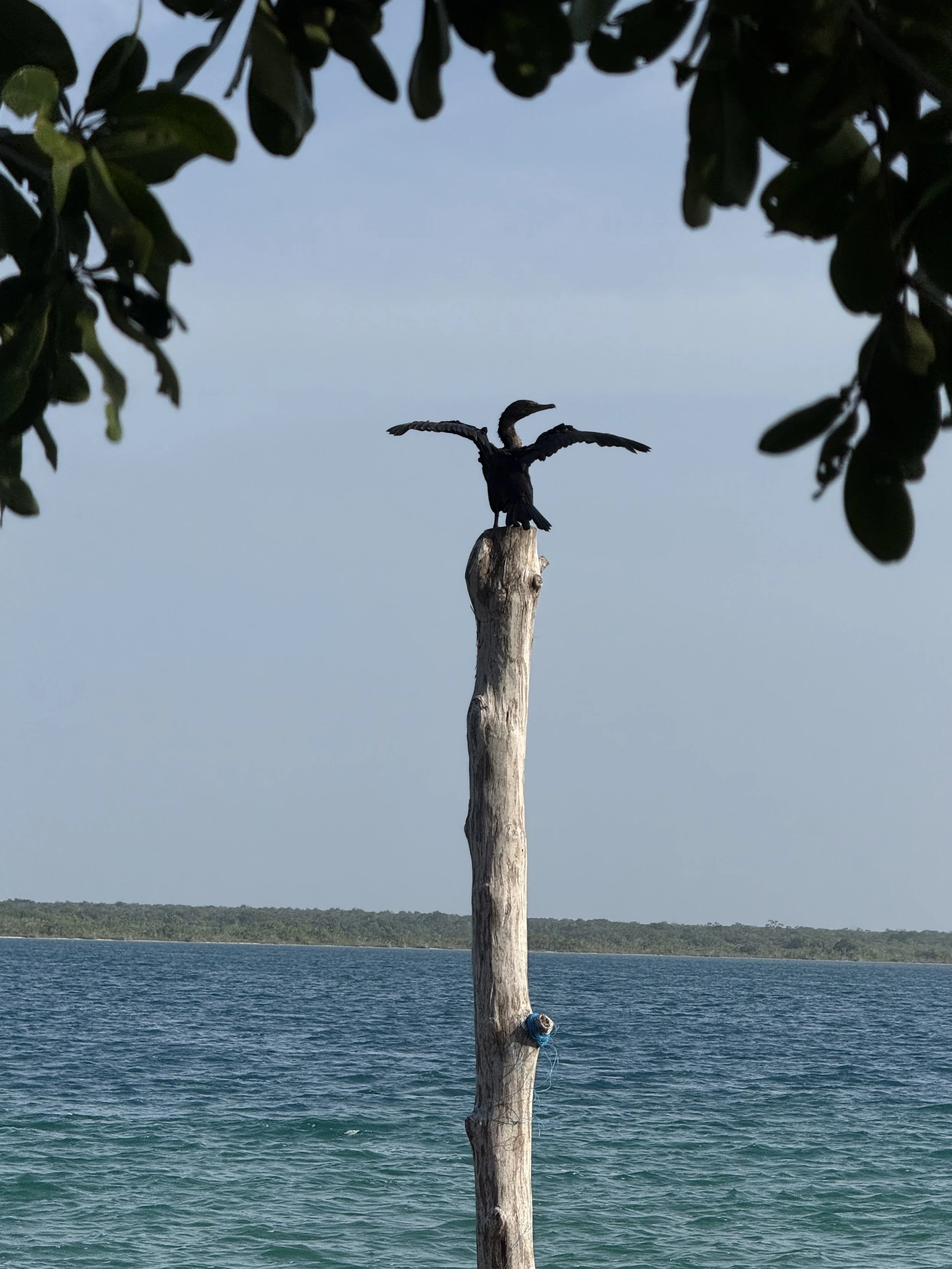
Swimming. Watching the birds. Watching the water change colour. Letting the heat and the breeze do their work. There are worse ways to have an adventure.
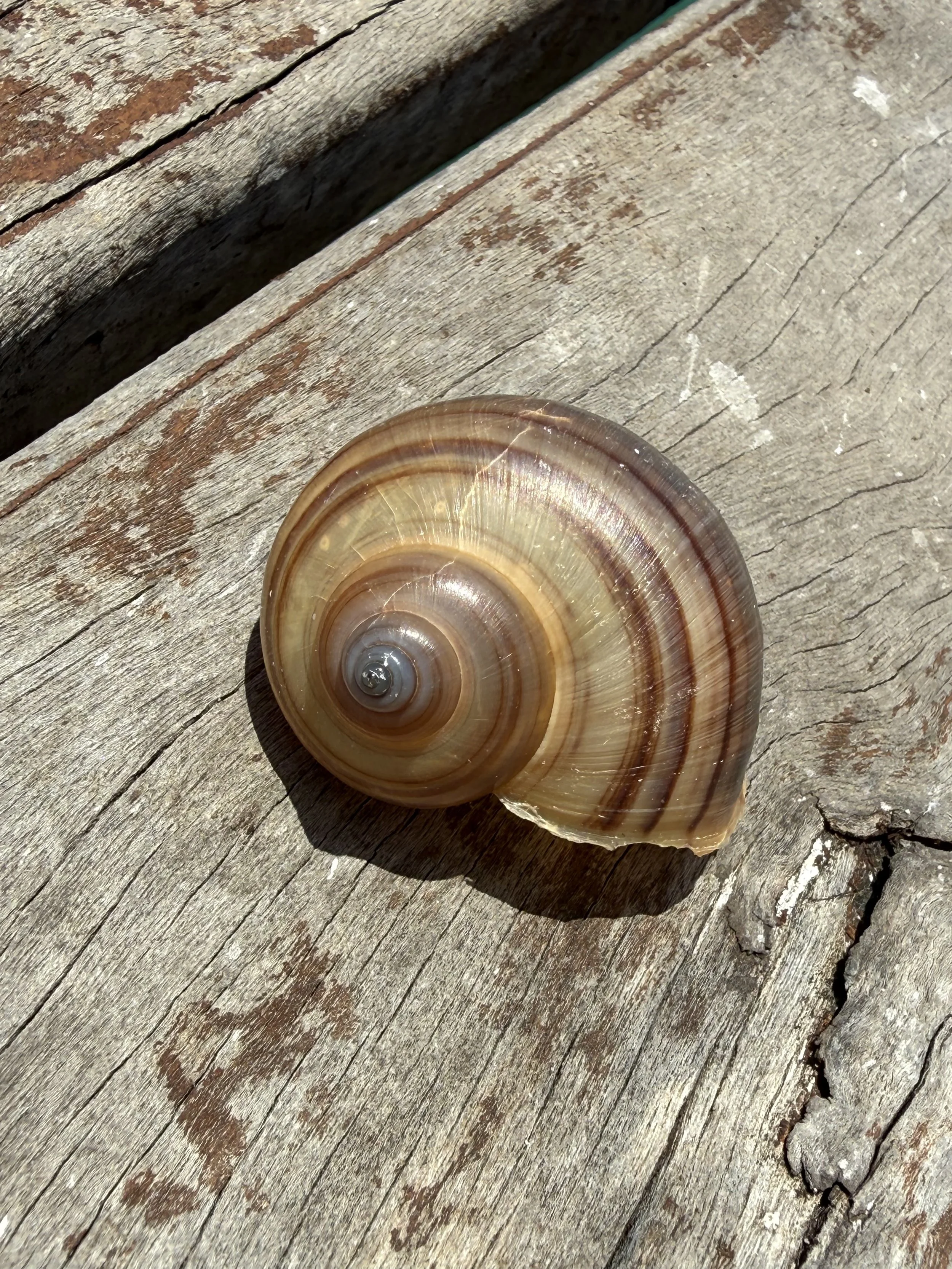
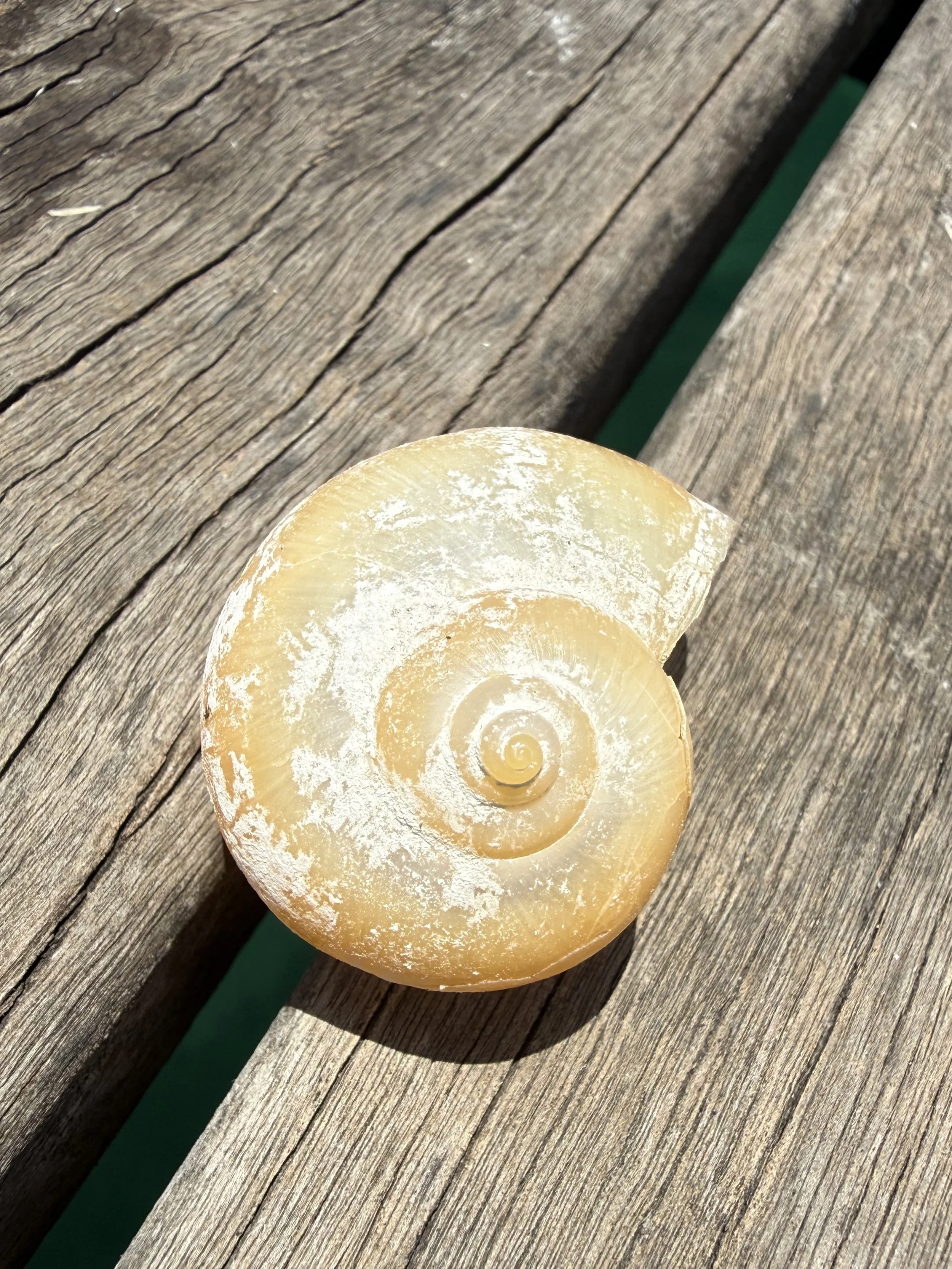
There are also large snail shells scattered across the dock. Every morning, new ones appear, the remains of a night’s feast.
And then there are the snail kites.
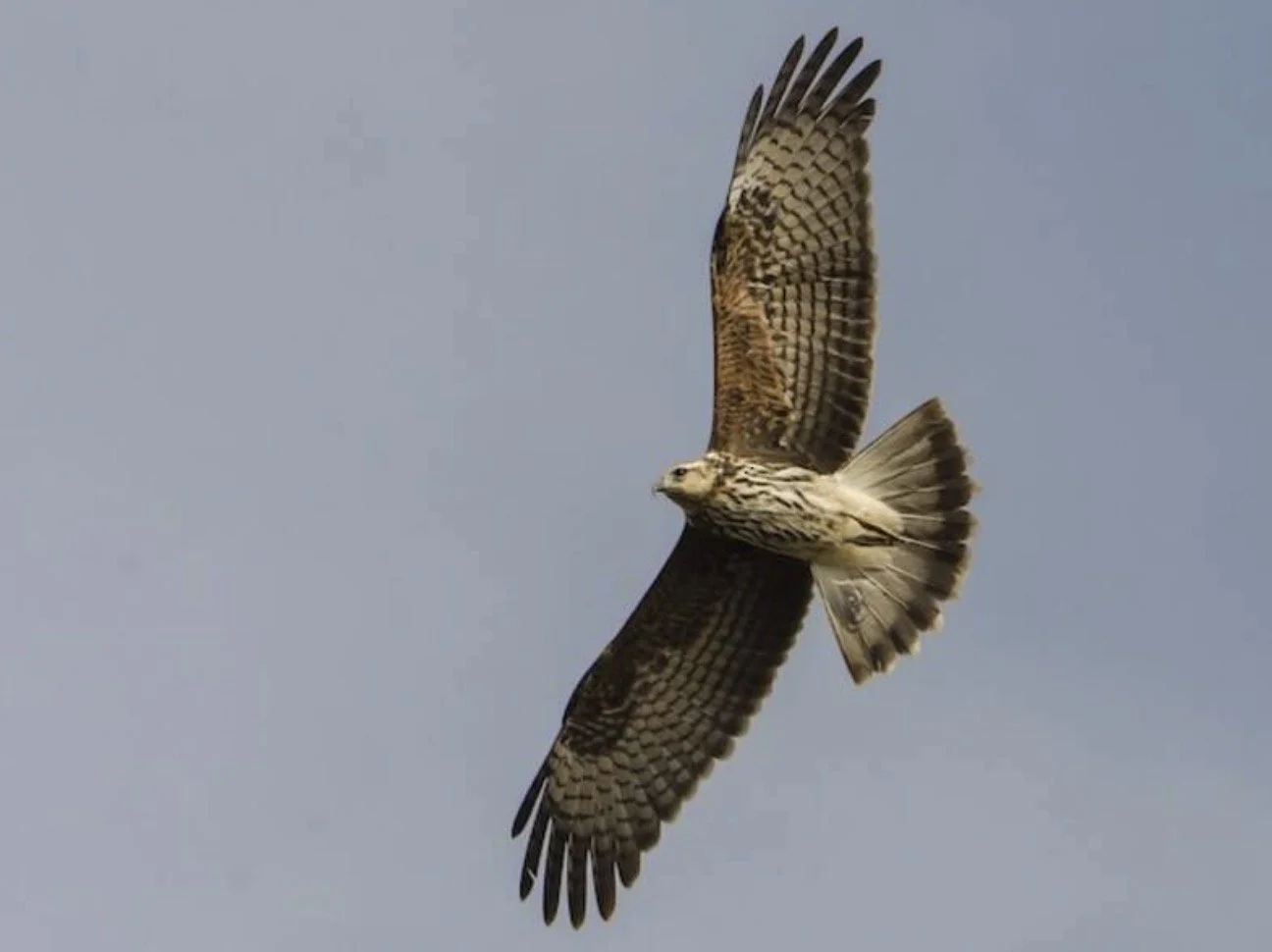
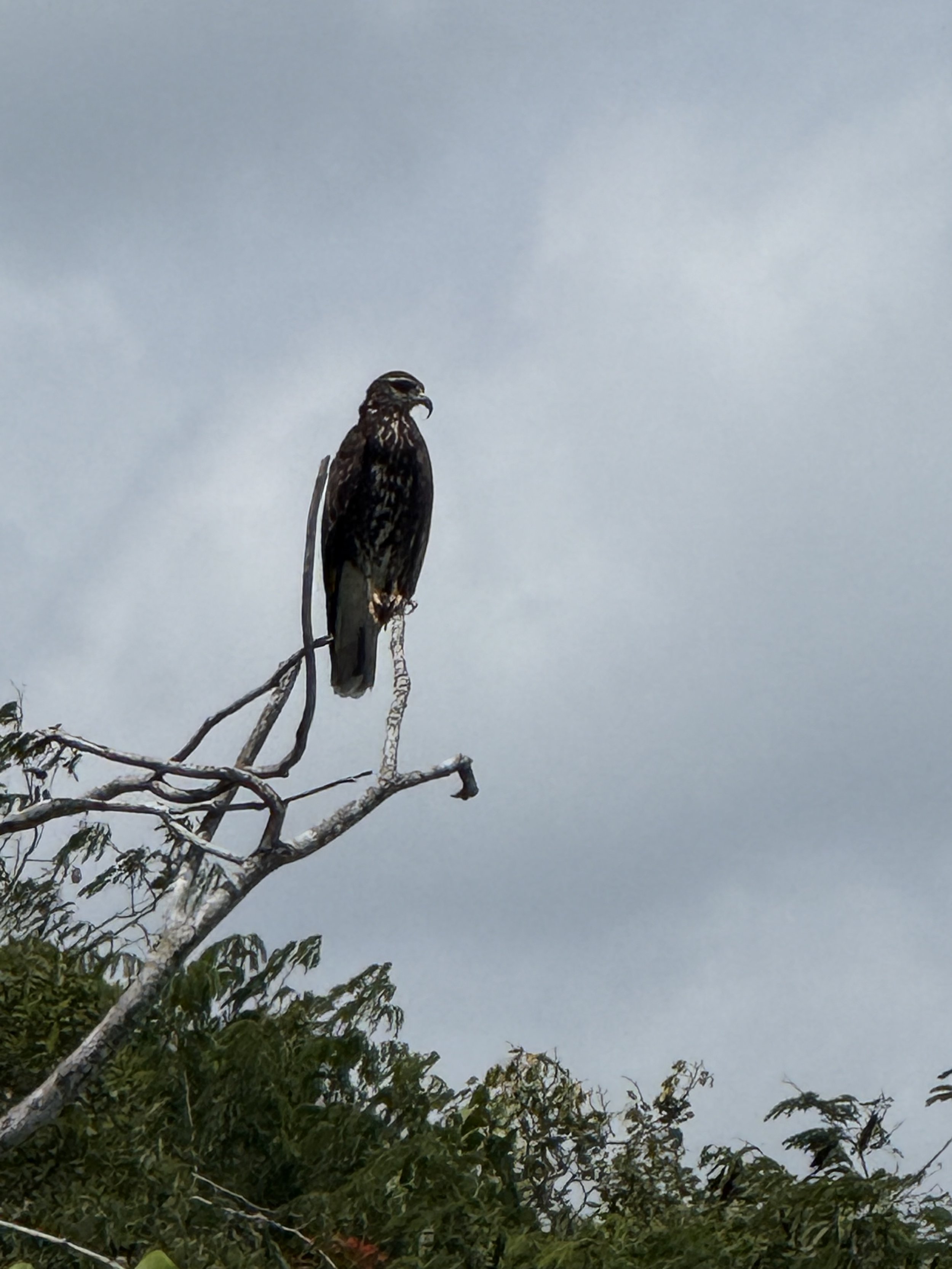
They fly low over the water, almost casually, their long wings carrying them only a few metres above the surface. But there is nothing casual about the eyes. They are sharp, piercing and constantly searching below. When one spots its prey, the bird drops toward the water and uses its talons to seize the snail.
The name is remarkably literal: the snail kite is a specialist predator, built around one particular meal. In Bacalar, that meal is the chivita, Pomacea flagellata, a freshwater apple snail that is so important to the ecosystem that both snail kites and limpkins depend heavily on it. Researchers have documented both species throughout the Laguna and found that the snails are a significant part of their diet.
The shells tell their own story.
Some lie scattered individually. Others are found in little piles, evidence of the birds that have been dining along the shoreline. The snail kite can extract the edible animal without damaging the shell in the way other predators often do, leaving behind these little archaeological sites of breakfast, lunch and dinner.
The chivita is also eaten by people here in Bacalar. It is collected locally for consumption in homes and restaurants, although I have yet to encounter it on a menu. (SciELO Classic)
And then I began noticing something even more fascinating.
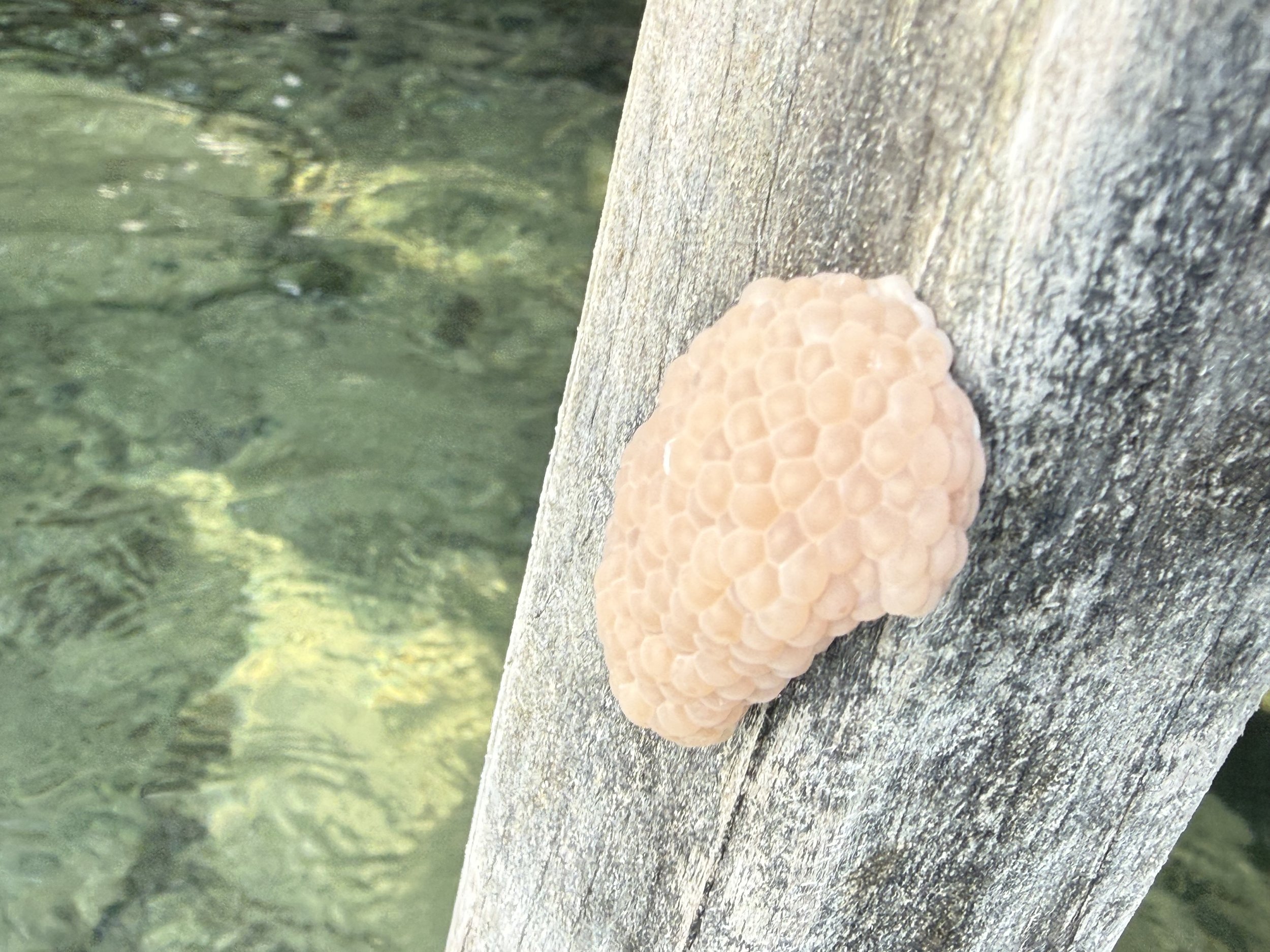
Hundreds of tiny nurseries cling to the wooden pillars, rocks and other structures just above the waterline.
The snail does not scatter its eggs into the water. It climbs above the surface and leaves behind a cluster, where the little eggs develop until the tiny snails emerge and drop directly into the lagoon. In Bacalar, egg laying begins around May and peaks in August and September, which explains the extraordinary number of clusters I was seeing during this visit. (Sedetur QRoo)
There were clusters at every stage.
Some were fresh and vibrant. Others were further along, their contents visibly transformed. And some had completed their purpose entirely, leaving only the empty nursery behind.
I had the strange feeling of looking at several generations of the same creature at once.
Some had just begun.
Some were almost ready.
Some had already left to begin the next part of their lives, eventually to return the favour by creating nurseries of their own.
The density around the dock was astonishing. Far beyond anything that looked accidental. Every post, every suitable rock, every structure hovering just above the waterline seemed to have become a tiny maternity ward.
Seven hours later, hunger finally began making itself known.
We headed back to the house to shower and get ready for our last dinner out together. I was sending John home early. He had a long drive back to Mérida, and I wanted him to have a few quiet days to digest the trip, as much literally as figuratively.
But before I left, I also wanted to experience one last piece of the infrastructure that is changing this part of Mexico: the Tren Maya.
The railway is far more than a tourist train. It is an enormous new transportation network built to connect the major destinations of the Yucatán Peninsula and the southeastern states, including archaeological sites and communities that have historically been much less accessible. Bacalar now has its own station, linking the town into that much larger circuit. (Tren Maya)
After nearly three weeks of travelling by road, I found it strangely appropriate that my journey through this part of Mexico would eventually end on rails.
For dinner, I found a local restaurant in a residential part of Bacalar: Marisquería El Güero. A small hat tip to my Oaxacan Chihuahua, who had once taught me that when a place is called El Güero, you should at least investigate.
John had never been in this part of town.
It was quaint, clean and unexpectedly lush, with tropical plants everywhere and a large covered patio waiting for us. Our waitress, unfortunately, seemed considerably less enthusiastic about the arrival of two more customers.
No matter.
I was excited.
I had checked beforehand, and they had confirmed that the pulpo was available that day.
I ordered an Ojo Rojo to start, that wonderfully savoury, spicy beer cocktail built around beer, tomato and citrus, with the particular kick that makes it feel less like a drink and more like breakfast that decided to stay up late.
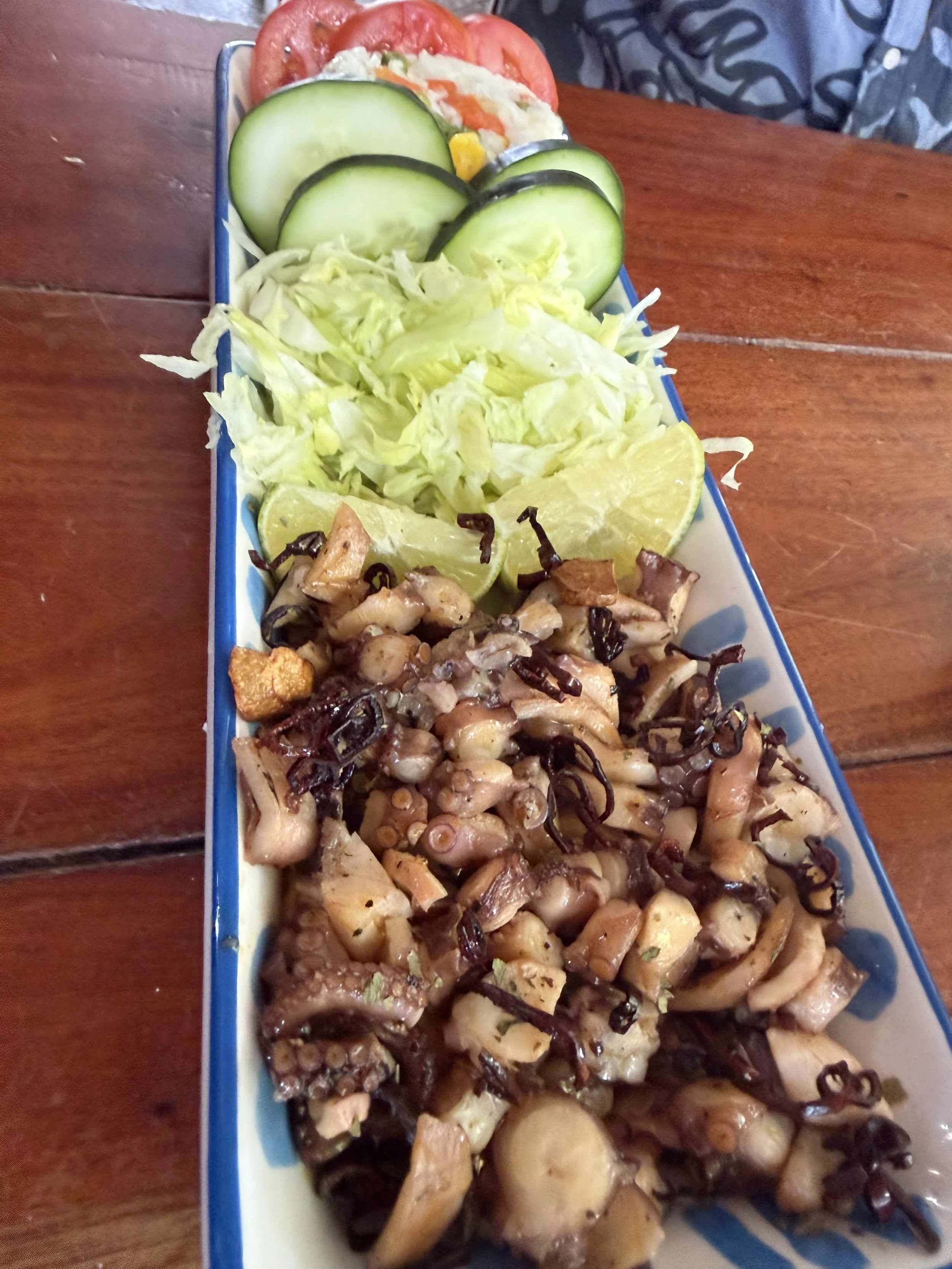
Then came the pulpo al ajillo.
Tender octopus bathed in garlic and oil, accompanied by fresh warm tortillas, rice, vegetables and pickled spicy onions.
The tortillas were warm enough to perfume the air. The octopus was exactly what I had been hoping for. And the pickled onions brought the necessary brightness and heat to cut through the richness.
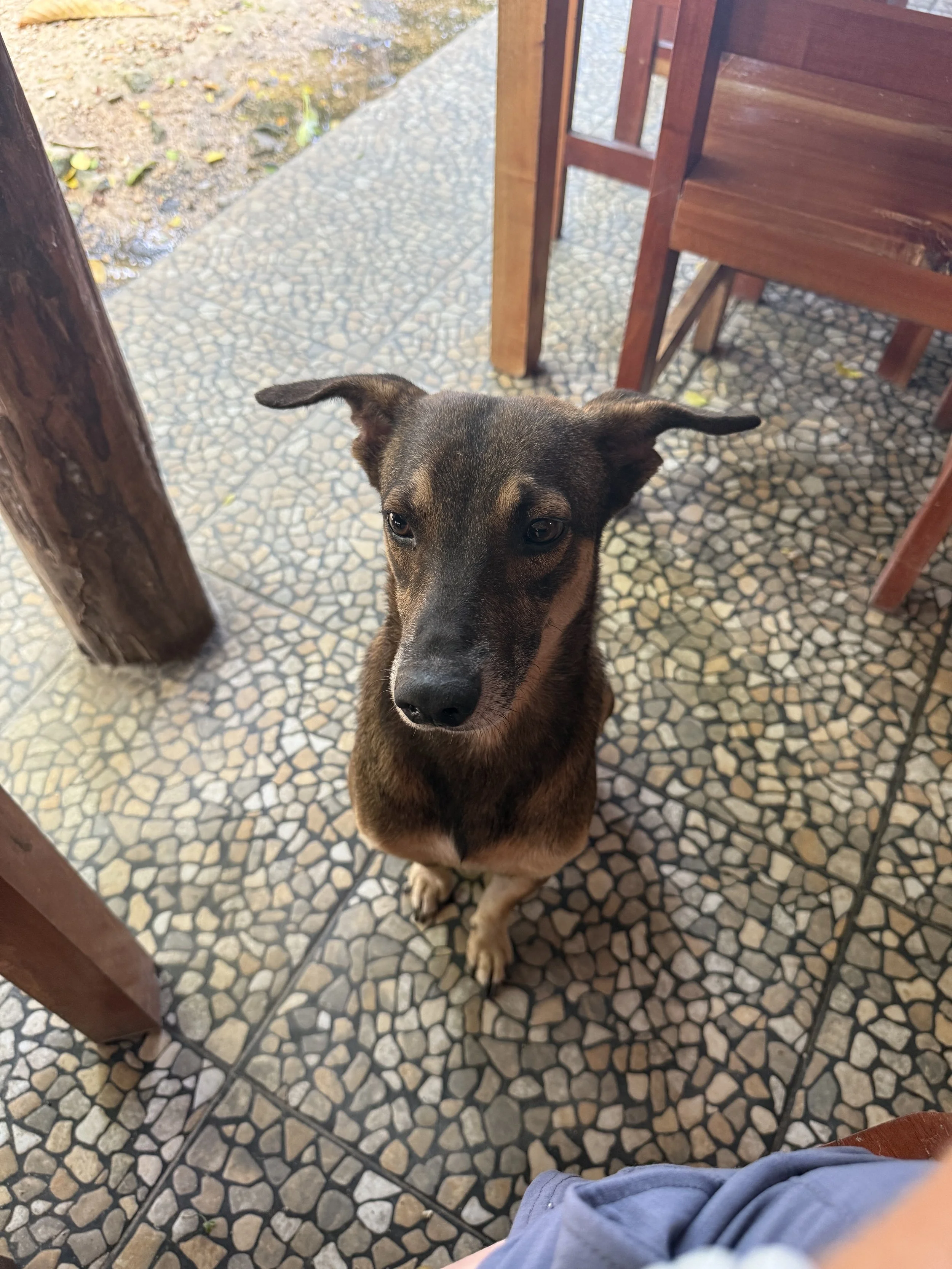
While we waited for our order, everything being made on the spot, I made a friend.
Not a friend whose name I learned. We simply did not have enough time for introductions. But I learned that he was not particularly interested in the food.
He was interested in me.
As I reached down to pet him, he leaned into my hand, first accepting the strokes over his head and then behind his ears. Other diners were shooing him away with considerably less patience, but there was something about this quiet little pup that stopped me from doing the same.
He had such a gentle nature. And those eyes.
They held that strange, profound wisdom some dogs seem to carry, as though they have spent considerably more time observing the world than we have.
When I stopped petting him, he gently pushed against my leg.
Well. I had no reason to object.
So my dinner companion stayed.
He sat quietly beside me, watching me eat, occasionally checking in as though making sure I was still there. It reminded me so much of my beautiful Chuggy, that same deep, knowing look that seems to reach somewhere beyond words.
The pulpo arrived.
My little buddy stayed.
And for the rest of dinner, I ate with a dog at my feet and a familiar pair of eyes in my mind.
I was still hungry.
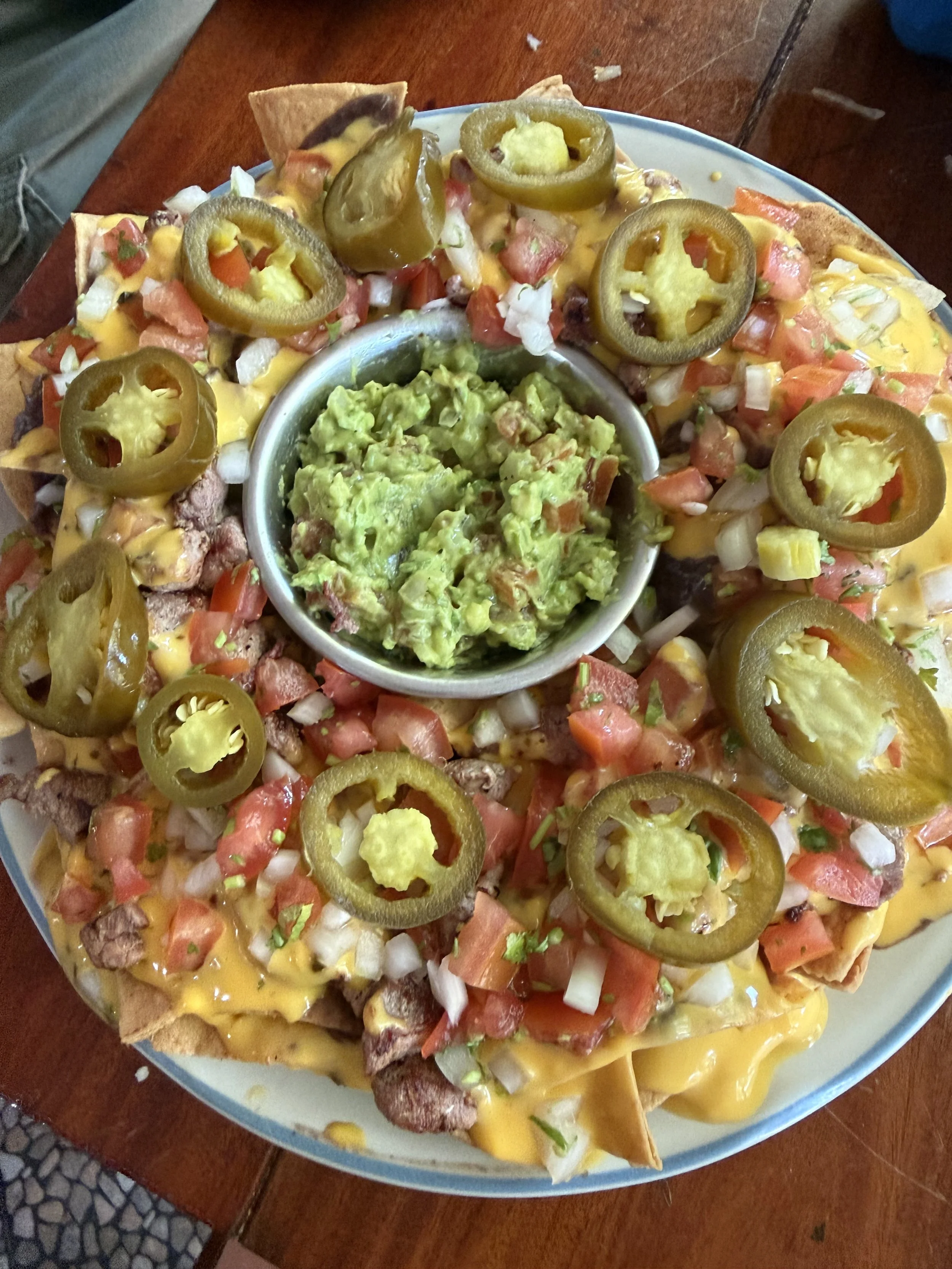
So I ordered nachos de arrachera.
It was, admittedly, a bit of an indulgence.
There was no going back.
We ate too much.
It was completely worth it.
This morning began with an omelet filled with fried poblano, serrano, onions, tomatoes and a good chunk of Oaxaca cheese, accompanied by the last of the pikliz.
A proper send-off.
I hugged John goodbye and sent him off on a full belly for his five-hour drive back to Mérida.
And now it is just me and the Laguna.
Until Friday, I have nowhere I need to be.
I can sit on the dock with a book. I can write. I can watch the clouds rearrange themselves above the water. I can swim when the heat becomes persuasive enough.
I can simply sit and watch the colours change.
On Friday, I will make my way to the Tren Maya for the ride back toward Cancún, and one last day of wandering before this journey finally folds itself up and goes home with me.