Through the eyes and heart of the Puma
Days are beginning to mix together. I have completely disconnected, and Bacalar is likely part of the reason. The Laguna, the constant sun and gentle breeze make it feel like a little pocket of paradise where time has stopped keeping score.
On my first evening, we descended to the dock on the Laguna, armed with nothing more than a handy flashlight.
The sun had disappeared, but the heat of the day still lingered in the air. The water was dark, almost black, with occasional ripples catching the beam of our light.
We were descending the man-made stone steps leading down to the dock when, all of a sudden, I whispered:
“Don’t move your foot…”
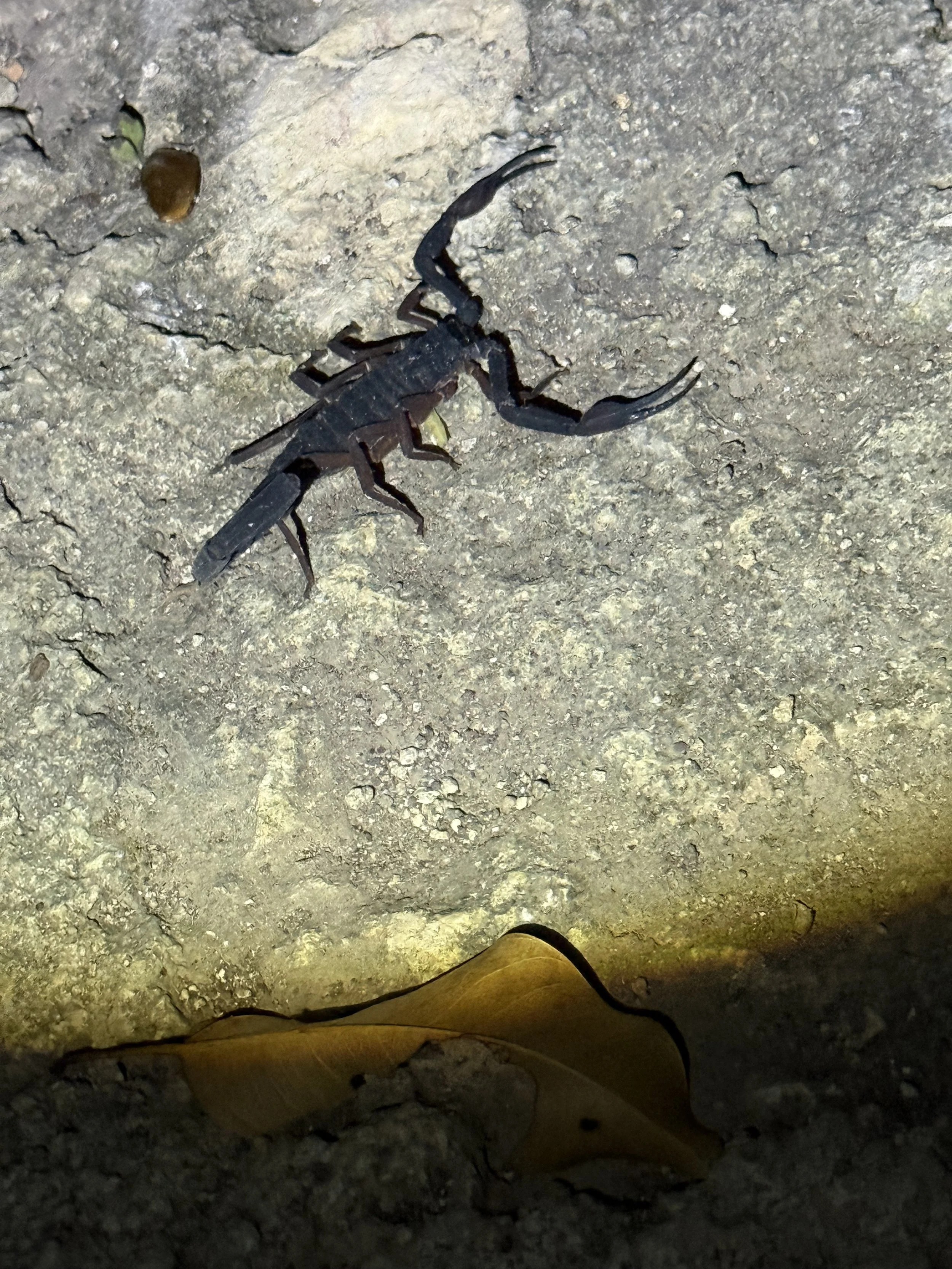
With a more watchful eye and a steadier stream of light, we continued down to the dock. No waves crashing, just a few night birds calling out and nothing but peaceful darkness, kissed by moonlight.
After quite a while, we headed back. I wanted to get to the market early the next morning, before the best of the produce disappeared.
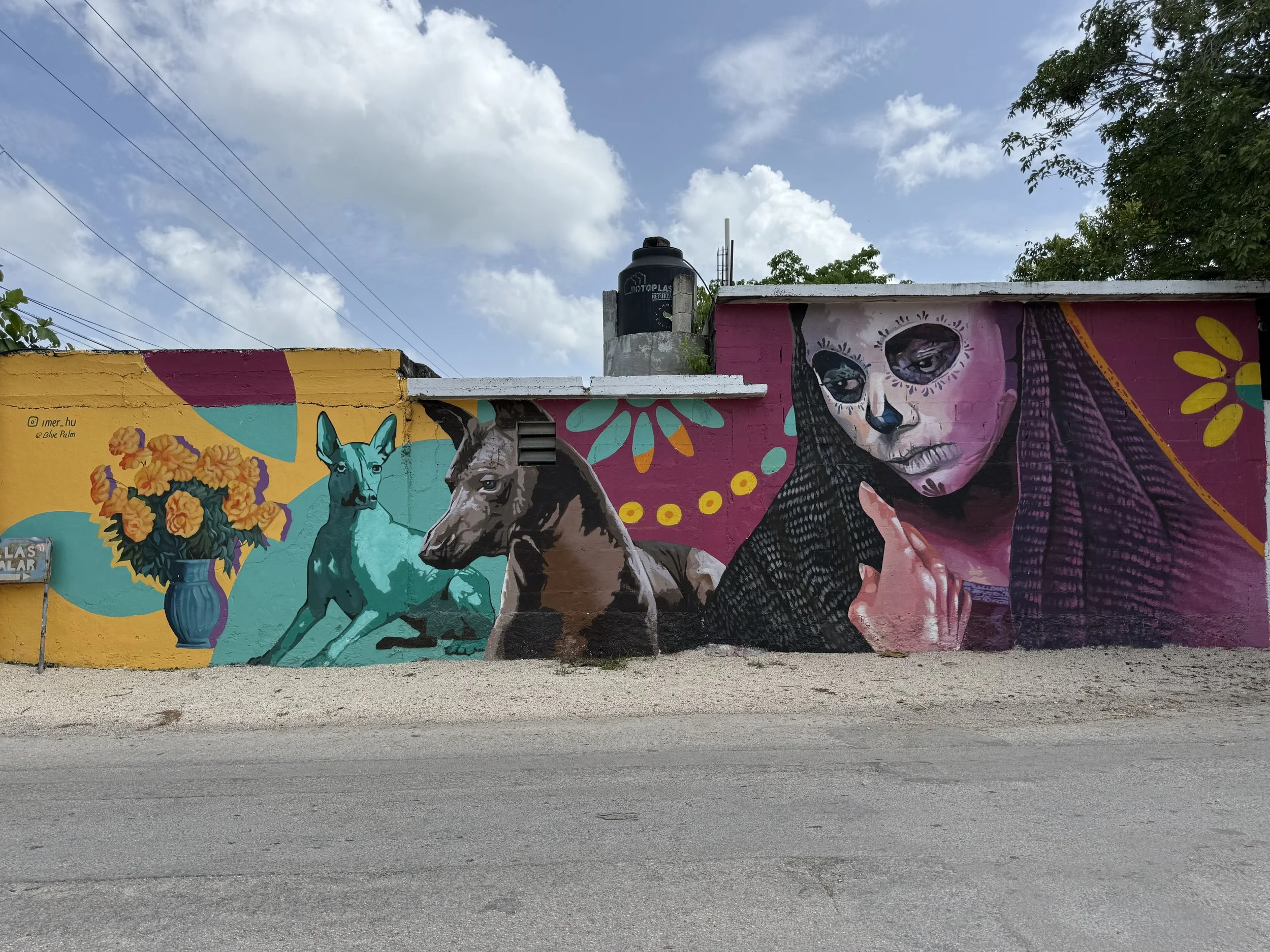
The following morning, we wandered through town in search of a latte, with absolutely no sense of urgency. I was becoming enchanted by the street art. Bacalar has murals aplenty, tucked onto walls and buildings throughout town, and I could have spent hours wandering from one to the next if it weren’t for the brutal sun blazing overhead.
There is something wonderful about discovering a town this way. No itinerary, no destination, just turning a corner and finding another splash of colour waiting for you.
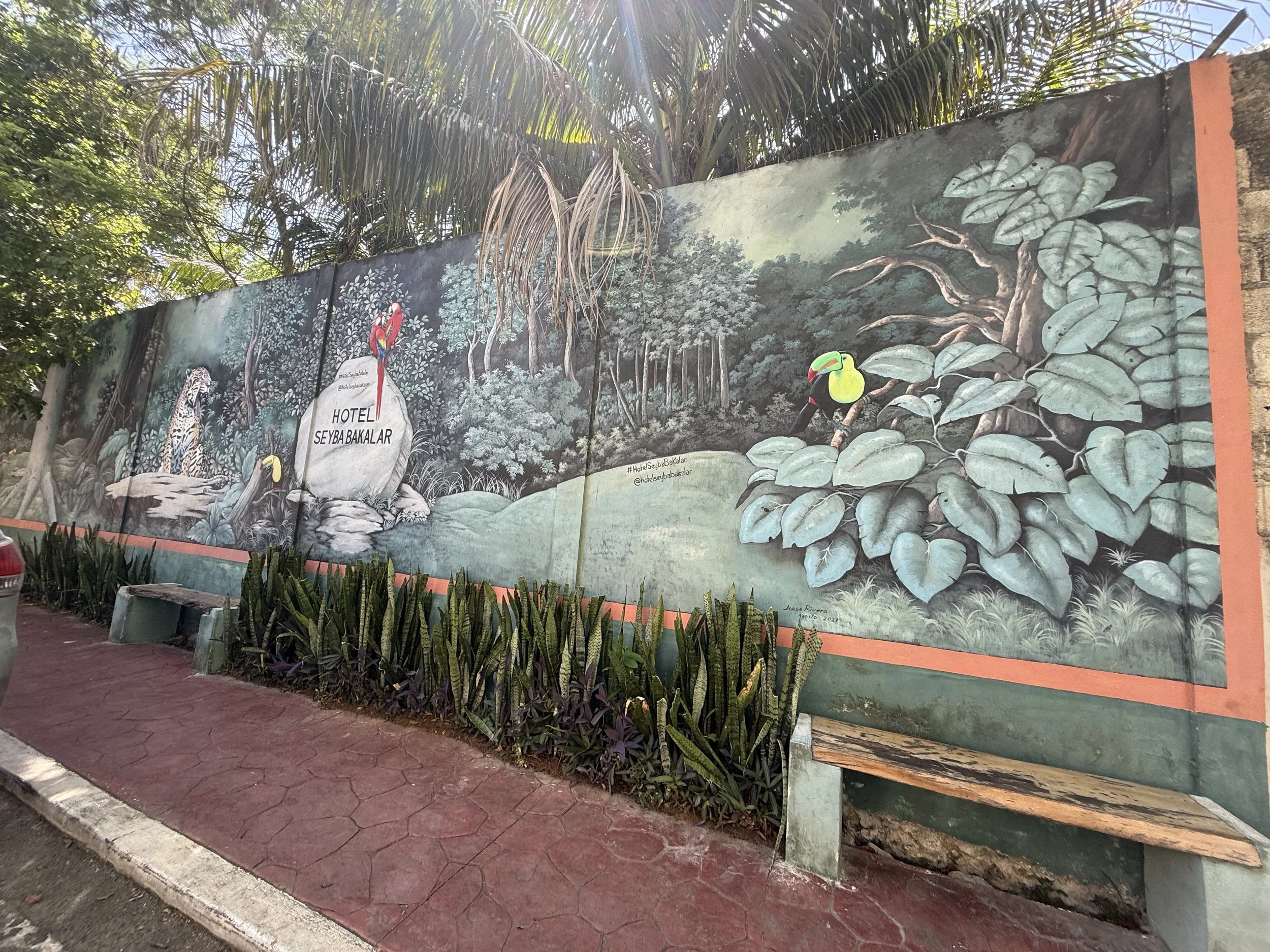
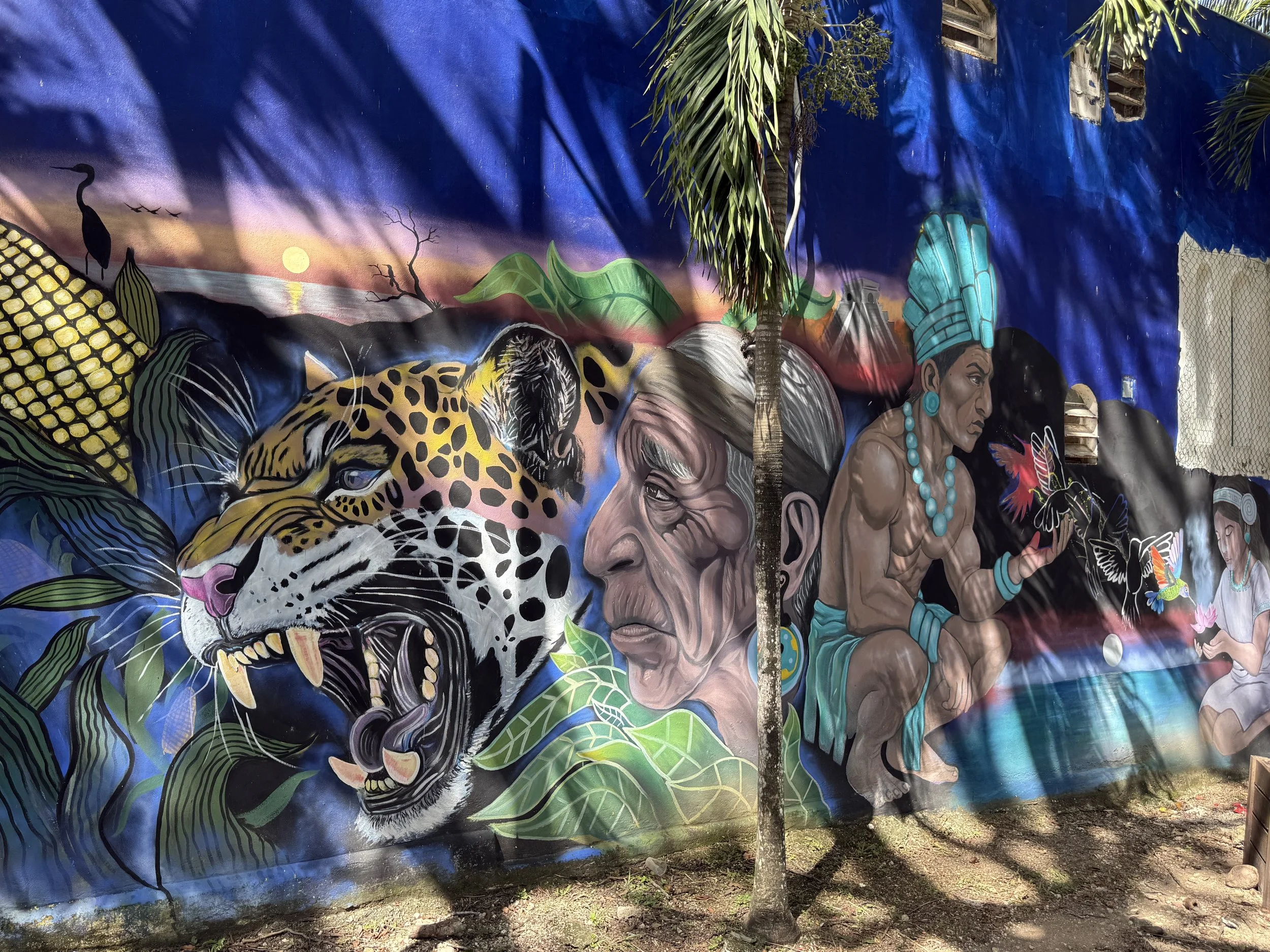
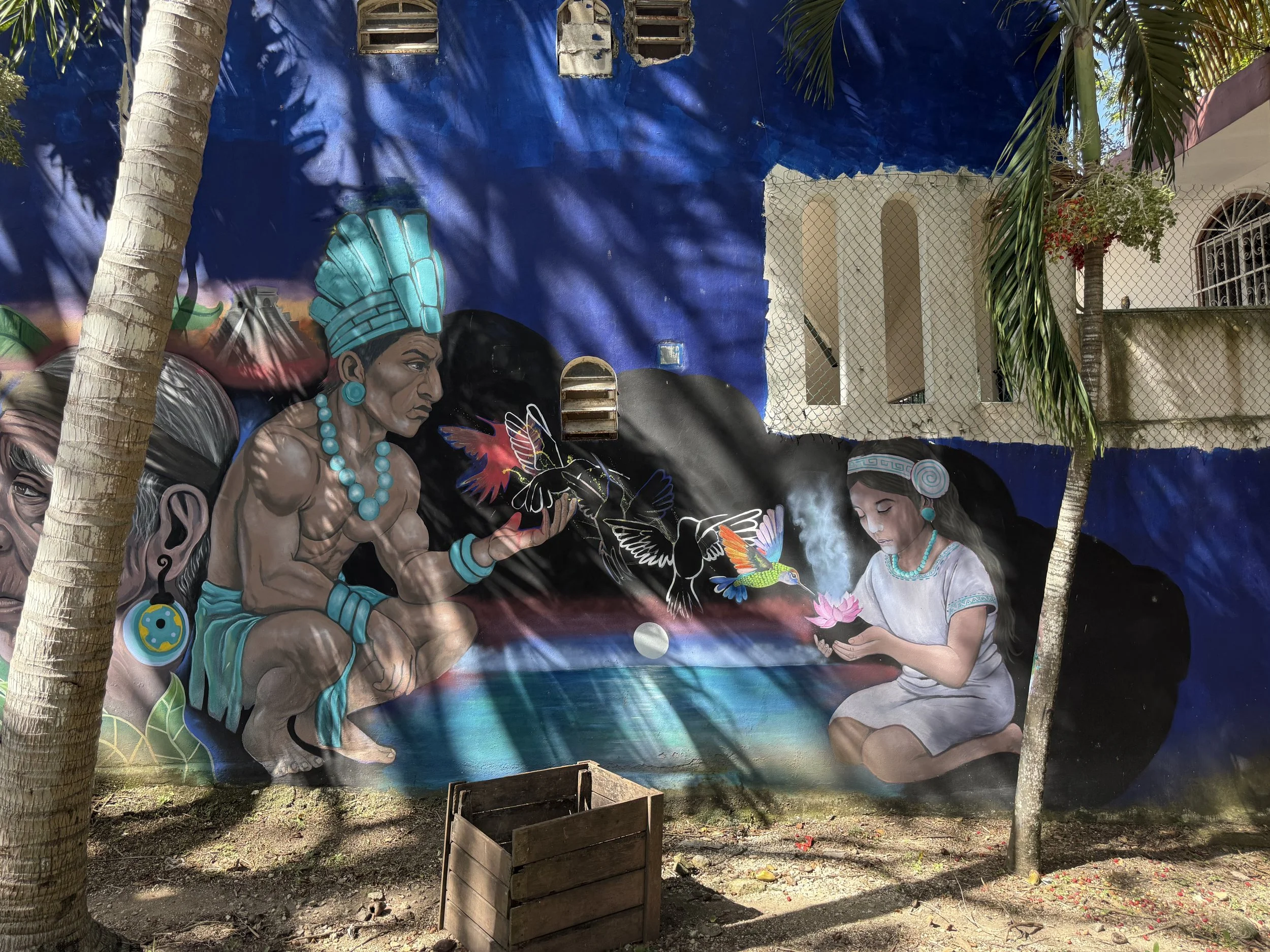
Every time we end up in town, I inevitably tell John to stop the car. Sometimes it is to check something out, but more often than not, it is because I have spotted another mural and need to see it up close.
One mural stopped me for a different reason.
I asked John about the story behind it. He knew pieces of it, but some details were hazy. So later, I went looking for the story myself.
It comes from the ancient Maya creation stories preserved in the Popol Vuh, and it begins in Xibalbá, the underworld.
Hun Hunahpú and his brother Vucub Hunahpú were great ball players. Their games disturbed the Lords of Xibalbá, who summoned the brothers below. It was a trap. They were defeated and killed.
But death, in the Maya world, was not necessarily the end of the story.
Hun Hunahpú’s severed head was placed in a tree in Xibalbá. A young woman named Xquic came upon it, and the dead man’s head spoke to her. He spat into her hand, and from that strange encounter she became pregnant with the Hero Twins, Hunahpú and Xbalanqué.
The twins grew up and eventually descended into Xibalbá themselves to confront the Lords who had killed their father.
They faced the trials of the underworld, played the deadly ball game and, through intelligence, cunning and a healthy disregard for the rules of the Lords of Death, defeated them.
And then came the return.
Their father, Hun Hunahpú, was brought back to life, not simply as the man he had been, but as the Maize God.
And suddenly the story makes sense in a way that feels almost startling.
A grain of maize is buried in darkness.
It disappears.
Then, from that darkness, it emerges again.
New life.
The Maya understood the death and return of the Maize God as part of the same great cycle that governed the natural world. Death fed life. Darkness preceded emergence. What appeared to be an ending could be a transformation into something else.
The Hero Twins themselves eventually rose from the underworld and into the heavens, becoming the Sun and the Moon.
Standing in front of this mural in Bacalar, I found myself thinking about how deeply water, darkness, death and rebirth are woven into Maya cosmology.
The man in the mural seems to emerge from the darkness. Birds cross the space between worlds. A young girl holds a flower above the water, its delicate form surrounded by smoke or mist.
Perhaps the artist is telling the story of the Maize God. Perhaps several Maya stories and symbols have been woven together.
But the message I took from it is beautifully simple:
Nothing simply disappears.
The seed goes into the earth.
The sun disappears into night.
The dead enter another world.
And somewhere, somehow, life begins again.
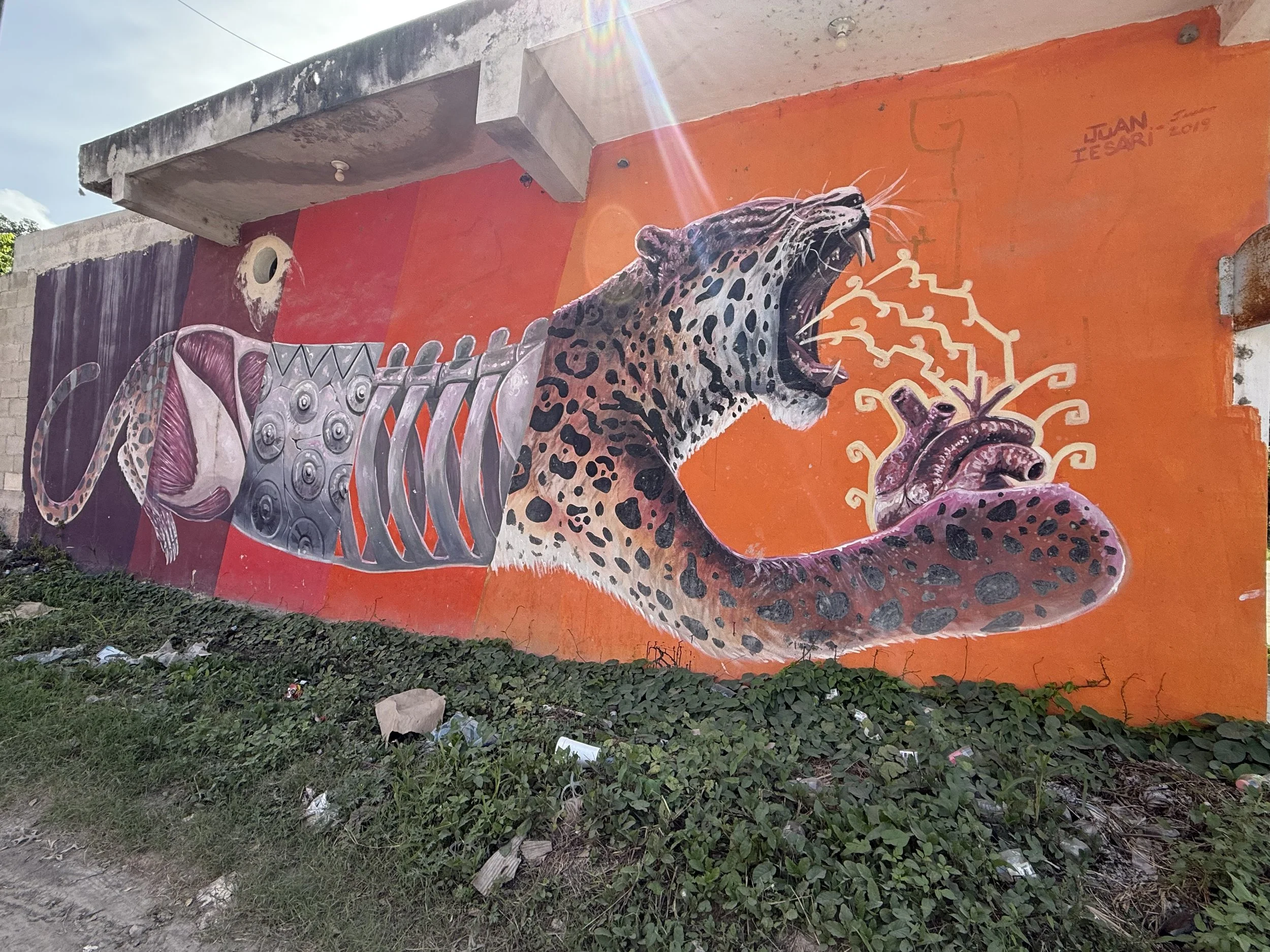
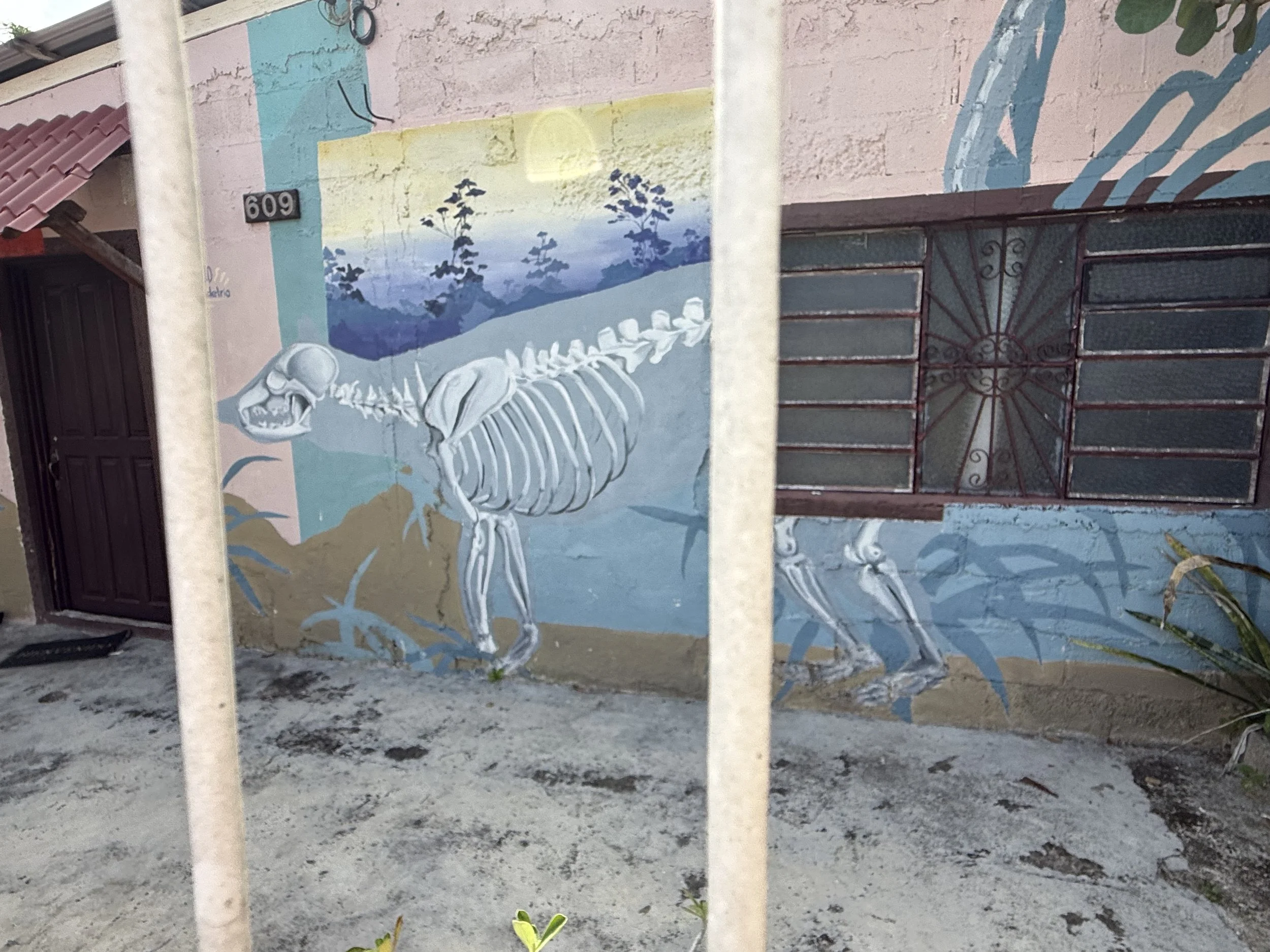
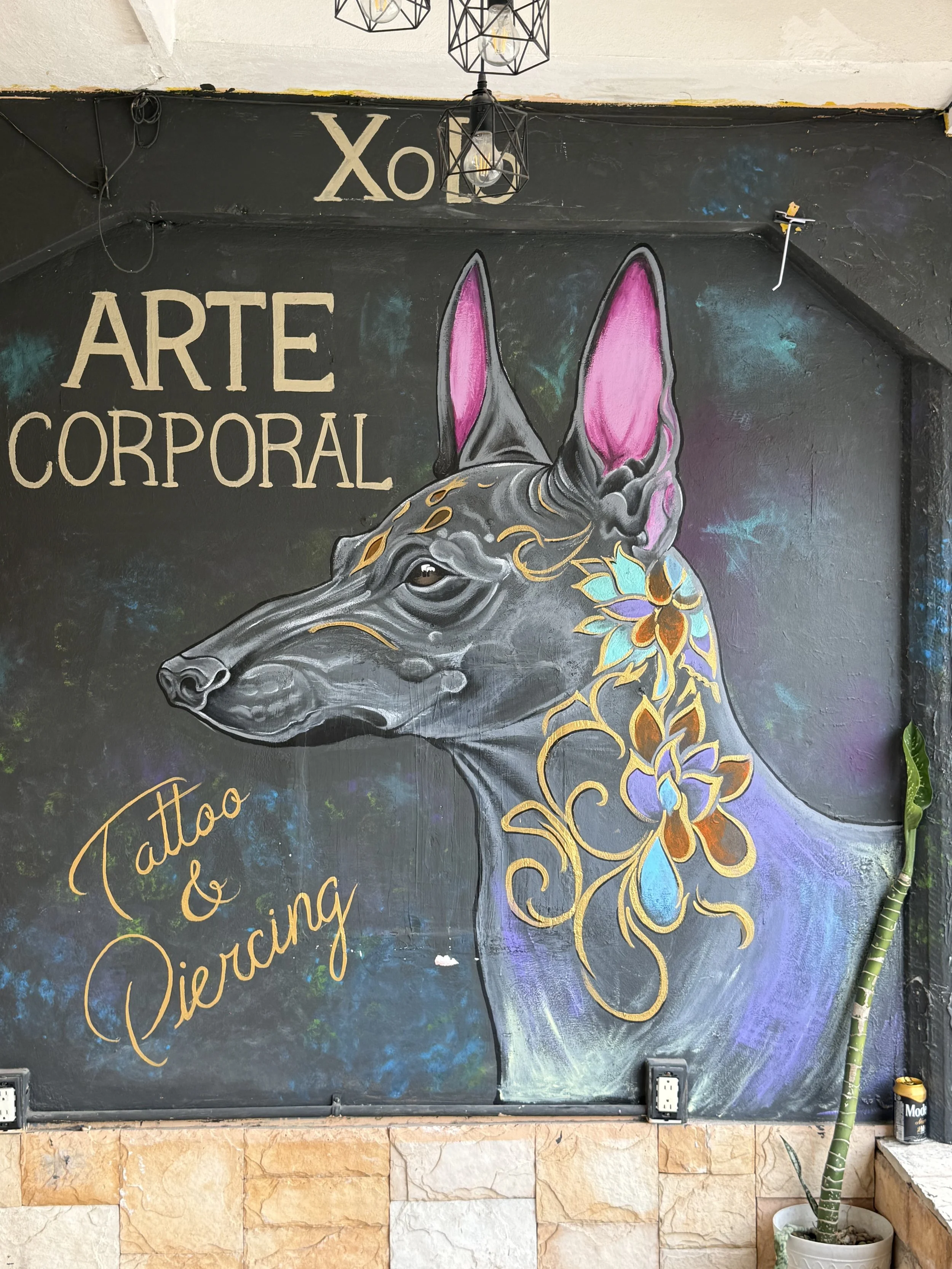
The puma is a recurring theme throughout Bacalar. Each one is different, with its own expression, but they all capture the same creature: fierce, powerful and somehow impossibly elegant.
The puma seems to be everywhere in Bacalar.
I have noticed them on walls throughout town, each one different, each with its own expression. Fierce, watchful, elegant. At first, I simply admired them as beautiful jungle cats. But the more I looked, the more I wondered why this particular animal seemed to have such a presence here.
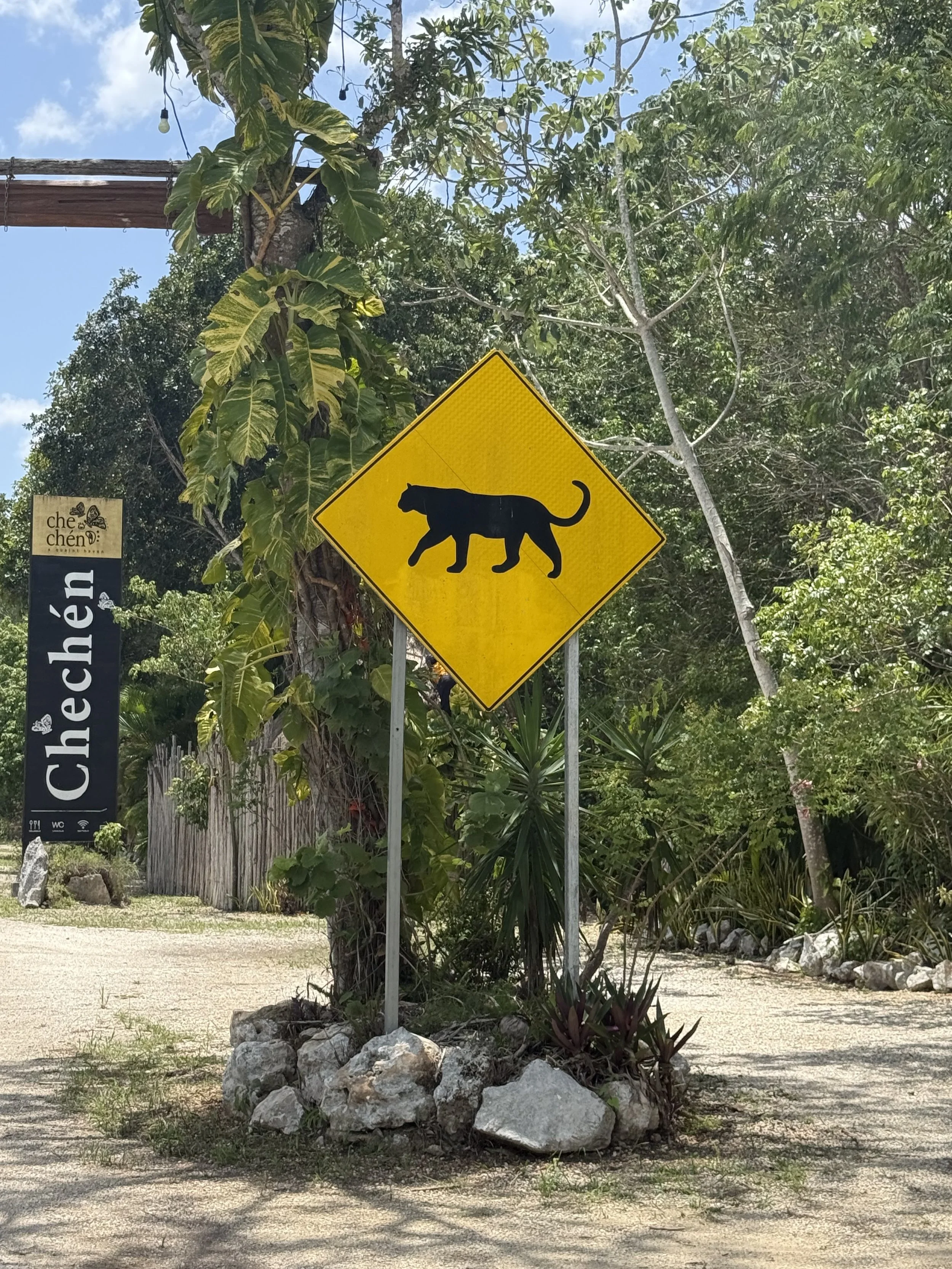
The answer begins with the fact that the puma is not some exotic creature imported into the imagery. It is a real inhabitant of Quintana Roo, part of the living jungle surrounding Bacalar.
But the great feline carries another kind of weight here too.
Whether an artist chooses a jaguar or a puma, these animals have long represented strength, power and sovereignty in Mesoamerican cultures. Great felines occupied an important place in the ancient visual world, connected to rulers, warriors, the forest and those powerful forces of nature that humans could respect but never quite control.
And this is what I find most interesting about the murals of Bacalar.
The artists are not necessarily recreating one particular ancient scene or illustrating a specific Maya story. They are taking an ancient visual language, animals, water, birds, humans, ancestors and supernatural worlds, and bringing it back into the streets.
Making it part of the landscape again.
Perhaps that is why the repeated pumas don’t feel repetitive. Each one has a different face. A different mood. A different way of looking back at you.
And there is something rather fitting about seeing them here, in a town built beside a lagoon that was sacred to the Maya.
Over these past days, I have been learning about the Laguna as a sacred landscape, about the Maya relationship with water and the underworld, about death and regeneration at Ichkabal, and now these enormous felines watching over the streets.
The jaguar, in particular, was understood as a creature capable of crossing boundaries that humans could not easily cross: wilderness, night, the supernatural world and the underworld.
So when one of those fierce cats stares back at me from a Bacalar wall, I no longer see just a beautiful jungle animal.
I see one of Mesoamerica’s ancient symbols of power, wilderness and that mysterious place where the human world meets something larger than itself.
Oscar even told us in Mahahual that they sometimes came close to their house and agitated the dogs for alarm.
Which, honestly, makes my repeated command to John, “Stop the car!”, rather more justified.
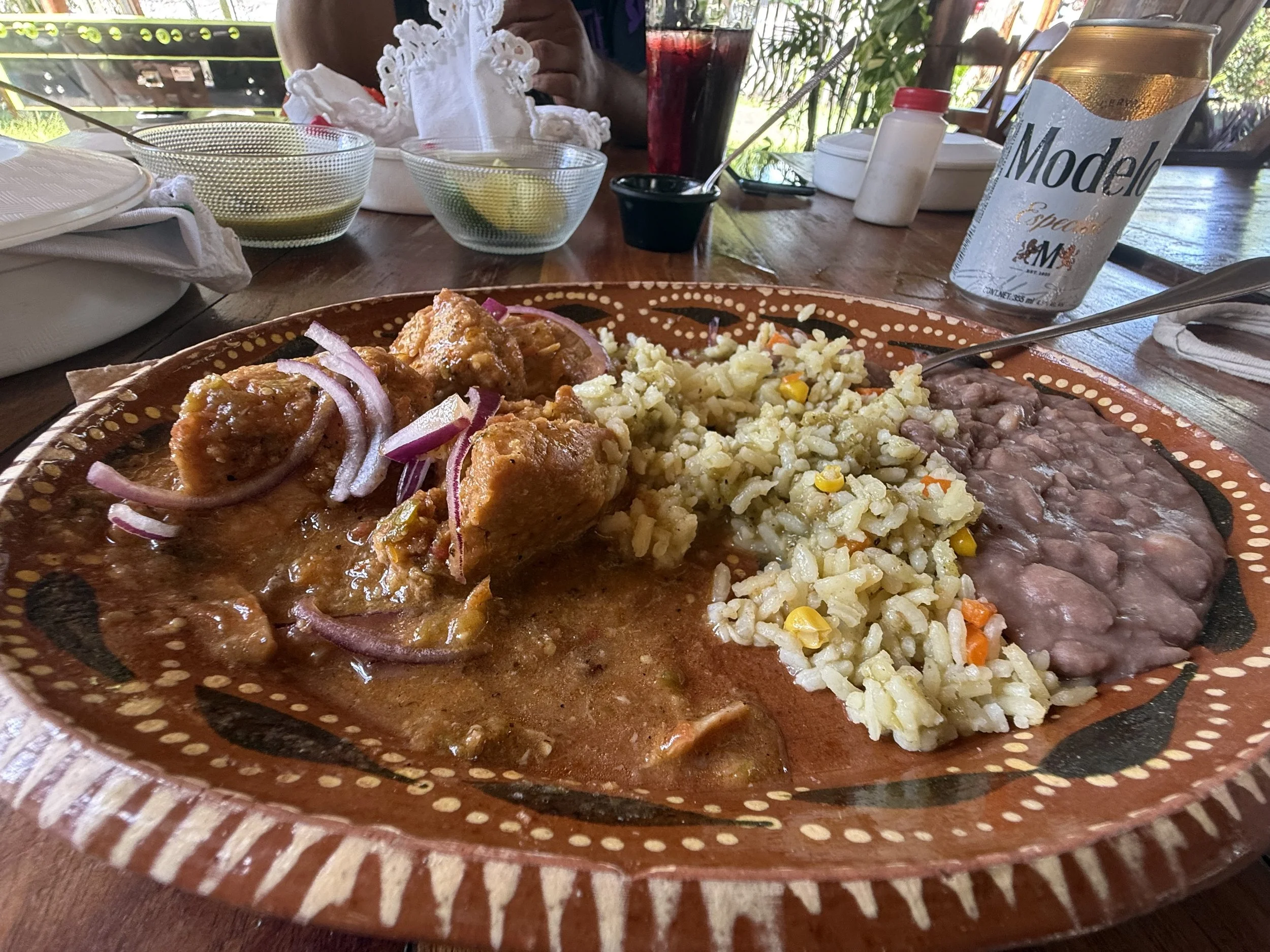
At one street corner, we came across a restaurant tucked into a large garden, with palapas providing welcome shade. A gentleman waved us over, inviting us to try their food and perhaps have a drink to escape the heat for a while.
He explained that he and his family were from Guerrero and Michoacán, and that they served local recipes alongside dishes typical of their home regions. A little piece of Guerrero and Michoacán had apparently found its way to Bacalar.
I ordered the last plate of pork in green salsa.
It arrived with handmade tortillas, still warm, the unmistakable perfume of toasted corn rising from the plate and dancing straight into my nostrils.
I dug in.
Then, halfway through my first bite, I remembered my foodies.
Right.
Photo first.
Then I could eat.
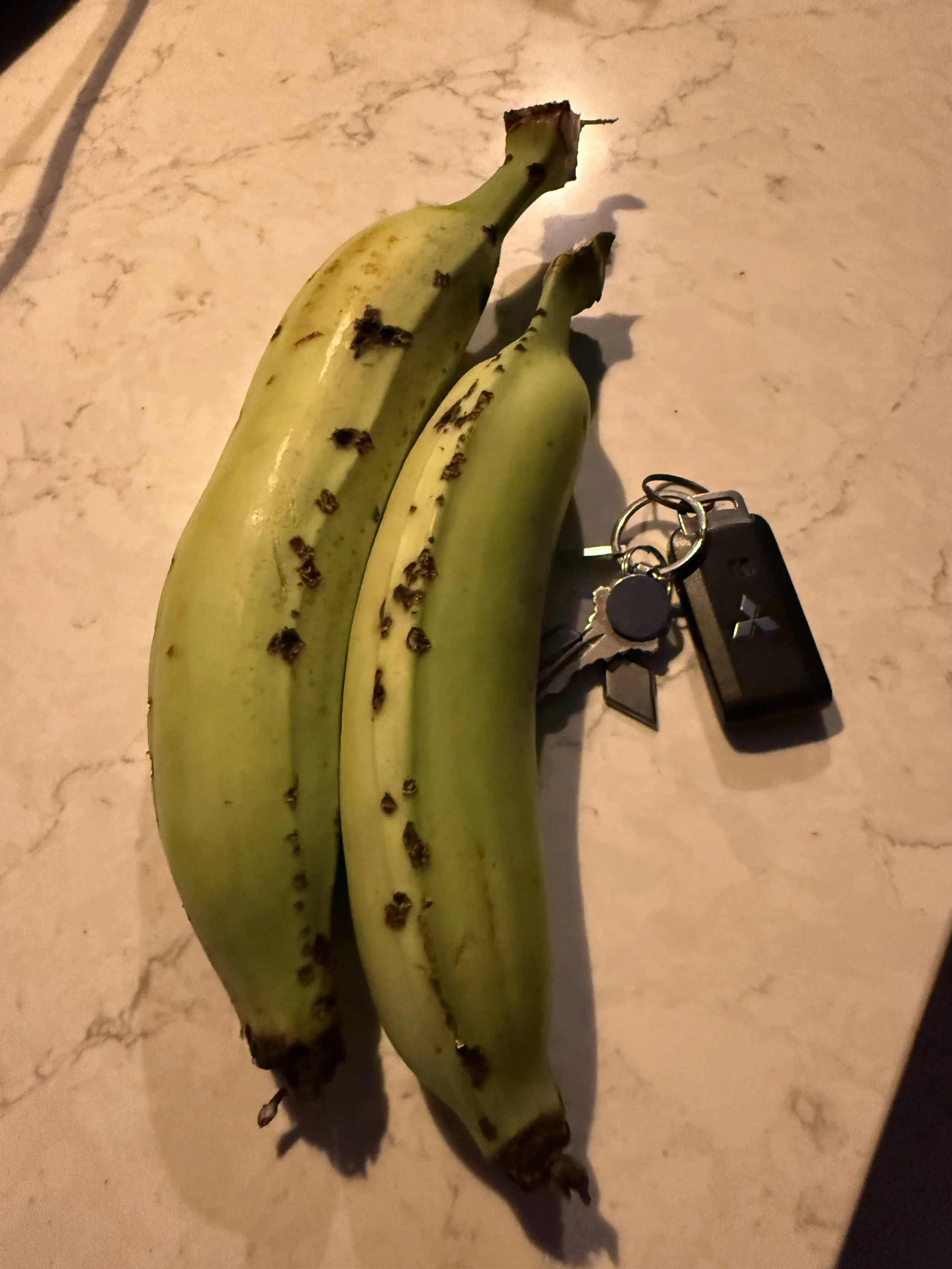
On our return to the house, the workers were heading home at the end of their day. One short, stocky guy was carrying what looked like 50 kilos of green plantains, all hanging together in one enormous, impossibly heavy bunch.
I asked him if I could buy one or two.
He simply waved me off.
“No te preocupes. Tómatelas.”
And just like that, I was heading back to the kitchen with two beautiful green plantains in hand.
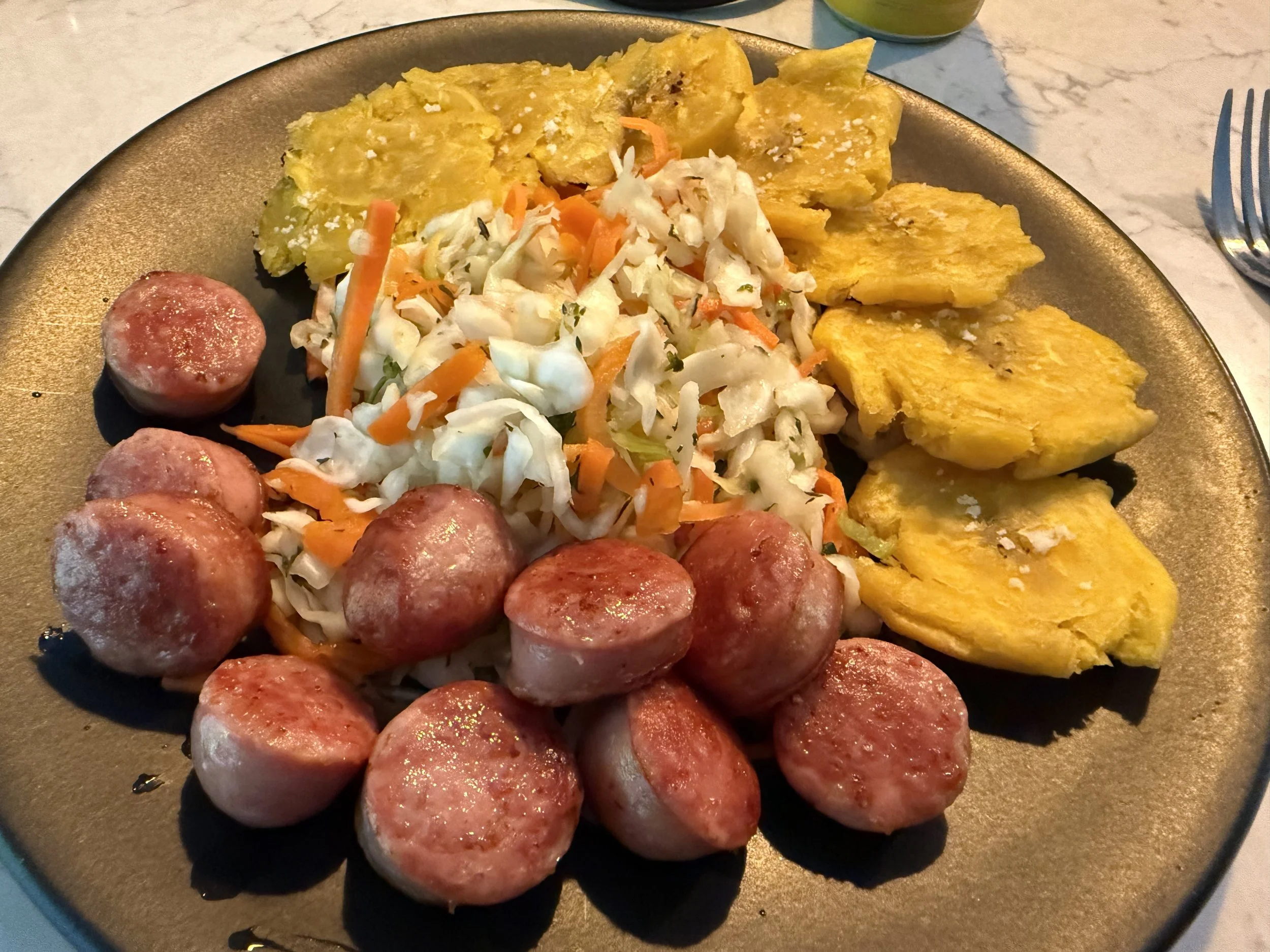
My mission: bannann peze, or tostones.
My kitchen here may not be stocked quite the way I am accustomed to, but that has never stopped me. Give me a cabbage, a few habaneros a single carrot and a little imagination and I will make magic.
The cabbage, carrot and habaneros became pikliz, sharp and fiery, exactly the way I like it.
Then came the freshest tostones I have ever eaten, crisp at the edges and creamy in the middle. And because I was missing my beloved griot, I improvised.
Argentine chorizo stepped into the role.
It wasn’t griot.
But with those freshly fried bannann peze and a generous spoonful of pikliz alongside it, I wasn’t complaining.