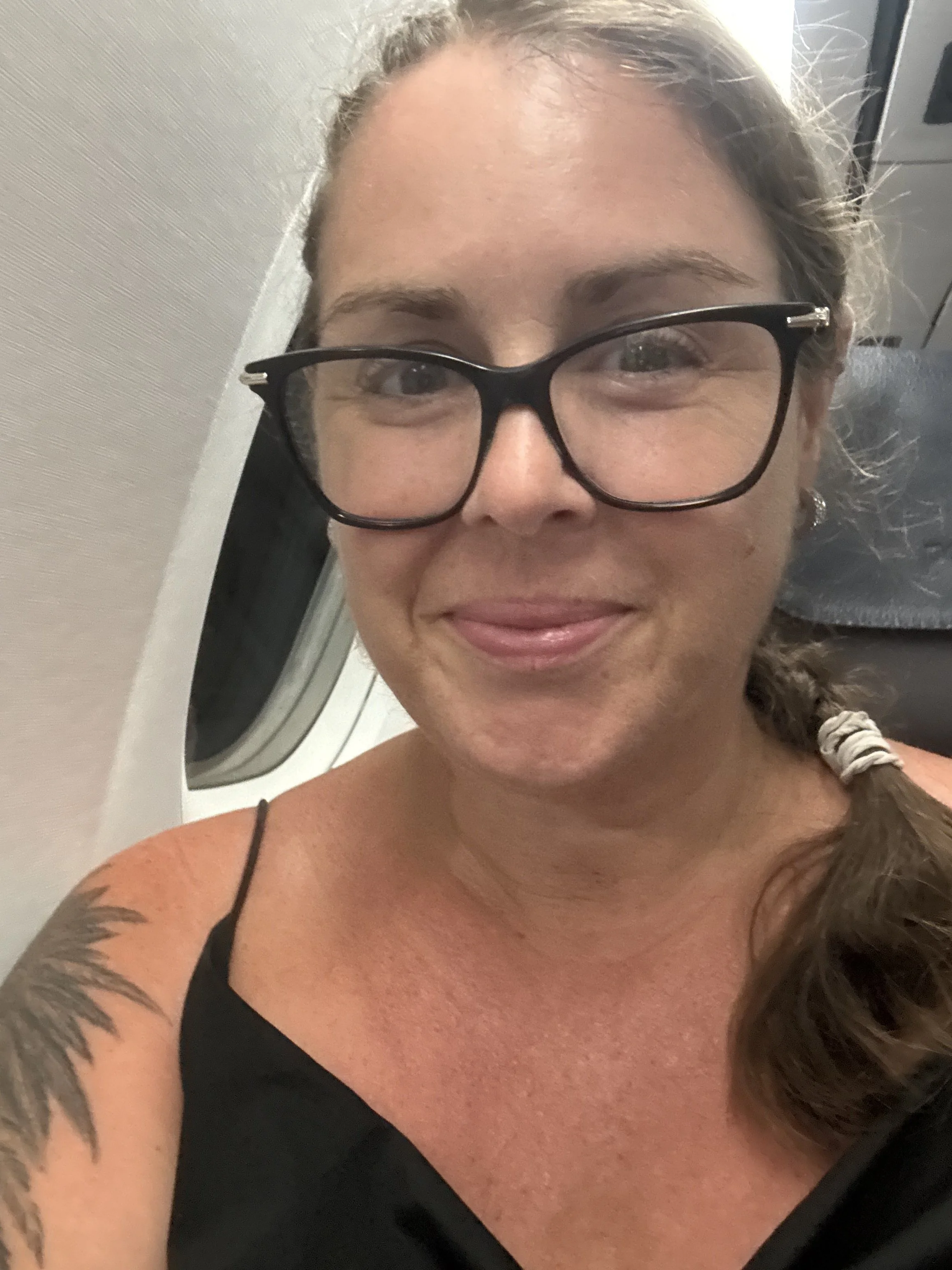
The last day in Cancún
By my last day in Cancún, I had accumulated rather more than I had arrived with.
I had my check-in luggage, my backpack, and a Soriana bag overflowing with food items and various statues that I had somehow decided absolutely needed to come home with me. The only problem was that I still needed a carry-on suitcase before heading out to lunch at Casa Bea.
A taxi driver was standing outside his car, so I approached him and asked if I could reserve him for a few stops and then have him bring me back to the hotel.
Absolutely. And, as it turned out, much safer than Uber, which had only recently started operating in Cancún. He was also perfectly happy to wait for me at each stop rather than disappear and leave me negotiating with yet another taxi.
His name was Beto.
Born to Maya parents, Beto speaks fluent Maya and spoke proudly of his origins. He was also an avid reader, and somehow, almost immediately, our conversation wandered down the rabbit hole of Maya mythology, cosmology and systems of belief.
This is one of those encounters that could easily have been nothing more than a practical transaction. I needed a taxi. He needed a fare.
Instead, we found ourselves talking about books.
I told him about one I had bought specifically for this trip, Gods of Jade and Shadow by Silvia Moreno-Garcia, written by a Mexican Canadian author. I had been completely captivated from the very first chapter. The novel draws deeply from Mexican and Maya mythology, following a young woman into a journey through 1920s Mexico and the Maya underworld. (Penguin Random House Canada)
There was something almost inevitable about our conversation after that.
I had come to Mexico carrying books, questions and a growing fascination with Maya beliefs. And here I was, sitting in a taxi with a Maya man who spoke the language of his ancestors and who was genuinely interested in the same things.
The conversation was simply too pleasant to interrupt.
So instead of having Beto wait for me in the car while I ate, I invited him to lunch.
At Casa Bea.
And this is where another little piece of serendipity entered the story.
I have to recommend Casa Bea in Puerto Juárez, Cancún. If you want amazing food, great service and very reasonable prices, go. It is the kind of market-style restaurant that can be easy to overlook if you don’t know where you are going.
Beto had driven past it many times. He had seen it packed with people, but had never actually tried it.
He was extremely surprised.
And extremely pleased.
By the end of lunch, he was telling me that he would recommend it to his future clients.
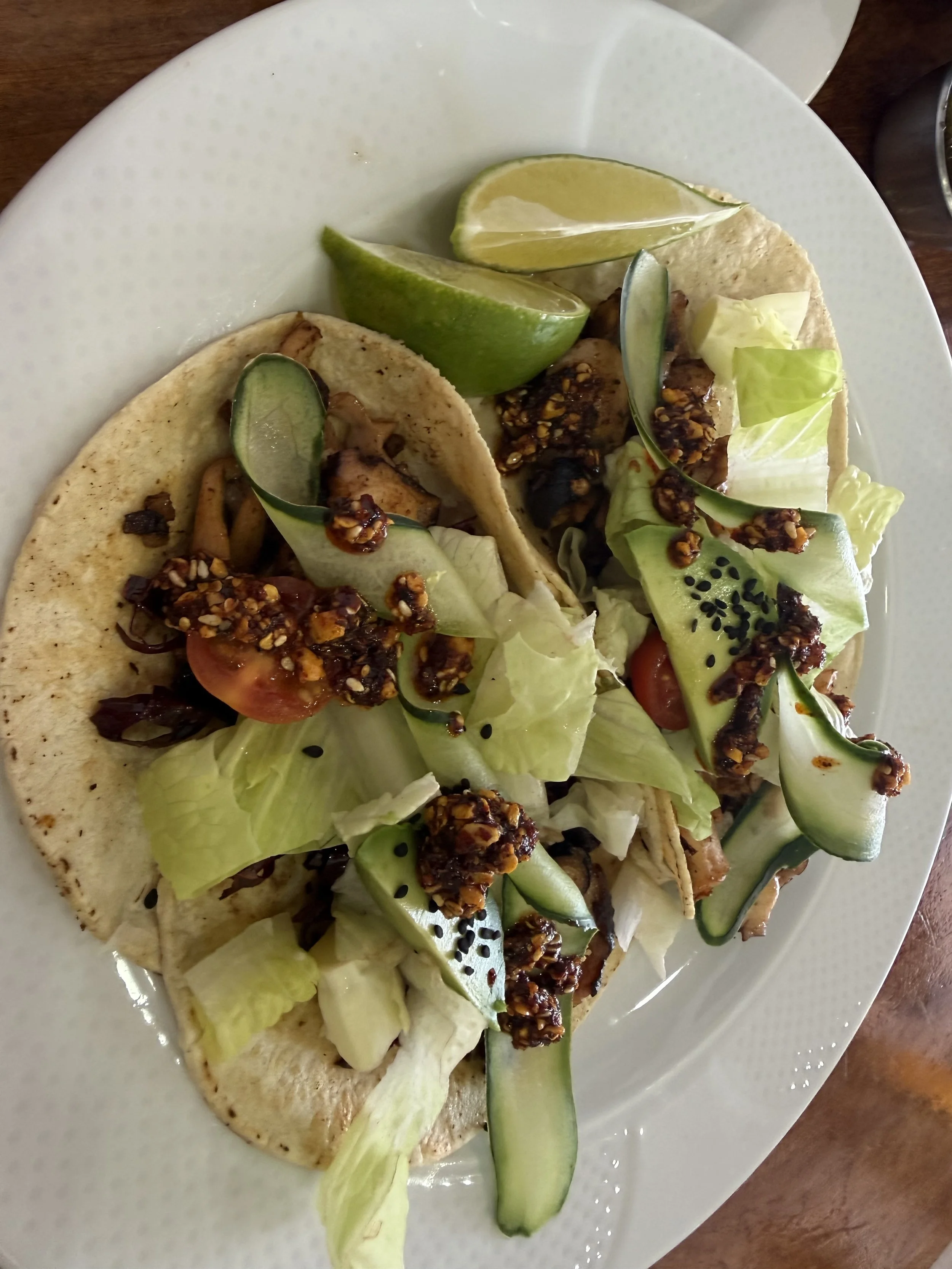
I ordered tacos de pulpo al ajillo and my chile relleno to go, because I still had a plane to catch and apparently the solution to leaving Mexico is to bring as much of Mexico with you as your luggage will tolerate.
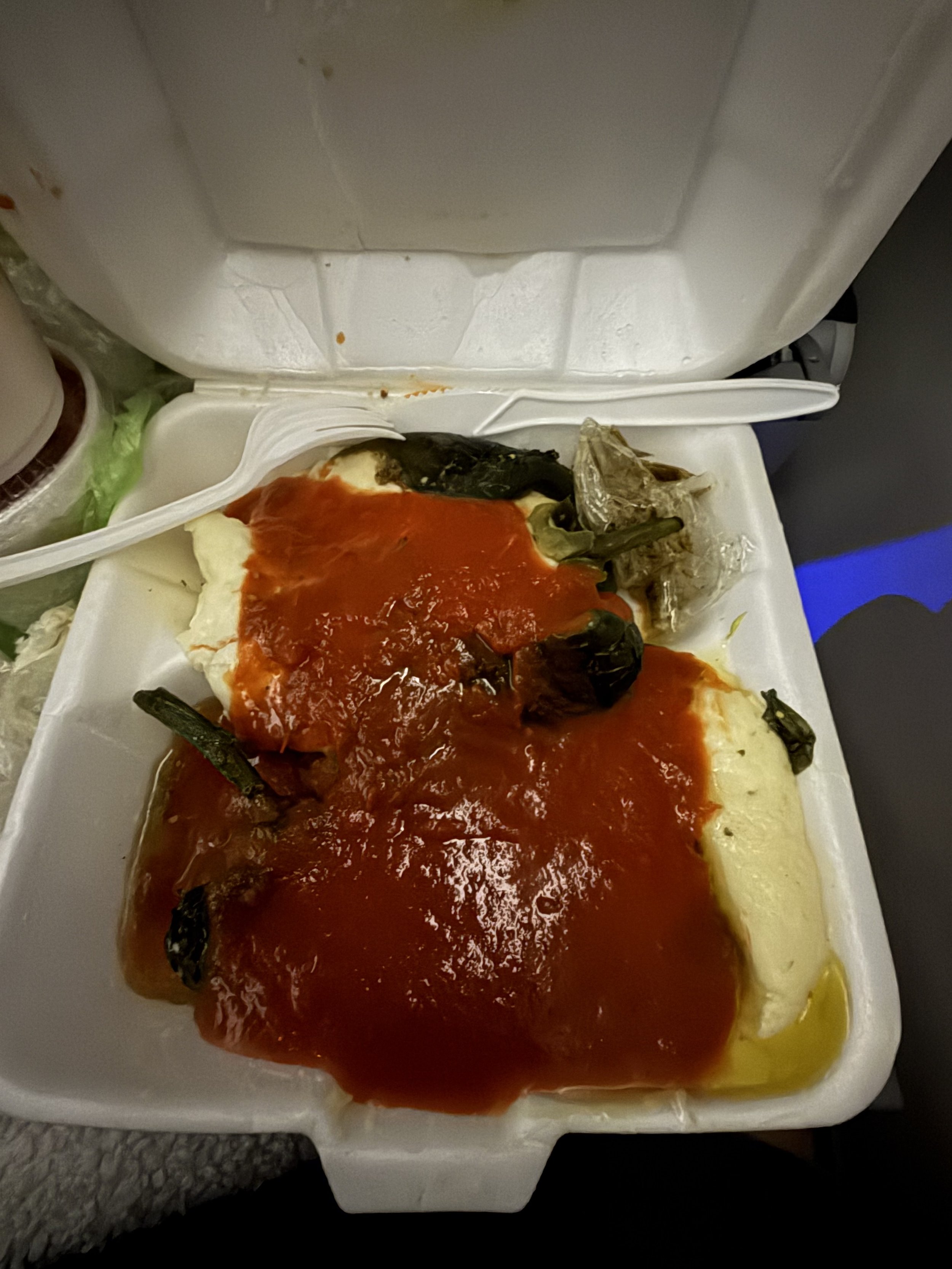
Of course I must apologize, chile relleno in a to-go container rarely lends itself to better plating. But I assure you that it was perfectly delicious!
And somewhere between the taxi, the books, the Maya mythology, the lunch and the ridiculous collection of bags, I realized that this was a rather perfect ending to my journey.
I had spent weeks moving through Mexico, collecting tastes, stories, images, questions and fragments of another worldview.
And now, on the very last day, I found myself talking about Maya mythology with a Maya man I had met because I needed a suitcase.
Sometimes travel gives you exactly what you planned.
And sometimes it gives you Beto.
He recommended two books. Well, one is actually a trilogy and the other a version of Popol Vuh; the sacred narrative of the K’iche’ Maya, wanting to encounter Maya beliefs not through an academic explanation, but through the stories themselves. It is written as a story, but beneath the creation myths, gods, trials, deaths and rebirths runs an entire way of understanding existence: the relationship between humans and the natural world, the cycles of destruction and creation, and the idea that death is not necessarily an ending.
Popol Vuh was not available on kindle but the first of the trilogy was. As I was a few pages away from finishing my current book, I ordered Flor Negra.
Flor Negra, a dark fantasy steeped in Maya mythology, became another doorway into the worldview I had been trying to understand, not through an academic explanation, but through story, magic, prophecy and the journey into the underworld.
There is a passage in Flor negra that stopped me.
Perhaps because I recognized myself in it.
The serpent, the book says, is a gift of the gods’ wisdom. If we know how to listen, she teaches us about renewal:
«Así como ellas mudan de piel y dejan atrás un abrigo viejo para cambiarlo por uno nuevo, nosotros debemos entender que durante la vida muchas veces requerimos “cambiar de piel”, dejar atrás aquello que ya no nos es útil y renovarnos para adquirir lo que en ese momento necesitamos.»
I have thought a lot about that idea lately. I feel that since 2023, I have shed many skins.
Not simply changed my circumstances. Not exchanged one house, one job, one routine, for another. Something deeper has happened. The old versions of me began to feel too tight, too confining, like a skin I had already outgrown.
The passage makes an important distinction:
«Este cambio no viene desde afuera: cambiarse de ropajes, adornos, de casa o de labor, no sirve. Como la serpiente, el cambio viene desde dentro, desde el alma.»
That is what resonates most deeply with me. The visible changes in my life are almost beside the point. They are the evidence of something that had already begun moving underneath.
There comes a moment, the author says, when the serpent feels an inner impulse toward liberation. But liberation requires shedding what surrounds her.
And that shedding is not gentle.
«El proceso no le es fácil; tiene que desgarrarse la piel vieja para que surja la nueva. Es un tránsito doloroso que le exige esfuerzo y energía.»
There is something brutally beautiful about that image. We often speak about transformation as though it were graceful, inevitable, almost effortless. But sometimes becoming someone new means tearing yourself away from something that once protected you.
The old skin was not necessarily bad. It simply stopped being useful.
And perhaps that is an important distinction when looking back at the person I was. I don’t need to reject her. I don’t need to be ashamed of the things she wanted, feared, tolerated, or believed. That skin carried me for a while. It belonged to a particular version of my life.
But it no longer fits.
The passage speaks of people who carry their old skins with them, sometimes for an entire lifetime:
«hay muchos hombres y mujeres que se resisten a dejar atrás sus pieles viejas y cargan con ellas toda la vida.»
That image unsettles me. To carry every former version of yourself forever. To allow the past to become an accumulation rather than a foundation. To keep wearing identities simply because they are familiar.
I don’t want that.
I have shed too much to willingly put those skins back on.
And what I love most is that the serpent is not the only creature that renews itself. Trees change their foliage. Birds lose their old plumage. Everything that is alive, everything that was created, participates in some form of renewal.
«Así renacen las serpientes, pero también los árboles al cambiar su follaje, las aves cuando mudan su plumaje y, en realidad, así sucede con todo lo que fue creado.»
Maybe that is what these last few years have been for me.
Not becoming a completely different person.
Becoming more fully the person I had already begun to become.
Shedding. Growing. Shedding again.
And perhaps that is the part of renewal we don’t talk about enough: it isn’t a single transformation, after which we arrive at some final, perfected self. The serpent grows again. Eventually, the new skin becomes restrictive too. And then, once again, she must let it go.
Maybe that is not failure.
Maybe that is life.
I think I have finally understood that I am allowed to outgrow myself and Mexico has become the blackboard on which the new chalk lines of my life are finally free to wander, curve, cross and redraw themselves.